
10 years of sports and culture: The Andscape oral history
An oral history of wins, losses, resilience, and reinvention

On May 17, 2016, www.theundefeated.com went live. Since then, we have explored sports, race, and culture in multiple dimensions — from written journalism to viral social posts to feature films. We put Serena Williams and Common on television together. We brought President Barack Obama to North Carolina A&T University. We helped Michael Jordan reveal his conscience, Jalen Hurts display his style, and Kobe Bryant show his heart. We made a name for ourselves, changed it, then made our name all over again.
What follows are our eyewitness accounts (via interviews condensed and edited for clarity) of how Andscape, formerly known as The Undefeated, has walked alongside a cultural community at the heart of American sports. This is the story of how we navigated the past decade together — competing, performing, protesting, suffering, always working, and still standing.
I’ve been here since this place was just an idea in the heads of a cool white dude and the wrong Black guy. So what had happened was…
JOHN SKIPPER, former president of ESPN: The vision for the platform was I thought that while we had made some progress diversifying the company, it still was run overwhelmingly by white men. I understood that you did some good by diversifying, but a lot of times it meant you were sitting in a room with seven white men and a white woman and maybe one Black man or one Black woman. And I thought, “Gee, I wonder what it feels like to be the only [Black] person in the room?”
The business case was — I learned this at ESPN The Magazine, where we probably had the most diverse staff at the company, and we had the largest young Hispanic male readership of any magazine and the largest young Black male readership. People heard voices that sounded like themselves in the magazine, and that helped the magazine succeed. With The Undefeated, I thought it would help show a large portion of our audience that we’re speaking to them and with them.
This was about 2013, when cable television was still pouring money into ESPN’s balance sheet. Under Skipper’s leadership, ESPN had already created or acquired several notable ancillary websites – ESPNW, Nate Silver’s fivethirtyeight.com, and Bill Simmons’ Grantland. Following that model, Skipper looked for “talent,” not an editor or manager, to lead the new site. That’s when my phone rang with a call from a guy I had met in 1997, when I was managing editor of Vibe magazine and had assigned him to write a piece on the recent NBA Rookie of the Year, Allen Iverson.
“ESPN is hiring me to start a Black Grantland,” Jason Whitlock told me. “You’re the first person I’m calling.”
JASON WHITLOCK, former editor-in-chief of The Undefeated (via email): It was the answer to a dream, a chance to build a media platform that addressed the central issues facing black Americans.
JOHN SKIPPER: I believe that Bill Simmons recommended him. Dan Le Batard called me about him. I thought, “Wow, maybe this is a little provocative,” because Jason’s politics, even at that time, did not accord with mine. But I thought, “So what?” If I really believe in a variety of viewpoints and trying to have a diversity of opinion, maybe I have to support somebody who doesn’t think quite the way I do. I also remember that we had been looking for a little bit, so I was ready to move on. I don’t have a lot of patience, and I wanted to get moving.
Melissa Rawlins / ESPN Images
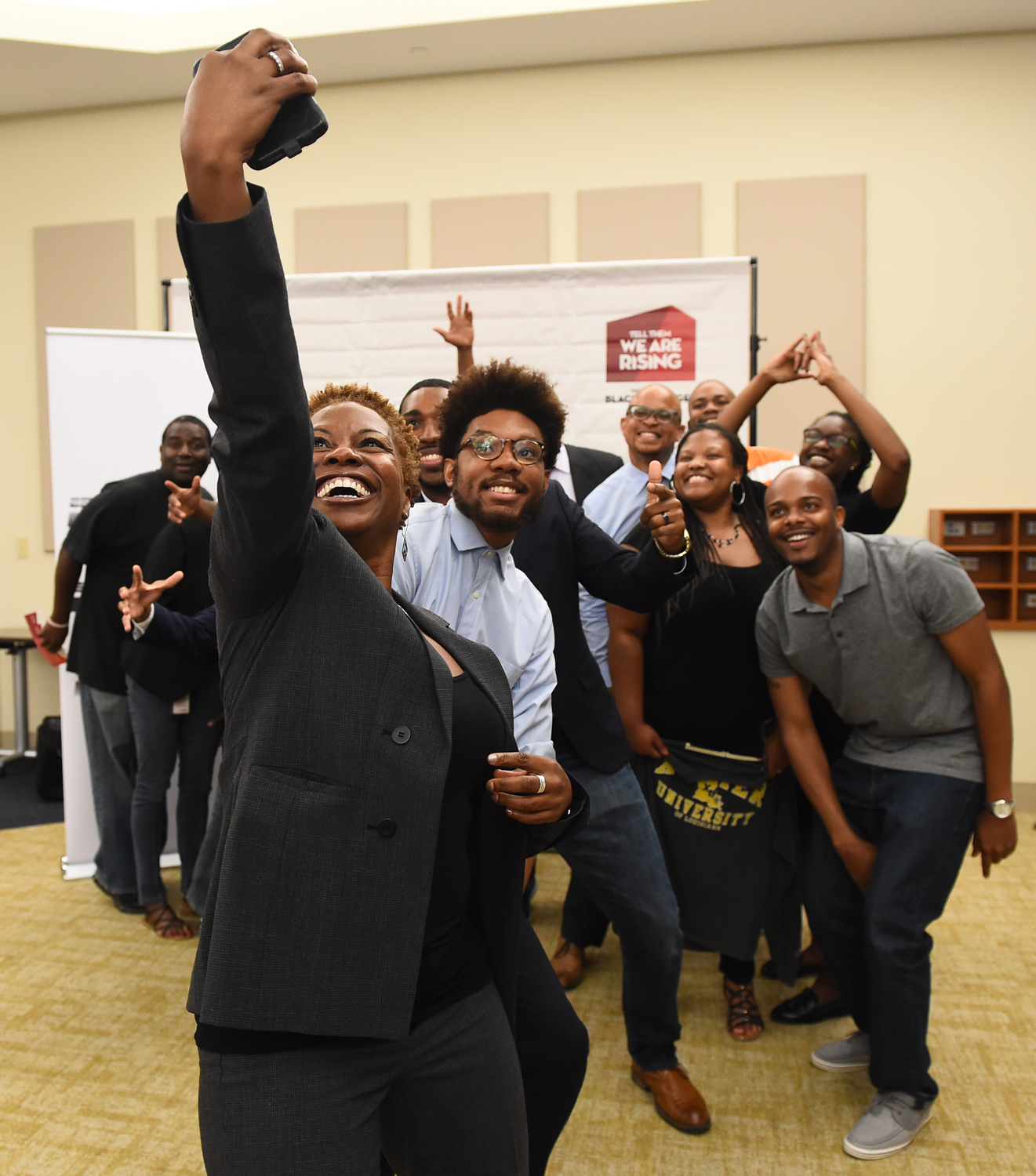
Whitlock had made his name as a talented, provocative and occasionally right-leaning columnist with the Kansas City Star. He hired about half a dozen of us, including Justin Tinsley, Jerry Bembry, Danielle Cadet, Mike Wise, Ryan Cortes, Brando Simeo Starkey, and Amy Barnett. Skipper asked Leon H. Carter, VP of ESPN New York and other sites, to move to L.A. and help get things going.
LEON H. CARTER: Many executives talk about diversity; Skipper believed in diversity. You heard it in his voice. Long before The Undefeated, he had attended HBCU football games and saw how competitive halftime shows were. It’s no surprise that he was instrumental in helping create the Celebration Bowl, which pits the SWAC champion against the MEAC champion. That game is very important to HBCU culture. So it’s no surprise that Skipper wanted to create a site for sports and culture. When he asked me to go to L.A. to help out, I had to say yes.
The team set up shop in ESPN’s Los Angeles office and started working on the as-yet-unnamed site. Whitlock briefly proposed TwiceAsHard.com (for real) in reference to Black folks having to work twice as hard to get half as far. Then, when Maya Angelou died in May 2014, Whitlock texted me her quote that begins: “We may encounter many defeats, but we must not be defeated.” When Whitlock texted that the site should be called “The Undefeated,” I got chills.
Despite the incredible name, our progress toward launch was slow. We published a few stories on ESPN.com, but couldn’t get traction. Whitlock, who had no management experience, told me he wanted to lead like a football coach. What I observed was more of a bullying style, and sometimes he accused us of things we didn’t do or thoughts we didn’t have. Meanwhile, the ESPN haters at Deadspin launched a punishing series of Whitlock hit pieces.
In March 2015, we gathered at ESPN’s Connecticut headquarters for a summit with Mothership staff. Whitlock distributed a 49-page “playbook“ detailing a vision based on stellar reporting and the history of Black journalism pioneers like Sam Lacy and Ralph Wiley. The playbook also took swipes at hip-hop and Black single parenthood. It extolled accuracy but failed to avoid typos and spelling errors, including on the cover page. It included inspirational messages from the likes of Martin Luther King Jr., but most of the full-page quotes were from Jason Whitlock.
JOHN SKIPPER: It became clear to me, because people called me, that Jason was trying to enforce an ideological doctrine. And it became clear that he was not a leader.
I defended Whitlock during this time. Few others did. In June 2015, Skipper summoned Whitlock to his room at the Four Seasons hotel in Los Angeles and fired him, effective immediately.
JOHN SKIPPER: He was clearly surprised. He didn’t really quarrel with it, but he did aggressively suggest that it was important for him and he would like a little more runway. He became very emotional and explained to me that it was so important to him to have this position of authority and a platform, and how bad this made him feel. He cried and, well — he put his head in his hands and sobbed.
JASON WHITLOCK: My memory is the meeting was less than 15 minutes. Skipper seemed disappointed it had failed.
SKIPPER: To see a big man with his head in his hands sobbing about what a disappointment this was, it made me feel bad. It did not make me feel like it was the wrong decision.
WHITLOCK: I’m a patriarch. I believe in male leadership. Black American culture is led by women. I stand in opposition to the matriarchy, feminism, and victimhood culture. I was the wrong choice to lead a site that ESPN planned to use to cater to black feminist culture. … ESPN employed me for those two years to gather my ideas and then hand them over to someone who would execute the site in a way that pleased black feminist culture.
In my opinion, Whitlock’s above statement is false and embodies the definition of victimhood. Nonetheless, his defenestration threw the staff into limbo. We heard vague assurances about the future, but as the months passed, our angst increased. I recall Jerry Bembry floating the idea that Kevin Merida, managing editor of The Washington Post, would be the perfect new leader, and we all lined up for the Hail Mary.
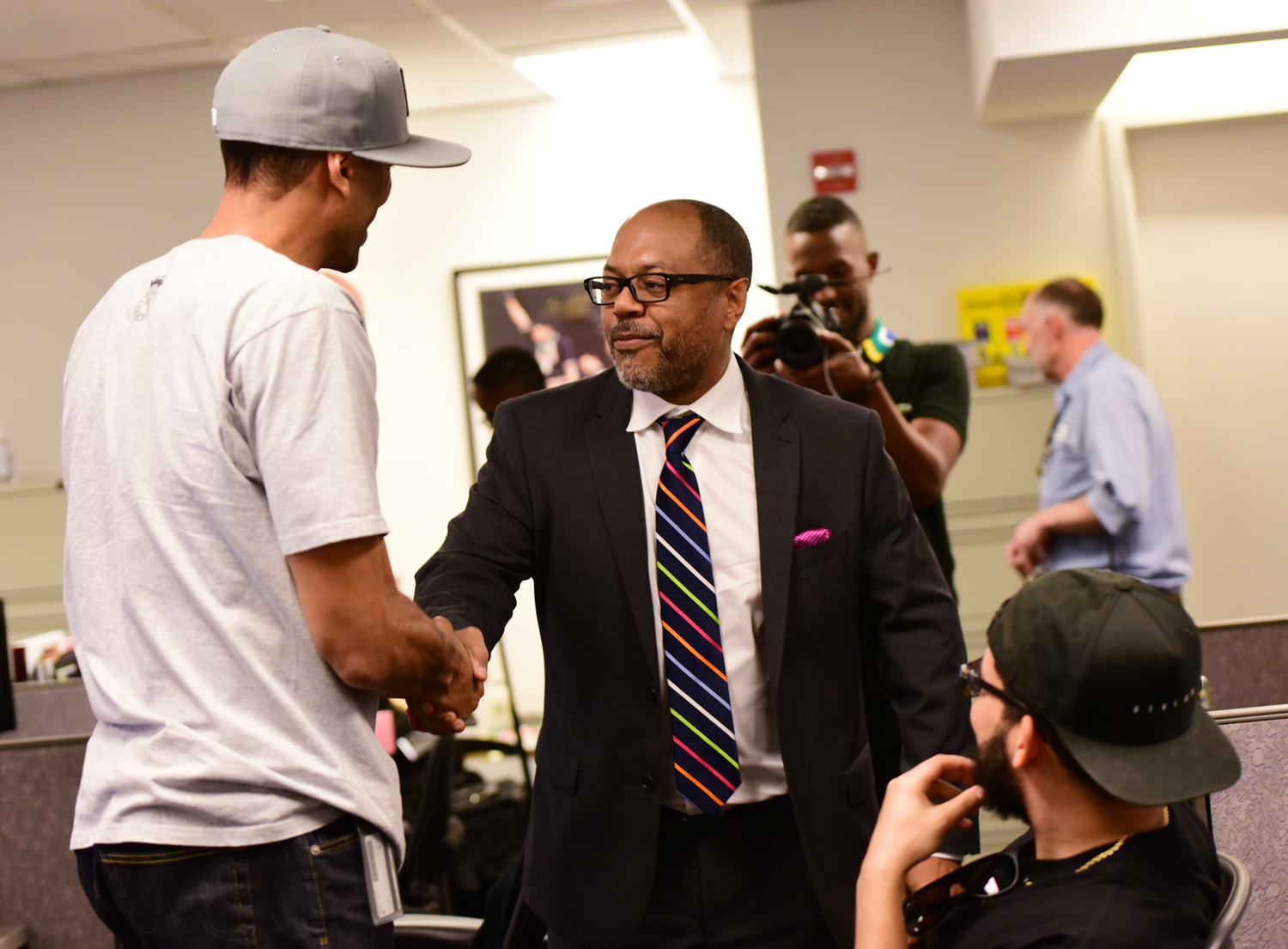
KEVIN MERIDA, former editor-in-chief of The Undefeated and senior vice president at ESPN: The first call I got, I think it was Cadet or somebody, like a through-the-transom thing: “Would you be interested?” And, “We’re going to be inside letting people know about you.”
DANIELLE CADET, former deputy editor of The Undefeated: I got invited to a Washington Post dinner at NABJ [the National Association of Black Journalists’ annual convention] that summer. I sat across from Kevin, not purposely. At the time, The Undefeated was like a pariah, right? People at the dinner went around the table saying where we work and I said “The Undefeated” with the straightest face. I deserve an Oscar for that performance. Everybody was like, “What are you guys doing and what’s going on?” I looked Kevin dead in the eye and said, “We’re going to be fine. We’ve got a great group of people. Everything’s going to be fine.”
JOHN SKIPPER: I couldn’t imagine that we could get him. He’s the No. 2 guy at The Washington Post. How are we going to get him?
KEVIN MERIDA: We were in that period in journalism of the transition to full digital news operations. It was an exciting time to create these new digital products. The other part was, in college [at Boston University], some of us started a Black student newspaper, including Mike Fletcher, who ultimately came with me to The Undefeated. It was a lot of fun times, trial and error, it was exciting doing something Black on a white university campus. … A lot of us as Black journalists spent a lot of time trying to make our industry better, diversify it, bring more voices. But here was an opportunity inside a big company to start something new, focused on race, sports, and culture. These are sweet spots for me.
I thought, “Man, you’re on that high dive, you want to be brave enough to do something that you know will be exhilarating — don’t not do it out of fear.” It was a very big struggle for me, but ultimately, I wanted to be part of new things going on in our industry. “Yeah, let me give that a shot.”
Merida’s appointment was announced in October 2015, and the newsroom moved from Los Angeles to Washington, D.C. The next seven months were a blur of hiring — we ended up with about 45 people on staff — and feverish development.
DANIELLE CADET: It was like the best of the best, the cream of the crop in journalism — not just Black journalists, but journalists, period. People who were setting the cultural agenda.
KELLEY CARTER, senior entertainment writer: It felt like we had assembled the Avengers. I was in awe that I got to be one of them.
RAINA KELLEY, who began as managing editor: Without a shadow of a doubt, the most exhausting, fun, brain-burning, amazing situation of building something Black from scratch with Black people.
Kevin’s vision was for The Undefeated to be more than a website — to build a community and a brand that created journalism, conversations, events, and digital storytelling. As we prepared for launch, our first piece of content was an original song and music video defining The Undefeated. And finally, some three years after I got that first phone call, it happened — launch day.
We tweeted our arrival at 5 a.m. The site featured Lonnae O’Neal’s profile of Marshawn Lynch, which included the immortal phrase “a loose confederation of cousins and them.” I wrote about the lynching, almost exactly a century earlier, of a man who shared my name. Marc Spears described Shaun Livingston overcoming one of the most gruesome injuries in NBA history.
DANIELLE CADET: I remember pressing the button to turn the site on. I think I started crying.
RAINA KELLEY: It was one of those transformative moments, like getting married or having a kid. I’ve never had that kind of experience of pressing the button and bringing something into the world on the internet. It was genuinely thrilling. And then, genuinely nervous-breakdown-inducing, tears-inducing. That was three hours later when I said to myself, and then out loud to Danielle Cadet, “And we have to do this every single day.”
The heartbeat of The Undefeated was the D.C. newsroom, where several dozen staffers were based. The office was filled with banter, debates, jokes, shade and creative fission that generated idea after idea. This environment was especially meaningful for the pioneering sportswriter William C. Rhoden.
After playing college football at HBCU Morgan State, Rhoden started his journalism career in 1973 at the Baltimore Afro-American newspaper, where his editor was none other than Sam Lacy, and then moved to Ebony magazine. At The New York Times, Rhoden became one of the first Black journalists to push discussions of racial equality into white media. In 2006, Rhoden published his seminal book, Forty Million Dollar Slaves, which stands as the definitive history of Black athlete activism and (dis)empowerment.
Rhoden arrived at The Undefeated several months after launch, then created a powerful initiative: the Rhoden Fellows, an annual cohort of interns from HBCUs. To date, 53 have come through the program.
BILL RHODEN: The D.C. newsroom reminded me of Ebony and the Afro, having these great Black journalists under one roof. I’ll always remember that D.C. office for all the fun and the repartee and the trash-talking and the brainstorming with some of the most well-respected journalists I’ve ever worked with. After 34 years at The New York Times, 27 of those being a columnist, it wasn’t until I got to The Undefeated and started working with John X. Miller that I realized how much of a burden I had carried. You became used to working in this white environment, self-censoring yourself, being the one Black journalist. I had really good editors at the Times, but I often had to justify stories.
At Andscape and The Undefeated, the conversation began on a high plane. We talked about athlete activism, Black ownership, labor and exploitation, policing, protests, HBCUs, coaching inequities, gender and race, and the cultural meaning of Black excellence. At the Times, although ultimately those things may have gotten into print, a lot of times it was like a fight. The Undefeated/Andscape was liberating.
LONNAE O’NEAL, who came to The Undefeated from The Washington Post: For the first time, I was able to write in the same voice that I think in. There were layers of translation I didn’t need to do. You only have so much energy for any story or project or essay. If you spend 25 percent or 30 percent of that energy trying to convince people that your worldview is valid, it doesn’t leave as much bandwidth for being creative and for reaching for higher ground and deeper truth. At The Undefeated, I was free to write and to think and to come up with stuff I didn’t even know I knew, and then to learn other stuff.
STEVE REISS, former executive editor of culture and enterprise: Lonnae was writing in her native language.
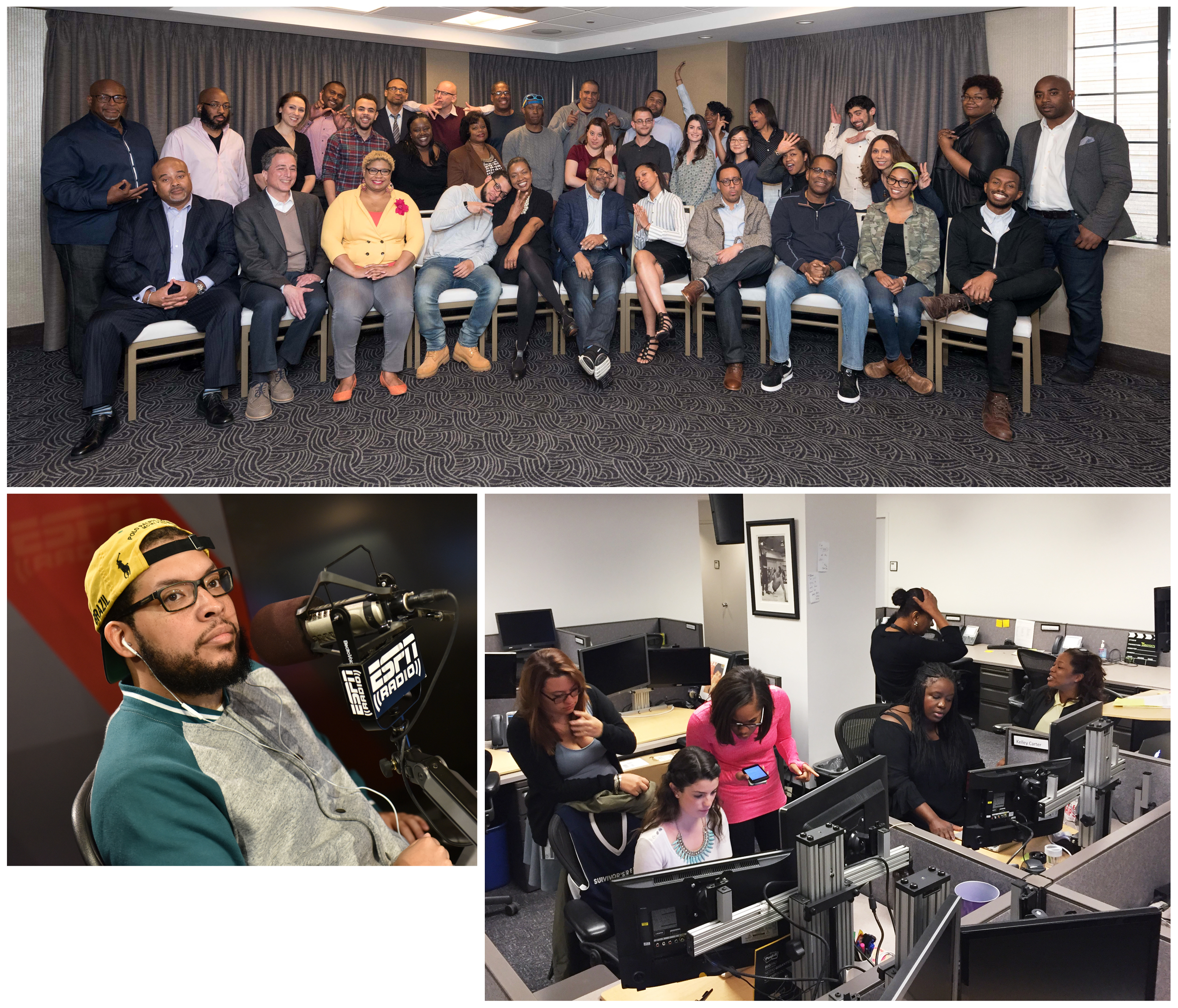
Reiss, a longtime journalist who edited O’Neal and Merida when they wrote for the Post, was one of several Undefeated employees who were not Black.
REISS: I enjoyed the ambition in the room and trying to help guide that ambition. I was learning every day. I wasn’t a stranger to Black America, but I had never been in a Black majority newsroom either. I was learning things every day and I treasured the willingness of my colleagues to teach me.
Our platform was born as the Black Lives Matter movement gained momentum and reawakened athletes to their social influence, and as Colin Kaepernick inspired more protests by taking a knee during the national anthem. It didn’t take long for The Undefeated to start racking up hits.
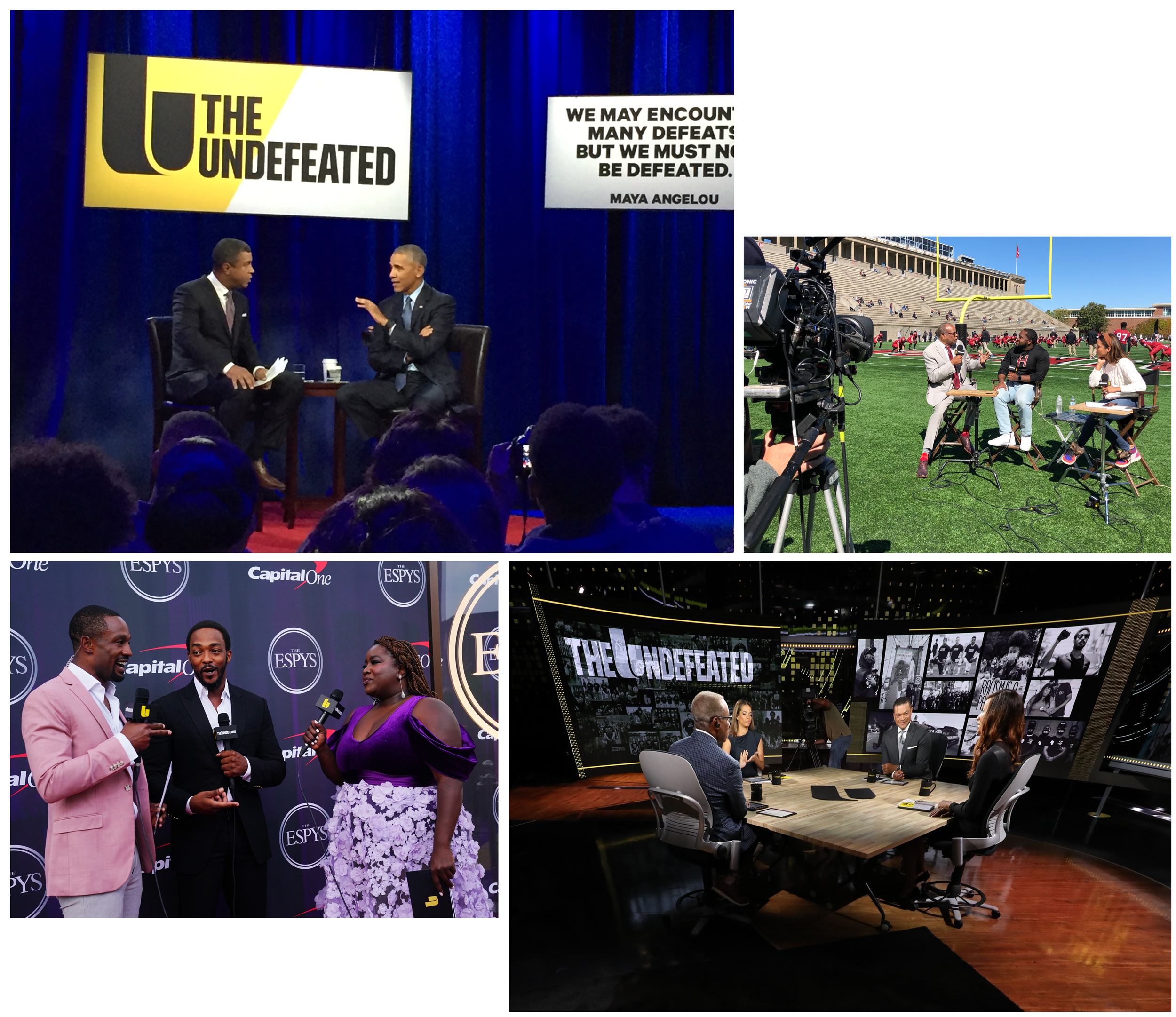
In July 2016, Michael Jordan gave us an exclusive statement saying that “I can no longer stay silent” about police violence. In October 2016, we brought President Barack Obama to North Carolina A&T for a “Conversation on Sports, Race, and Achievement.” That December, we put Serena Williams and Common back together on ESPN airwaves to discuss Black identity, public scrutiny, activism, and definitions of greatness. Clinton Yates and Domonique Foxworth became featured personalities on ESPN television.
I was the first journalist to reveal Antonio Brown’s instability, after which he threatened to punch me in the face; my column about the Penn State men’s basketball coach got him fired. Dwayne Bray uncovered the incredible family history behind the music of Anderson Paak. O’Neal followed her Marshawn Lynch piece with profiles of Derrick Rose and DeMarcus Cousins. When Lonnae joked in the newsroom that she was on the “troubled brothers beat,” Mike Fletcher corrected her: “No, you are the leading troubled brothers reporter in America.”
Journalism awards rolled in: A Webby, an EPPY, APSEs, Emmy nominations, and NABJs by the pound. In 2020, Soraya Nadia McDonald was named a finalist for the Pulitzer Prize in criticism — the first Pulitzer recognition in ESPN’s history, and only the second time a Black publication had been honored.
KEVIN MERIDA: We had to keep doing big things. Jordan and Obama set a tone, and then we began to do more TV specials. There were no limits, no ceiling for us. I don’t think there’s been anything I’ve done with that level of constant creativity and just, “Man, what are we going to do next?”
MARC SPEARS, senior NBA writer: I got a box of Undefeated hats from Sabrina Clarke (Andscape director of experiential storytelling and operations) and gave one to Kevin Durant. He was wearing it all the time. If Kevin loves a hat, he wears a hat, you know what I’m saying? He’s in press conferences, he was getting photographed in cool places, and he was rocking that hat.
With The Undefeated established as a powerful and acclaimed journalistic force, it was time to start making money. Merida hired Jason Aidoo in February 2021 as vice president of content business strategy and operations. This is about the time when a ticking time bomb inside The Undefeated got louder: We did not own all rights to our name in all forms of media.
RAINA KELLEY: When The Undefeated was born, there was no thought that it would be anything other than Black Grantland, right? So the wider trademark belonged to a competing brand, a sneaker and lifestyle company.
STEVE REISS: We weren’t going to be able to have a book imprint. We weren’t going to be able to have a film studio or content studio. Those were necessary to the continued future of the organization. The Undefeated was a great name, but if this enterprise was going to expand and stand on its own, the name needed to change.
At the same time, the legendary Washington Post executive editor Marty Baron was preparing to retire, and Merida’s name was in the news as a candidate for the top job. But Kevin shocked our whole staff on a Zoom one day when he informed us that after five years at The Undefeated, he was leaving to run the Los Angeles Times. Raina Kelley was now in charge.
RAINA KELLEY, former vice president and editor-in-chief: When Kevin left, I just thought we had to get out from under this name problem. If we don’t, we’re not going to get investment from [ESPN parent company] Disney, because Disney is not going to invest in a growth engine that can’t grow. It was a tough one. The other thing I lived with every day — I beg you to put this in — is that I knew no matter what name we picked, it would be the wrong name.
The staff knew a change was in the works, but no options were presented for discussion. Around November 2021, I got an email invite from Raina and Jason Aidoo about the name change. I logged on to Zoom with a few other staffers and watched a marketing video that built up to the revelation of … ANDSCAPE.
JUSTIN TINSLEY: The hell is this? I made sure my Zoom was on mute, and my camera was off.
MARC SPEARS: I didn’t know what to think. I didn’t hate it. I didn’t love it. I guess I had to rock with it. I broke the story about the New Orleans Hornets changing their name to the Pelicans. A lot of people hated it at first, but ultimately, people got used to it, so I felt like the same thing would happen with us, and it did. People just got used to it.
The reaction on the Zoom was so underwhelming that Raina looked like she was about to cry. I texted her: “I’m on board. Andscape will be what we make it.” I was halfway lying, though — for at least a year, I avoided speaking our new name out loud.
STEVE REISS: There are plenty of names that are either meaningless — or the meanings are not obvious — that are very successful brands. The key is great content and great marketing. To my mind, the great content was there, but the marketing never quite matched the content.
JUSTIN TINSLEY: The Undefeated was so powerful, based on the Maya Angelou quote. It felt like there was a deep root and connection to us as a people. To lose that, it hurt. I ain’t gonna lie. It probably always will hurt.
RAINA KELLEY: That Zoom call was gut-wrenching, and also to be expected. But I had faith in our plan. If we kept the important people and you all stayed, we would have some money to spread our wings.
The most exciting source of new money was for Andscape to make films for Hulu, another Disney division. But the film development process played out in what appeared, to most of us in the newsroom, to be total secrecy. In March 2022, right after our name change was publicly presented as an expansion beyond sports into “Black and everything,” our first film release was Starkeisha. I honestly don’t understand what Starkeisha was about; maybe the director can explain. The next film, in February 2023, was a scripted feature, Three Ways. It was definitely about something — a menage a trois, which was shown over the last 20 minutes of the movie in naked, not quite full-frontal, and at one point, urine-splattered detail.
KELLEY CARTER: Raina told me they had acquired a film and wanted to bring me in as a producer. The first time I screened it, I was fortunate enough to watch it by myself on my laptop. I say fortunate because it’s an incredibly risque film. Part of me wondered why this made sense as our first project. I never got that answer.
JUSTIN TINSLEY: Are we really putting our name on this? No disrespect to the directors, producers, or actors. A lot of people were shocked that this was going to be the first major film that we put our stamp, our emblem, our logo on.
RAINA KELLEY: I’m going to stand by it. Because I’ve always felt like The Undefeated and then Andscape were ahead. There’s nothing in Three Ways that wasn’t on Euphoria.
By this time, with far fewer staff working in D.C. and the pandemic keeping people home, the newsroom had relocated to a smaller space. The remaining staff was invited to watch Three Ways in the conference room. About a half dozen people showed up for the kind of scenario that human resources nightmares are made of.
LONNAE O’NEAL: It was excruciating. Whether Andscape bought it or should have had it, that decision is above my pay grade. I’m fine with that. But I didn’t necessarily know or pay attention to what it was going to be thematically. The sounds of it alone were pretty rough. At some point, I just laid my head down, closed my eyes and prayed for it to be over. No shade on the merits of the movie. It was just excruciating to watch with my colleagues in the conference room at midday.
For me at least, the triple-whammy of the name change, Starkeisha, and Three Ways created a malaise that lasted through 2023. The D.C. newsroom would soon close altogether. We still landed some ambitious projects, like Jason Reid’s prescient book Rise of the Black Quarterback and Jerry Bembry’s ESPN+ documentary On and Coppin. But overall, things felt adrift. I saw no social media strategy. Foxworth left to do ESPN full-time; Soraya McDonald just left. In November 2023, about 20 months after the rebrand, Raina moved on to Vibe.com, and Jason took over.
JASON AIDOO, vice president and head of Andscape: My responsibility was never to preserve Andscape in amber, but to refocus and evolve it for a new era — one where we could continue to be relevant, meaningful, creatively ambitious, and commercially valuable within ESPN and Disney. That meant sharpening our identity, leaning further into sports and premium storytelling, and making sure everything we produced carried weight and intention.
Media had shifted dramatically since 2016. YouTube, social and films were now crucial fields of play. Marc Spears’ diaries with NBA stars moved from text to video; Sheila Matthews appeared on screen with everyone from A’ja Wilson to DK Metcalf.
SHEILA MATTHEWS: I approach interviews through a cultural lens. So many people feel locked out of traditional sports media conversations, so my goal is to make people feel invited in. Our audience cares about the layers behind the story. They’re not just looking for the scores or the headlines — also the community, the identity and experience connected to sports.
One of Jason’s first improvements was to pull back the studio curtain and bring more journalists closer to what we did at Hulu. I directed the 2024 documentary Hip-Hop and the White House; Tinsley and senior writer David Dennis Jr. were co-executive producers on The Honorable Shyne, which topped the Hulu charts. A Jerry Bembry story about encounters with Kobe Bryant turned into him directing Eight on Eight — a new playbook for turning journalism into intellectual property.
DAVID DENNIS JR.: Working on the Shyne doc expanded my idea of what it took to be a storyteller and what storytelling looks like — one of the many ways that Andscape allows you to do things that you hadn’t considered
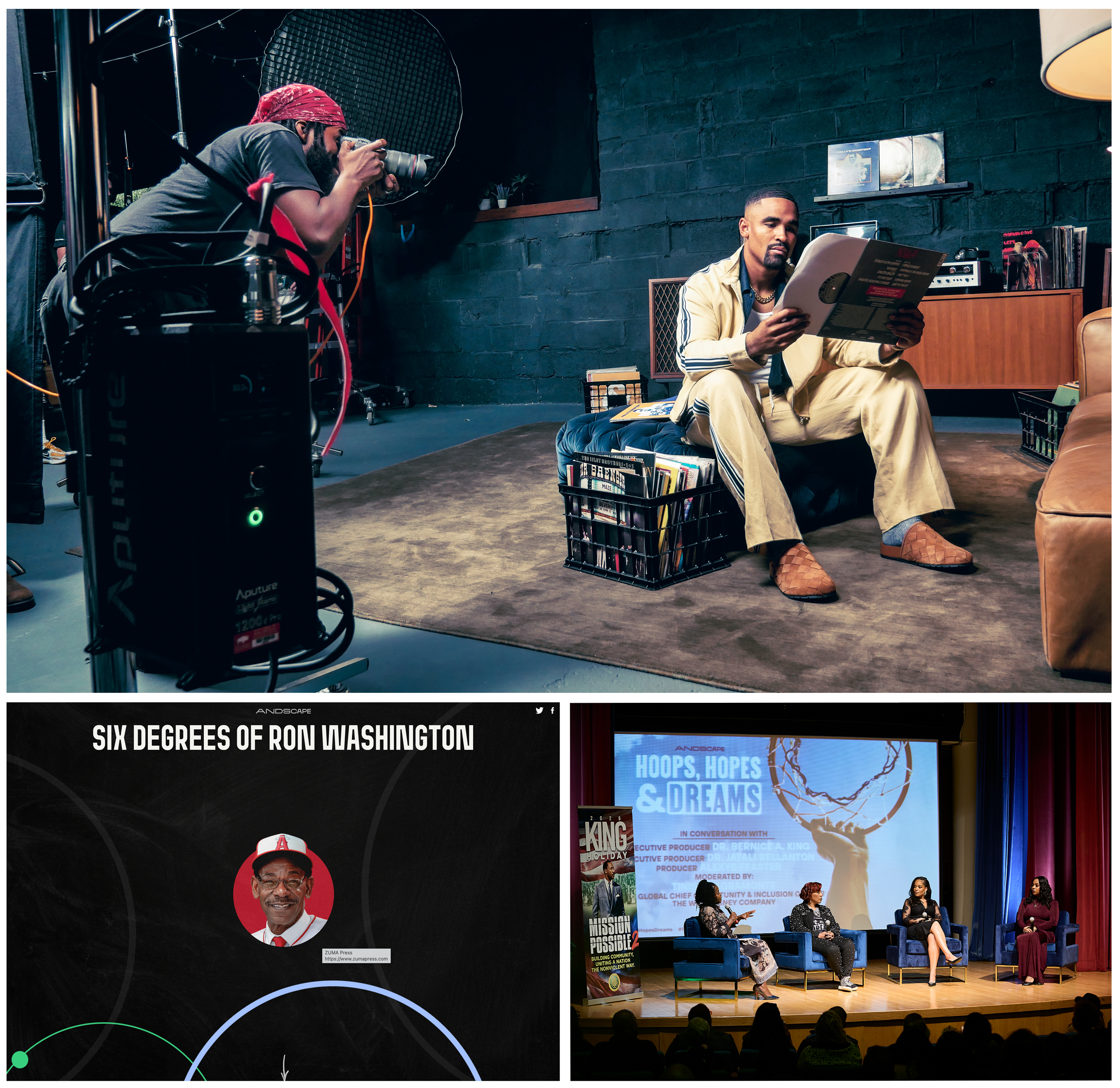
We remained committed to journalism, like Dwayne Bray’s investigation into the theft of organs from the bodies of deceased Alabama prisoners, and Martenzie Johnson’s look at the city left behind in the Mississippi/Brett Favre welfare scandal. And our toolbox got bigger: Clinton Yates assembled an amazing interactive feature about Ron Washington as the Black baseball common denominator; we put the soon-to-be Super Bowl champion Jalen Hurts on a digital cover; Mia Berry explored the lifestyles of women’s college basketball in her “Get Ready With Me” series.
MIA BERRY: The inspiration came from seeing how women basketball players are increasingly shaping culture, especially in the name, image and likeness era. They’re influencing fashion, beauty, music and social media while also performing on the biggest stage in college sports. Younger audiences connect deeply with lifestyle content and personality-driven storytelling. I wanted to merge that format with Andscape’s storytelling — not just asking players about mascara or shoes, but why they carry devotional books, sentimental blankets, or film cameras to document memories. Those details humanize athletes in a way traditional media sometimes misses.
Those early films are now a distant memory, with the studio at 21 titles and counting. I’m proud to be associated with projects like Memphis to the Mountain, The Man in My Basement, Hoops, Hopes & Dreams, and the upcoming They Fight.
KELLEY CARTER: When I think about Andscape’s origin story, back when it was The Undefeated, one of the first things they told us was that we would be platform agnostic. That meant a lot to me because I’d been doing a lot of the same work for years, and I wanted an opportunity to work through a different prism. That’s exactly what’s happening with the studio right now. Our docuseries and multipart projects are incredible extensions of journalism. I don’t think we get there without having some of the bumps and bruises trying to figure out what our voice was as a studio.
JASON AIDOO: The last few years across media have challenged everyone to rethink how we work and where we invest. Andscape is now in the strongest and healthiest position we’ve ever been as a brand. More focused, more aligned, and more intentional in how we operate. We have a team that understands exactly who we are and what we want to say to the world. That clarity matters. It means the work cuts through more, the storytelling has greater impact, and the brand itself continues to grow in credibility and cultural relevance.
JUSTIN TINSLEY: This place has carved its niche and its role into the history of ESPN. You can’t tell the complete story of ESPN without Andscape and the people who have come through here. I’m honored to be part of something that I know has changed a lot of lives.
STEVE REISS: We didn’t shut up and dribble.
As Marc Spears predicted, the sting of the new name wore off. While some of our journalism formats have changed, the mission has not. The Undefeated DNA is still there when we need it — like a few weeks ago, when 10 of our colleagues were laid off amid broader ESPN cuts. Some of our fallen soldiers had created some of our most memorable work.
It was another reminder of what we — our platform, our athletes, our culture, our people — are and always will be:
“You see, we may encounter many defeats, but we must not be defeated. It may even be necessary to encounter the defeat, so that we can know who we are. So that we can see, oh, that happened, and I rose. I did get knocked down flat in front of the whole world, and I rose. I didn’t run away — I rose right where I’d been knocked down. And then that’s how you get to know yourself. That’s it. That’s how you get to know who you are.“
— Maya Angelou