
The People’s Course: What Trump’s plans for East Potomac could cost Washington, D.C.
Administration’s redevelopment plans could alter the core of Hains Point golf course, threatening affordability and access
I grew up in Washington, D.C., and spent countless hours at Hains Point, that familiar stretch of parkland extending south from the Jefferson Memorial into the Potomac River. Like generations of Washingtonians, I knew it as a place for family gatherings, picnics, fishing, cycling and simply escaping the pressures of the city.
What I didn’t know was that there was a golf course there.
That changed when I was in my late 30s and was invited to join the management team at East Potomac Golf Course. I wasn’t even playing golf at the time. What I thought might be a temporary job turned into seven years helping manage Washington’s public courses and the beginning of a career that would take me around the world covering the game.
East Potomac changed my life, but my story is hardly unique. For more than a century, East Potomac has been the setting for thousands of personal stories, friendships and discoveries, many just as meaningful to the people who experienced them.
Now, President Donald Trump’s administration wants to fundamentally transform the place where those stories unfold. The proposed redevelopment would replace East Potomac’s collection of public golf courses with a championship-caliber facility designed by renowned architect Tom Fazio, with the ambition of hosting the U.S. Open and other major competitions.
But the administration’s plans suffered a legal setback Nov. 14, when U.S. District Judge Ana C. Reyes temporarily blocked the planned Nov. 15 closure of East Potomac Park. The order prevents the government from closing the park to the public through Nov. 28, unless the court orders otherwise. It does not, however, require the government to continue golf operations. Trump has said his administration will appeal.
The ruling offers a temporary reprieve but leaves the larger debate unresolved.
The administration promises a world-class public golf course that will remain affordable. But its proposal leaves unanswered questions about future green fees, the project’s ultimate cost, its construction timeline and the fate of other recreational uses of Hains Point.
For many Washingtonians, the concern isn’t whether East Potomac could become a better golf course. It’s whether it will remain their golf course.
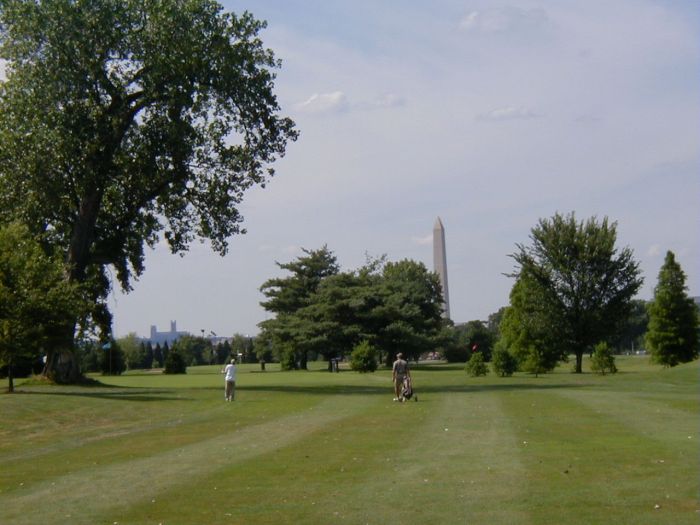
Butch Duval
East Potomac’s history is inseparable from Washington’s commitment to public recreation.
The park was created on land reclaimed from the Potomac River, and the golf course emerged from an early 20th-century movement to make a game largely associated with private clubs accessible to ordinary Americans.
Designed by Walter J. Travis, the original 18-hole course was developed between 1918 and 1923. Over time, East Potomac evolved into a sprawling recreational complex featuring the 18-hole Blue Course, nine-hole White and Red courses, a driving range, a golf school, practice facilities and miniature golf.
Presidents have played Washington’s public courses, as have members of Congress, government employees, laborers and countless residents who could never afford private-club memberships.
The course hosted the 1923 U.S. Amateur Public Links Championship, a tournament created specifically for golfers who played public courses rather than private clubs. Richard Walsh won that championship, and Secretary of State Charles Evans Hughes presented the trophy, praising the democratic character of the game.
East Potomac also played an important role in Washington’s civil rights history. In 1941, three Black golfers — Asa Williams, George Williams and Cecil R. Shamwell — challenged segregation at East Potomac, ultimately playing under police protection. Their actions helped bring about the desegregation of federally owned golf courses in the nation’s capital.
That history gives East Potomac a significance that extends well beyond its fairways. For Black golfers and other historically underrepresented communities, affordable public facilities provide an essential entry point into a sport whose private-club traditions have too often created economic and social barriers.
East Potomac’s shorter courses, practice facilities, junior instruction and community programming have helped introduce generations of beginners to golf. Its accessibility has made it valuable to school-age golfers, families, community groups and organizations working to expand participation in the game.
East Potomac is the kind of place where presidents and cab drivers can play on equal terms, where rank and privilege are left in the parking lot and the game becomes the common ground.
People come because of the place, because of the game and, perhaps most importantly, because of each other. Kenneth Triplett has been coming to Hains Point for most of his life. He learned to swim at the park’s former public swimming pool as a child and has played golf at East Potomac since the early 1990s.
For him, the attraction is about much more than golf.
“It’s convenient. It’s affordable,” he said. “You get to meet a lot of different people down here, and there’s a lot of activities other than golf down here.”
Triplett remembers the park as a place for cyclists, families, cherry-blossom visitors and people simply looking for somewhere to relax. He believes the course could benefit from improvements but sees little reason to replace it with a championship facility.
“This place don’t need to be … a championship golf course,” he said. “It needs to be affordable for the regular taxpayers, not the billionaires.”
Joe St. George understands the appeal of a better golf course. But he also remembers what East Potomac meant when he was a student at Catholic University nearly 20 years ago. Back then, it was one of the few places where he and his friends could afford to play, squeezing in nine holes before class or after work and practicing under the lights.
He recently drove 40 minutes from Fairfax County to play what might be his final round at East Potomac as he remembers it.
“I’m not going to pretend this place is Augusta National, but there’s something special about a municipal golf course,” St. George said.
He welcomes improvements but hopes future generations of college students will enjoy the same opportunities he had.
“This place, so many people learned the game here and became better at the game here,” he said.
“I’m not going to pretend this place is Augusta National, but there’s something special about a municipal golf course.”
-Joe St. George, East Potomac Golf Course patron
For Eugene Kinlow, 64, Hains Point is inseparable from growing up in Southwest Washington. Long before he learned golf at East Potomac, the peninsula was a gathering place for family reunions, cookouts and community celebrations. Later, golf became part of his family’s life. His wife, children and son-in-law learned the game there.
“Everybody has elements of their life embedded in this place and in this space,” Kinlow said.
Karmel Smith, 66, of Woodbridge, Virginia, doesn’t even play golf. She runs around Hains Point and often stops at the clubhouse to relax and enjoy the surroundings.
During a recent visit, she unexpectedly reunited with Kinlow, a former co-worker she hadn’t seen in nearly three decades. Their reunion was a small but telling example of what makes East Potomac special. You never know whom you’ll meet or whom you might meet again.
“You’re interrupting people’s lives,” Smith said of the proposed changes. “We have our things that we do daily, that we enjoy doing.”
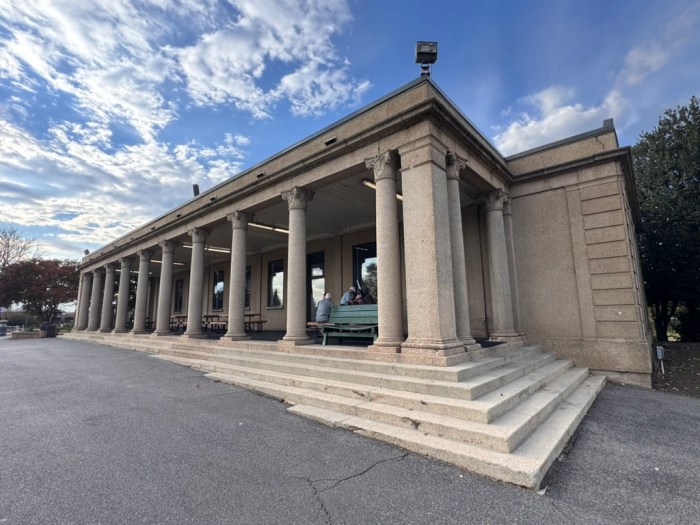
The Trump administration sees an opportunity to create a nationally recognized championship venue in the shadow of Washington’s monuments. Its proposed redevelopment would reshape much of the peninsula, consolidating existing golf facilities into a new 18-hole championship layout, adding practice amenities and extending the course toward the waterfront and southern tip of Hains Point.
Trump has described the goal as creating a world-class public course capable of hosting major championships. The administration has also described the existing property as deteriorated and unsafe.
There is little dispute that East Potomac needs substantial improvements. David Michael Lampton, 80, lives just across the District line in Maryland and visits the driving range three or four times a week, hitting 68 balls for exercise. He acknowledges the need for repairs, citing flooding, deteriorating trees and an encroaching river.
“The golf course does need a lot of work,” he said.
But improvement and transformation are not necessarily the same thing. The proposed layout would significantly change how portions of Hains Point are used by cyclists, walkers, picnickers and other visitors. The administration has proposed replacement recreational areas, but questions remain about their locations, accessibility and whether they would adequately replace what exists today.
Then there is affordability. The current facility offers relatively inexpensive golf, with many rounds costing about $40 to $50 or less. The administration has proposed a tiered pricing system intended to favor local residents but has not announced what golfers will pay.
Lampton worries that championship aspirations will inevitably bring championship prices.
“I think championship golf course in that sense probably means it’s going to cost a lot more,” he said. “So it’ll, in my view, probably hurt diversity.”
For golfers with limited resources, even a modest increase could mean playing less frequently or abandoning the game entirely. And the loss of affordable facilities would be particularly consequential for young golfers and minorities who have historically depended on public courses to gain access to the sport.
Perhaps the greatest obstacle to Trump’s vision is not the golf course itself, but the land beneath it.
Hains Point is surrounded by an aging seawall, sections of which have deteriorated as the reclaimed peninsula settles and rising water levels contribute to flooding. Any lasting championship-caliber redevelopment must address that problem. The administration’s planning submission estimates that replacing about 20,700 feet of seawall will cost $304.5 million and take between 2½ to 3½ years.
That figure is separate from the still-undisclosed cost of the golf redevelopment. The proposal does not establish how the overall project will be financed or provide a comprehensive construction schedule. The seawall work is necessary regardless of what happens to the golf course. But its enormous cost and lengthy timetable raise legitimate questions about whether the proposed transformation can be delivered as quickly as the administration has suggested.
There are also unresolved legal and procedural questions. Preservation advocates and individual golfers have challenged aspects of the administration’s actions in federal court, while the redevelopment proposal awaits review by the National Capital Planning Commission.
Lampton believes the public should have been more meaningfully involved.
“The irritating thing is that there was no consultation and use of due process,” he said.
National Links Trust, the nonprofit organization that assumed management of East Potomac, Langston and Rock Creek golf courses in 2020 under a 50-year federal lease, originally envisioned restoring the historic facilities while maintaining affordable access. But the administration has now directed the organization to relinquish East Potomac operations, ending its stewardship of the facility and raising questions about the future of the nonprofit’s restoration plans.
Asked to comment for this story, National Links Trust co-founder Will Smith replied, “Unfortunately we are not in position to speak on the record about what is happening at East Potomac.”
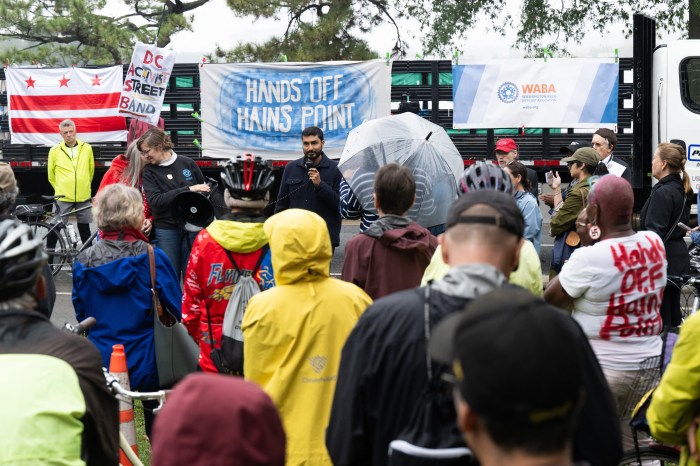
SAUL LOEB / AFP via Getty Images
East Potomac’s future will affect more than golfers. It will affect the families, walkers, cyclists, students, retirees and working Washingtonians who have made Hains Point part of their lives. It will also affect the next generation of minority golfers who need welcoming, affordable places to discover the game.
A beautiful championship course could bring prestige to the capital. But prestige is not the same as public benefit, and public ownership does not automatically guarantee meaningful public access. East Potomac has always been special because of the people who use it, not simply the quality of its fairways.
Kinlow believes the course deserves investment, but not at the expense of its identity.
“It was already a jewel,” he said. “What we needed is just to maintain a certain level of investment.”
When asked what he would say to President Trump if given the chance, Kinlow offered a challenge at the the heart of the debate.
“I would suggest that he find a way to make a project that’s worthy of the history in this place, and to serve the largest number of people at the best price,” Kinlow said.
For a course that has spent more than a century bringing Washingtonians together, that may be the most important measure of success.