
In ‘Open Season’ Draymond Green takes you on his mental health journey
Warriors star talks docuseries of unscripted therapy sessions, LeBron James and Steve Kerr’s offseason decisions, and more

MENLO PARK, Calif. — LeBron James’ rejection of the Golden State Warriors would likely be a major storyline if Draymond Green releases a second season of his virtual reality therapy docuseries, “Open Season.”
It sounds like the Warriors star is still disappointed his sales pitch didn’t convince James to make the “right decision” to join him, Stephen Curry and Golden State over the Philadelphia 76ers.
“I told him all the great things,” Green told Andscape. “How cool would it be for him to join Steph, who’s pretty much carried the NBA for the better part of the last 15 years — Bron a little longer, but they are the guys. And how cool would it be to [challenge] these young guys who are kind of taking over? Their time is up now to Shai Gilgeous-Alexander and all these [young] guys. How cool would it be for the two guys who’ve battled on the biggest stage for so many years in the NBA — who now see these younger guys taking over — just for one time to say, ‘Hey, fellas, we can still do this. Yeah, move over’? How dope would that be?
“Everybody speaks about the basketball side. Most people don’t understand how important it is to have teammates that you rock with at this age. Teammates that are like-minded. Teammates that have similar lives. Teammates that when you go to dinner, you want to go to dinner and sit with. As you get older in this league, that becomes a weird thing. We’ll have that. This will be the greatest show on Earth, by the way. Stephen and LeBron together?
“How much has [James] gotten into golf? There’s no better place to be for golf than San Francisco. I also thought from a business standpoint, there’s a whole business side of business that he hasn’t tapped into [in Silicon Valley]. From a business standpoint, what can that mean? I know for sure this would be the best organization you’ve ever played in. I know that for certain.”
So, ultimately, why didn’t Green’s sales pitch work on his good friend?
“He just couldn’t get over the past, which is, ‘I battled these guys over and over again. What is that now going to look like for me if I come there? What type of beating am I going to take if I come there?’ And ultimately that’s why it didn’t happen. … I also think that’s why it took so long to make the decision, because I know this, [Golden State] was the right decision. He just couldn’t land on it,” Green said.
Green exclusively spoke to Andscape at the Meta Headquarters last week about his new virtual reality docuseries, “Open Season on Draymond Green,” featuring six unscripted filmed therapy sessions with the Warriors star available exclusively on the Meta Quest TV App starting Tuesday.
The show follows the four-time NBA champion as he works with sports psychologist Dr. Carrie Hastings to confront real-life struggles over the 2025-26 season, aiming to break the cultural stigma around mental health while reflecting on his on-court ejections and technical fouls, midseason trade rumors, family joy and challenges and navigating his NBA career.
Along with talking about his new show and therapy, the 2017 NBA Defensive Player of the Year’s conversation with Andscape discussed the return of head coach Steve Kerr, Curry’s future with Golden State, Jimmy Butler’s health, the Warriors now being underdogs, entering his 15th season and much more.
“I’m nervous as hell. Super nervous,” Green said about the docuseries. “Well, No. 1, it’s something that I have struggled with for a long time, the thought of therapy itself. From what I thought it was, then being misinformed on what it was. Two, all of the stereotypes that I’ve learned from childhood. ‘You don’t need it. It’s for the weak.’ And once I started, it was like, ‘Man, this is actually great.’
“How many other kids have been told this isn’t for them and you shouldn’t do this? As I got more comfortable in my own journey, it’s when I then came around to the thought of like, ‘I’m actually OK with someone seeing.’ But I had to get comfortable in the journey first. Initially, I don’t even want you to know I’m doing it. I’m going on my own time. I don’t even really tell my wife what I’m doing it. This is my thing.
“I’ll be totally honest with you. You kind of go through these waves of like, ‘I’m happy as hell for people to see [this]. I’m nervous as f‑‑‑ and I don’t want anybody to see.’ Once I committed to putting it on camera in doing what we’ve done with ‘Open Season,’ I thought to myself, ‘Why not help someone else?’
“This is my journey. Why not help the kid that’s like me that’s been told you shouldn’t do that? I saw how beneficial it was for me. To fall on that mindset, it made it easier to come around, because I could look at it through a different lens. It ain’t necessarily about me. Whatever you see in my journey, it’s going to help someone else. So, if it’s through me then it ultimately helps someone else, I got to be vulnerable. I got to put myself out there. That’s how I came around to it.”
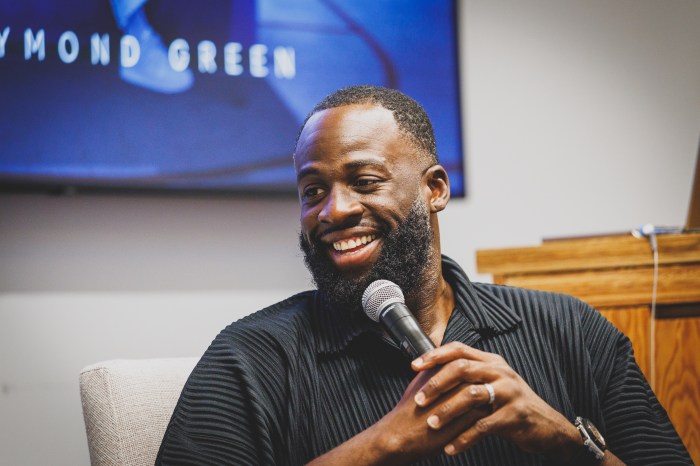
As an African American man, are you speaking to African American males in particular about using a psychiatrist? (Note: In 2024, African American adults were 36% less likely than U.S. adults overall to have received mental health treatment in the past year, according to the U.S. Department of Health & Human Services).
One thousand percent, because that’s who I can relate to. I know that kid growing up in Saginaw [Michigan] being told he has nowhere to turn to, right? Everyone’s opinionated about whatever it is that that you’re going through, and you don’t really have the space to work through. There’s no safe space, and so you just plow through it, right? You just keep pushing, keep pushing, keep pushing.
It’s so unnecessary. There are actually tools out there for you that deal with this, put you in a better space and better equip you to deal with things. In particular for me, but I know this helps everyone as well. The man I can relate to most is that man, because that kid became that man. And he became that man despite everybody saying, “You don’t need this, you don’t need that.”
All of the trauma and everything that … little boy that turned into this man has dealt with is still there. It’s never been dealt with. It resurfaces in more ways than that man knows. In a sense, yes, I know I can help that person. But then, as you go through this journey and you’re talking to more and more people, you realize it’s not just the African American kid. Everybody has their struggles.
It’s the white kid that grows up in the African American neighborhood. What does he deal with, right? It’s the Black kid that grows up in the white neighborhood. What does he deal with? The Mexican [kid] who feels like he don’t fit at all. What does he deal with? The Asian [kid] … What does he deal with? Along that journey you realize that. For me personally, I can speak directly to that kid because I know that kid.
There was an in-game argument with Coach Kerr that you had last season during a timeout where you ultimately left the bench and went to the locker room. Was your response to leave rather than continue the argument a result from your therapy sessions? I feel like a season ago, or two or three years earlier, you wouldn’t have handled it that way.
(Note: Words were exchanged between Green and Kerr on the bench during a Dec. 22, 2025, game against the Orlando Magic. Green then walked back to the locker room and spent more than eight minutes there before returning to the bench in warm-ups for the rest of the game the Warriors came back to win. Kerr would later admit to reporters that the argument was “not my finest hour,” stating he needed to remain calm in the huddle.)
That’s why I was able to get up and leave because, for the first time in a situation like that, I didn’t feel the need to get back. I didn’t feel the need for you to hear my side. I didn’t feel the need to stand there and plow through whatever the situation was. It’s like, nope, it’s actually OK for me to just remove myself and whatever comes of that will come from it.
What I do know is this situation is not going to get better for me. Me staying right here in this moment, it’s not going to allow the moment to calm down, [so] let me just remove myself. I could have never done that before.
I wouldn’t necessarily say I learned that in particular, that I learned to get up and leave in therapy. But throughout my journey, what I’ve learned is how to mellow myself when I need to be mellowed, how to better perform in these situations. It’s a little different than going to play in the game. You’re trying to figure out what is best for you in that situation.
I’m happy. I can see that clearly now, because that was 1,000% what was best in that situation. I just never would have cared before of what’s best. I would have just did what I thought in the moment, which is, “Oh, you’re going at me? All right, I’m going back. Now what?” I think I’m just better suited in general to deal with those situations differently than I would have before.
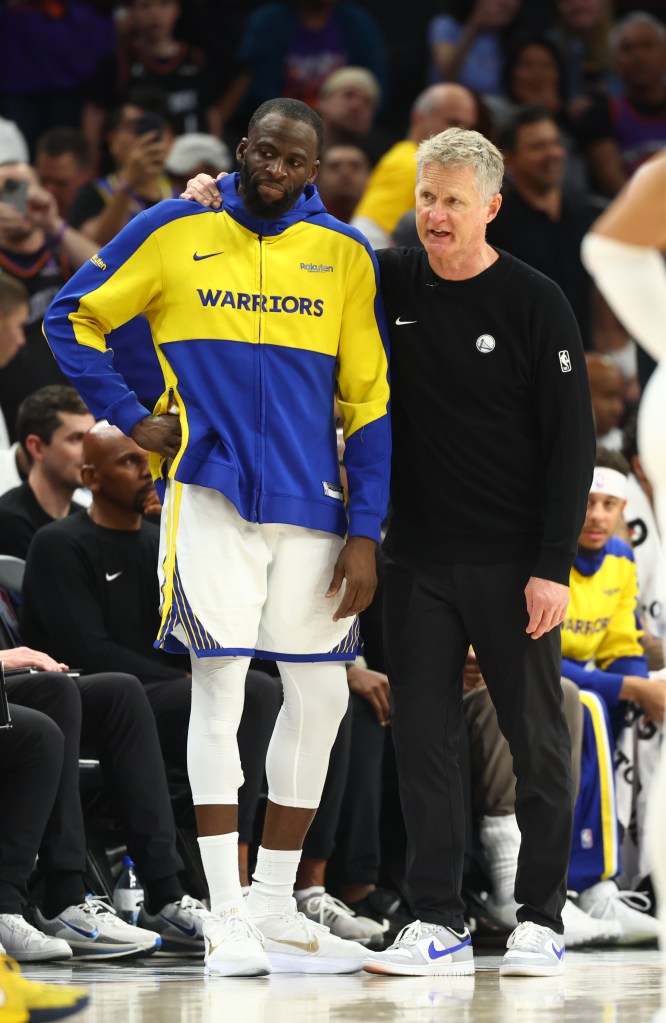
Mark J. Rebilas-Imagn Images
What do you hope people learn in watching your journey?
A lot of people see me in one light, and that’s the light they’ve seen me on a basketball court, which is great. That’s what you know. That’s fine. What people don’t see on the basketball court is the father. What people don’t see on the basketball court is the guy who will give the shirt off his back to anybody.
For whatever reason, you don’t see that. … I don’t really open myself up in that way, no problem. But if you do know the guy that’s on the basketball court, the two don’t mix. Who better to show you than me? What I hope to get out of this is very simple actually: for everyone [to see] that it’s OK that we all have s‑‑‑. And what you see and what you thought, that’s not the case. We struggle just like you struggle. We go through s‑‑‑ just like you go through s‑‑‑, and my s‑‑‑ is not bigger than your s‑‑‑ because it’s my s‑‑‑. Oh, it’s just mine. And yours, it’s yours.
But I want people to know that, and it’s very simple, that it’s OK. It’s OK to talk to someone. It’s OK if I always do this to get help. It’s actually best that you go on your own journey, because this world is becoming more and more of an unsafe place by the day, and where do you find that solace? That’s what I hope to get out of this, that people can find their space, their journey. Your journey won’t be the same as mine, right? By the way, people are going to watch this and still be reluctant to start that journey. But if you start a year from now, no problem.
I fought myself for years, and would talk in front of my teammates for years like, “Yo, I really need to go to therapy, and I know it. I’m gonna do it one day. I ain’t ready.” You got to find it at your own speed, at your own pace. However, I just want you to know, here’s my journey. And I’m cool with putting it in front of you and, by the way, it’s OK for me to walk up to you and be like, “Yo, I was in therapy yesterday.” Let’s destigmatize what this is. It’s actually OK to go share with your friend, because that may be the push that your friend needs.
What do you think about LeBron’s decision to go to Philadelphia?
If you look at, even going to Philly, they weren’t on the radar a month before. But then that’s where you go. Well, that says a lot to me. So, I think that’s why it [Golden State] didn’t work. [James] just couldn’t ultimately get over, “Damn, what’s that gonna look like?” I get it.
What does Steve Kerr coming back to the bench for the Warriors mean to you? And how big a role did you play in him re-signing?
Zero. That was for [Kerr and Warriors management] to work through. However, what it means to me, it’s great. Going into Year 15 in the same place and adjusting to a new coach now, I feel like that’d be a bit weird. Things are done a certain way. You go to bat with each other for so long. I think that would have been weird. So, for him to come back, I’m excited about it. It’s great.
I think he got a renewed sense of how he’s looking at things, which you need sometimes when you’ve been doing something for so long. You can kind of stay in the status quo and keep just doing what you are doing. But ultimately, sometimes you need to get a little uncomfortable to move forward. I think he got a little uncomfortable. I think we all did, which is good. I don’t think that’s a bad thing for anyone.
How proud are you of reaching your 15th NBA season? You went from a guy on the bench in summer league to a four-time All-Star.
It’s crazy, huh? Fifteen years. I’m very proud of that, 15 years in one place. I look around at the guys that aren’t doing it anymore. For myself to still be doing it in Year 15, man, I’m very proud. I always was like, “Look man, if I can get to 15, that would be crazy.” And here we are staring down the barrel at it.
It’s pretty cool. I’m very proud of myself, and also that I can still play at a very good level, a very high level. The one thing I’ve always said, I don’t want to be crawling through Year 15. I feel like I’m about to go through Year 15 strong.
What should we expect from the Warriors?
Well, we’re going to go out and compete. I don’t know when the last time we’ve just been counted out like this. Maybe 2014? We weren’t counted out. We just weren’t counted in. Now, for the first time in 12 years, everybody like, “Oh yeah, they’re absolutely done.” That’s pretty cool for some guys who came from being underdogs. You make us start again. Thanks, appreciate it. Needed it. Looking forward to it. Love you.
Any optimism on Jimmy Butler’s return from knee injury from what you saw at the Warriors’ recent voluntary players camp in San Diego?
Listen, Jimmy works his ass off. Jimmy works as hard as anyone. And if there’s any chance, he’s the guy that can do it. I know he’s working to get back this [season]. I know he’s not looking at this like, “Oh, well, just go ahead and rehab all [season].” He’s working to get back. I do know that. You’re just seeing him starting to get on the court in different ways just in general. It’s good to see.