
For WNBA players of African descent, deciding what name to go by is a choice born of pride, preservation
Athletes consider convenience and comfortability in how they present themselves
In Nigerian culture, Los Angeles Sparks forward Nneka Ogwumike said, a person’s full name acts as an affirmation.
Ogwumike, whose full name is Nnemkadi Chinwe Ogwumike, said Nnemkadi means “mother supreme,” Chinwe means “God gives,” and Ogwumike means “warrior.”
Ogwumike is among multiple WNBA players with a name of African origin. Several of those players, though, have opted to shorten their first names during their pro careers. For some players, the change is a choice of convenience or accessibility. For others, it’s an act of preservation.
Andscape spoke with Ogwumike, fellow WNBA players Okikiola “Kiki” Iriafen, Tèmítọ́pẹ́ “Tèmí” Fágbénlé, Eziyoda “Ezi” Magbegor and free-agent Ndjakalenga Mwenentanda about their relationships with their names and how they’ve navigated presenting themselves over the course of their lives.
These interviews have been edited for length and clarity.
Tèmítọ́pẹ́ “Tèmi” Fágbénlé
Team: Toronto Tempo
Where she grew up: London, United Kingdom (born in Baltimore)
Family country of origin: Nigeria
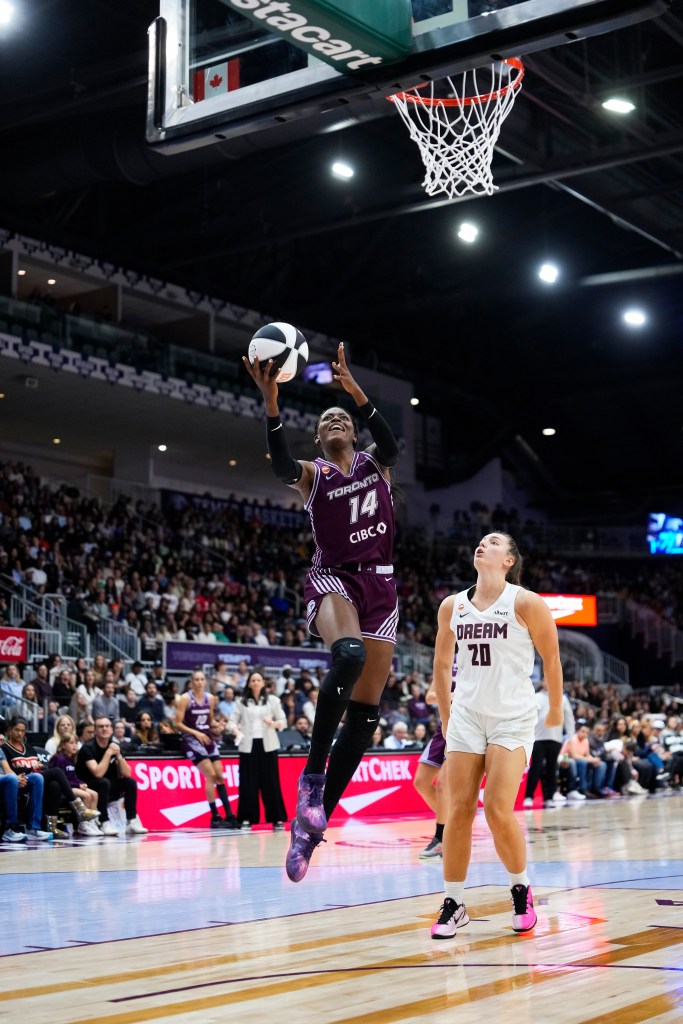
Mark Blinch / NBAE via Getty Images
Tèmítọ́pẹ́ is Nigerian of Yoruba origin. I think from the get-go, especially growing up in England, nobody could pronounce Tèmítọ́pẹ́ properly. In Nigeria, a lot of people just shorten their names anyway, so it’s not out of the norm, but I would say that I kept Tèmi because that’s what people could pronounce easier.
Even when [people] say Tèmi, it’s still not the correct intonation, but it’s easier for them to say and easier for them to not butcher. It’s not Temi, it’s Tèmi. There’s accents on it for a reason. Tèmítọ́pẹ́ is a bit harder, although I do love that name and I love it when anyone calls me that — properly. If you don’t know how to say it, don’t say it.
I’ve considered using my full name for basketball rosters, but I’m not having them butcher my name when they call it out in front of thousands of people in the stadiums. I don’t want to hear it. Nope. … It’s just mainly for my own preservation. It takes something out of me to hear it pronounced incorrectly, to hear time after time.
The world isn’t foreign to difficult names to pronounce, right? Like Russian names, Stanislavski, Schwarzenegger, whatever. Whoever else is out there, they will figure out a way to pronounce it. I think the tone is the hardest part of getting it correct, but I do appreciate people’s attempts to try and pronounce it correctly. I think we’ve got a ways to go, but the effort is still there, especially in America.
I love that I’m able to say that I’m from somewhere. … I know my roots. I know my history, and I’m very thankful to be able to call Nigeria home, as well as go back there if I ever need to. It’s just a pride, not only being there, but also being in the diaspora, knowing how successful Nigerians are across all kinds of facets of life. We’re great, we’re smart, we’re athletic, we’re artistic, creative. We’re pretty amazing, and I’m very proud to be part of that demographic.
Okikiola “Kiki” Iriafen
Team: Washington Mystics
Where she grew up: Los Angeles
Family country of origin: Nigeria
Okikiola means, like, “famous wealth” in the language of Yoruba. My parents were very intentional with naming myself and my siblings things that will come to fruition. So, they’re always like, “We see you as a well-known person that’s going to be very well-off.” I believe it’s more of a male name, but my dad was like, “Regardless of male or female, I want my first kid to be Okikiola.”
Growing up, it’s always like you hate when there’s a sub coming in class because it always gets to your name and you’re like, oh, gosh, it’s me, but I’ve always loved my name. I’ve never been ashamed of it or tried to hide it. Some of my professors in school would call me by my full name and others wouldn’t. So, I’ve always had a healthy relationship with my name, but growing up it was harder for people to say it.
It wasn’t hard for me when that happened. I kind of came up with this little phrasing [to help]. I would tell people my name is like “oh, Kiki, ola.” After I said that, people were like, “I will never forget your name.” So I always tried to make it easy for people to say my name, but still say it correctly.
Honestly, with basketball, it’s just easier for people to say Kiki on the court. So for my teammates to be like, Okikiola, Okikiola — it’s just harder to say. But anything I do officially, like when I got drafted, I made sure the WNBA said Okikiola Iriafen. They didn’t call me Kiki. So, for the most part, I use Okikiola in my everyday life. But I respond to either. Some people actually are like, “I want to call you by your full name,” and I’m fine with that, too.
Eziyoda “Ezi” Magbegor
Team: Seattle Storm
Where she grew up: Melbourne, Australia
Family country of origin: Nigeria
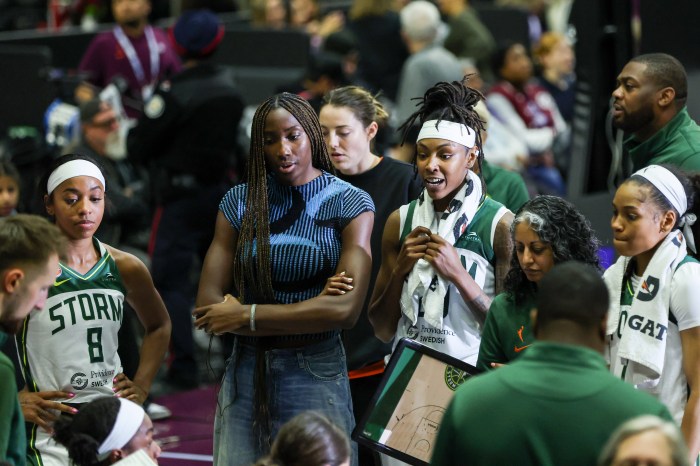
Indrawan Kumala / NurPhoto via Getty Images
I’m Nigerian and Isoko. My parents grew up in villages … in Delta State, so that’s kind of the background of where my name and where my culture, family and name comes from. I was actually named after my grandma, my dad’s mom, and her name was Eziyoda. She recently passed last year. She was 103 years old.
It’s very important to me to carry her name on, and when she passed away that was something that I told my dad. I know how much she meant to him. They were very close. He was the only son — he’s got seven sisters. The meaning of Eziyoda, it kind of translates to determination — like determined to live … win, thrive.
Obviously, people call me Ezi, and I tend to introduce myself as Ezi. I think growing up in Australia, not a lot of people could pronounce my full name, and so it was just concise. My parents call me Ezi as well, but I think it was just something that I went by and just stuck.
[When I was younger], because my name is Eziyoda, people would say, “Yoda” and compare it to Star Wars, which got really annoying and old and I didn’t like it at all. … When you’re young and one of the only Black kids aside from your sibling growing up at school, it’s kind of like you try and laugh it off. I was never one to correct people, in primary school at least.
In high school, I was better. If I didn’t like how they said my name, I would say that. It wasn’t more like a “picked on” thing — they just kind of made it a joke, and it was something that I went along with.
Now, I feel like, especially if I could go back, I would stop them from doing that every time because I think even now, I always make sure I pronounce someone’s name right. That’s their name, no matter how difficult it is to pronounce. I think it’s so important to call someone by the name that their parents gave them out of respect to them and their parents.
Ndjakalenga Mwenentanda
Team: WNBA free agent (previously Golden State Valkyries)
Where she grew up: Sioux Falls, South Dakota
Country of origin: Democratic Republic of Congo (Luba tribe)
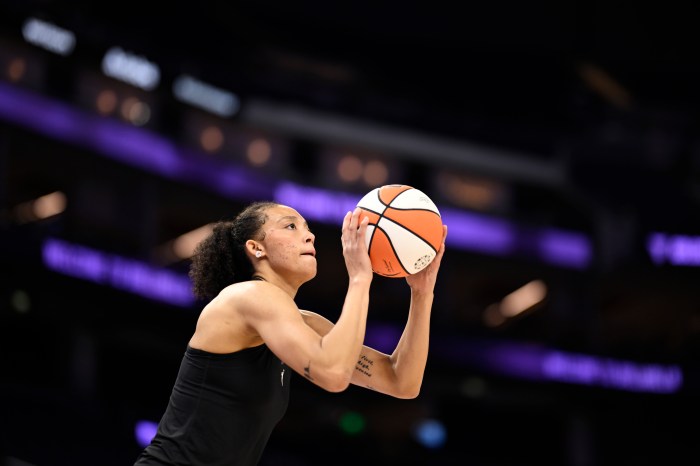
Eakin Howard / Getty Images
My mom is from the Democratic Republic of Congo so, of course, my name holds a lot of meaning. It means “a gift of luck.” Your name — where my mom comes from — your name is like a blessing. When somebody’s calling your name, they’re sort of blessing you in a sense. That was one other explanation she gave for the reason why she wanted me to have my name.
Growing up, my mom was always really strict with no nicknames, wanting people to call me by my full first name. At first, I was like, come on, it’s a lot to say, you know? As I grew older, especially in high school, I realized the value of my name, how much power it gives me and that it does hold a lot of importance.
My mom was the one raising us. I grew up around a lot of Congolese culture — eating cassava soup, okra soup and listening to music that my mom would listen to. She also used to talk to us in Swahili, but because I grew up in the Midwest, it never stuck with me. It was a little hard growing up in the Midwest with a name that was unfamiliar to people. Even though you want people to respect your name — and in today’s day and age a lot of people are very respectful of people’s names — back then kids didn’t know any better. They’re going to say what they want to say.
Having to deal with some kids not really respecting the fact that my name is Ndjakalenga, not Jackie or such, it wasn’t like I was bullied or anything, but sometimes there were just some people who would either just not call me anything or they would shorten my name.
Being proud of my name is important to me because I want people to be able to respect who they are and be able to have that self-confidence and not feel like they have to minimize themselves for the comfortability of others. I know, especially in the job realm, you may have some people who may pass up on you because of your name, but those opportunities aren’t meant to be, if they’re passing up on such an amazing person. I could shorten up my name, but there’s no point because I’ve stuck with it so long and my mom has instilled that belief that my name is a blessing for myself.
Nnemkadi “Nneka” Chinwe Ogwumike
Team: Los Angeles Sparks
Where she grew up: Tomball, Texas
Family country of origin: Nigeria (Igbo)
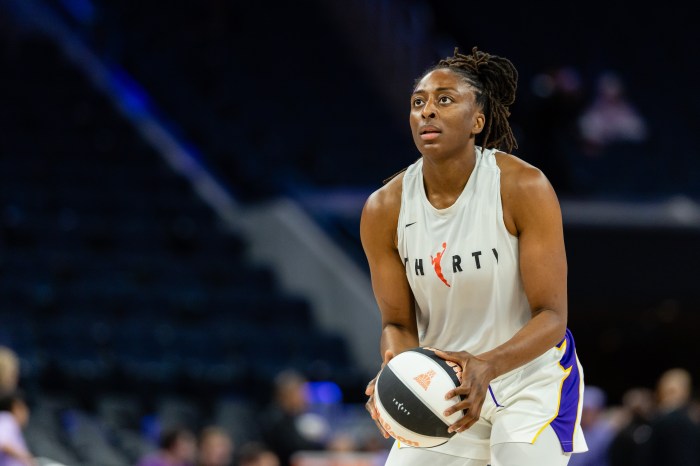
Matthew Huang / Icon Sportswire via Getty Images
My first name was certainly in honor of my grandma on my mom’s side, who died a year before I was born. I went by Nneka very early on. I can’t even really remember if anyone’s ever called me Nnemkadi besides my family. It was just an easier way for people to pronounce my name, even though it’s not actually my name at all — the letters are shared in my full name, and Nneka is a very common name in Nigeria.
I’ve always loved my name. I think what I loved about my name was that I’m not sure if there’s anyone else who has my name. My parents gave me something that’s incredibly unique. I think I was trying to make certain people feel comfortable when they read my full name. I would tell them, “Oh, you can just call me Nneka.” But as I got older, I realized that my job isn’t to make others feel comfortable. There’s quite a few other names that aren’t of African descent that people don’t have an issue pronouncing. So, I leaned less into the comfortability, I guess, like public comfortability with my name.
What I realized was that not leaning into or at least growing into owning my name and where I’m from and identifying with what makes me who I am — it was closing me and a lot of others off to a group of people who may not know that they could be interested in some of the things that I’m involved with. As everyone likes to say, and it’s true: If you can’t see her, you can’t be her. There’s probably a lot of young girls who are either named Nneka or relate to the name Nneka that perhaps now — because I’ve owned my name — feel more confident in being able to believe that they can achieve certain things.
When Ogwumike attended Stanford from 2008-12, she was listed on the Cardinal team page as “Nnemkadi.” As a pro, she is listed as “Nneka.”
I don’t quite remember it necessarily being a conscious decision [to change the presentation of her name]. But when asked, I think in order to, kind of, I guess just avoid explanation, I would say, “Oh, you can just call me by Nneka.” I do feel, though, that we were groomed to be in a society where if you are different, you are to assimilate. I would be remiss to say that I didn’t have that as an underlying reason.
In Nigerian culture, our names are sentences. Our names are affirmations and declarations. That’s not something that should be lost just because someone wants to say it as easily as they may feel they need to.
I think that this is a very timely conversation as we’re looking at what’s happening with the Knicks and OG [Anunoby], you know? People are probably being exposed to aspects of culture they never otherwise thought they would be just simply by learning how to pronounce somebody’s name correctly.