
Stephen Curry 1-on-1: On legacy, LeBron James and being a one-franchise star
Golden State Warriors star discusses James’ free agency, relationship with Steve Kerr and Draymond Green and more

HONOLULU — Golden State Warriors guard Stephen Curry has spoken to former New England Patriots quarterback Tom Brady and former Dallas Mavericks forward Dirk Nowitzki about their legacies with their respective franchises. Curry, a four-time NBA champion, also once talked to Kobe Bryant about life after the league.
Like Nowitzki and Bryant, Curry will continue to play for only one franchise as he enters his 18th NBA season with the Golden State Warriors. After inking a two-year, $116 million contract extension with the Warriors this offseason, the 38-year-old acknowledged he can get emotional when he reflects on his legacy and longevity in the San Francisco Bay Area.
“I’m constantly going through those emotions,” Curry told Andscape from the Ritz-Carlton O’ahu during Golden State’s training camp. “Just gratitude of the position that I’m in. Me and [my wife] Ayesha had a nice moment to ourselves the day that it became official to reminisce on how far we’ve come. I still feel like I can play at a high level. But I think [the emotions were because of] what that extension signified. God willing, I can see it through.
“To represent the organization for that long, to play in front of one fanbase, and grow up through all the ups and downs, triumphs, the losses, the kind of personal development journey I’ve been on, and all that … there’s definitely a sense of pride being able to see it through. And now I can just play basketball and enjoy it. And that’s what I’m excited about.”
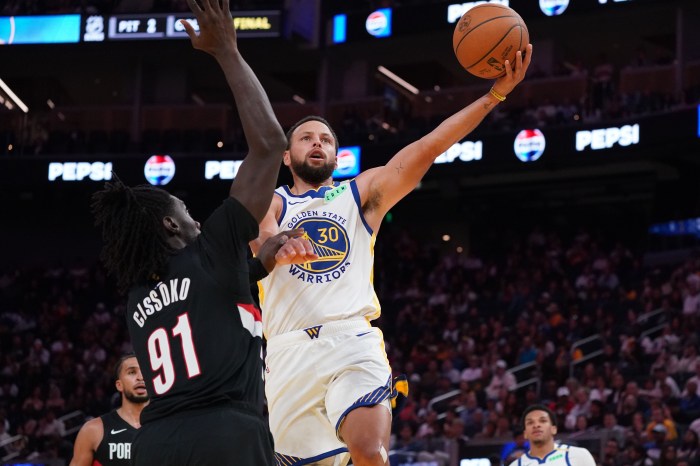
Curry was drafted by Golden State with the eighth pick in the 2009 NBA draft and has played in 1,069 regular-season games while scoring 26,528 points with the franchise. His contract extension could keep him in a Warriors uniform through the 2028-29 season. If he exercises a player option on the final season, the NBA’s all-time leader in 3-pointers made will become the first player in league history to surpass $600 million in career earnings.
Curry is still playing at a high level, averaging 26.6 points, 4.7 assists, and 3.6 rebounds per game during the 2025-26 NBA season, though he played just 43 games due to injury. The 6-foot-2, 185-pounder also tweaked his right ankle during the team’s open practice in San Francisco on Sunday and is listed as probable for Wednesday’s season opener against the host Los Angeles Lakers.
Curry will be playing in his 15th season alongside Draymond Green and his 13th season led by coach Steve Kerr, who considered leaving after last season.
The following is a Q&A conversation with Curry with Andscape in which he reflects on his longevity and legacy with the Warriors, his relationship with Kerr and Green, the failed recruitment of LeBron James in free agency, his legacy on and off the court in the Bay Area, the key to staying healthy and more.
David Gonzales-Imagn Images
Why have you felt so comfortable here that you haven’t wanted to explore?
I was talking to [former Warriors general manager] Bob Myers about it recently. And I’ve had a very blessed experience in the league, because every step of the way there was either a clear vision of who we were supposed to be as a team or a challenge that I could get behind and embrace. And that’s been an amazing journey at every inflection point. The energy was more, “What do we need to do to change us to get to or stay at that level or get to the next level?” versus anything outside of our organization piquing my interest.
And so, again, up until this latest one, the conversation was a little louder than usual. I got to embrace the different iterations of this team and there was a clear answer of this is what we need to do. And we’ve had great additions along the way that have embraced what we do and how we do it that were a huge part of our success, from KD [Kevin Durant], obviously, in those years to, you know, the down period we had right around COVID to that ’22 team, and then recently trying to reimagine what we do.
It hasn’t worked out the way we wanted to, but the journey has been fun. So now we’re in a position where I got to choose, stick it out, fight for the ability to compete at a high level of doing it here. And that’s what I chose.
Have you ever talked to Kobe, Dirk and Tim [Duncan] about legacy with one team, or somebody from another sport or another genre? Any of those conversations had an impact on you and maybe played some influence in how you feel about where you currently are?
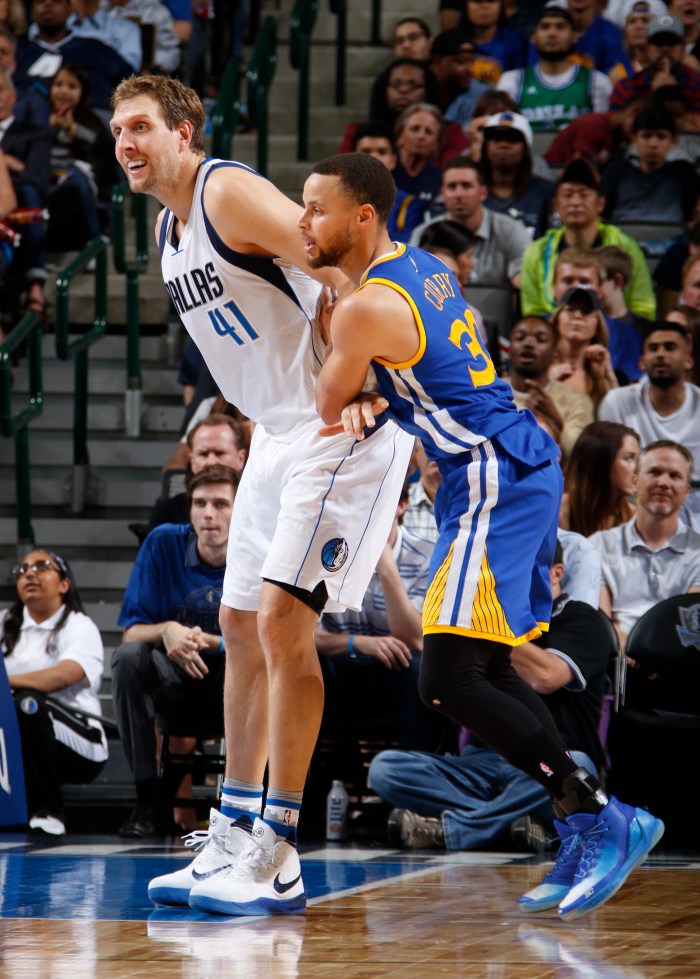
Not specifically about that short list of guys who played for one team. But I talked to Kobe years back, like the year after he retired. And it was more about the transition into exerting that creative energy into something else. Talked to Dirk, who still lives in Dallas, represents the organization, gets to come back. That connection as a player and now like the ambassador, whatever role he’s playing in the organization, how much he’s fulfilled by that. I’ve talked to Tom Brady just about longevity and playing. But I think the biggest thing is that there’s a mutual respect of all of us of knowing what it takes to carry the torch at that stage and that level for as long as we’ve been able to do it. And I feel that every single day.
That’s why the work gets harder the deeper you get into career. But that’s why you still do it, because you know at a certain point it’s going to be over and you’re going to miss it so much. And to be able to do it again in one uniform and hopefully in front of one fanbase, that matters even more, because there will be that connection forever. So, everything else, you really can’t control in this this league, sports in general.
Danny Bollinger/NBAE via Getty Images
Steve Kerr decided to come back. How did you feel about him coming back? And what role did you play in that?
It was a confusing summer at the beginning of the summer. And what I mean by that is at the time we lost [in last season’s finale] in Phoenix, if you asked me right when we were walking out the arena — I think Draymond mentioned it, too — we thought it [Kerr’s coaching tenure] was over. We were mad that we lost the game and that was a foregone conclusion. When he pulled us to the side, like 13 years of memories just rushed back. It was like, “This is it?” And then the conversations that happened over the next month or so were very enlightening because we all knew we still wanted it. We still would love to embrace the challenge.
But for Steve, I think it just had to make sense for where he was in his life, his family, the energy he had to do the job. I think that’s what we were concerned about the most. And once he kind of gave that vote of confidence, then it was like, “All right, what do we need to do?” We keep using this word “reimagine” with who we are and how we do things. From there, it’s been a great summer of trust. Obviously, that you know any idea is open, and we’re able to kind of bounce stuff off each other.
We still understand how hard it is to win in this league and especially coming off the year we had last [season]. There’s challenges. Embrace them, work through them, hopefully get the young guys into it. I think Steve has been the definition of consistency when it comes to that leadership position of making sure we’re asking the right questions of ourselves to bring the best out of us. That’s all you can really ask for. However it ends up, I think we’re happy he’s back.
Noah Graham/NBAE via Getty Images
Draymond Green, you guys appear to be joined at the hip forever. You did a little bit of wink-wink with your contract perhaps to ensure that he stays. Is that accurate? And what does he mean to you?
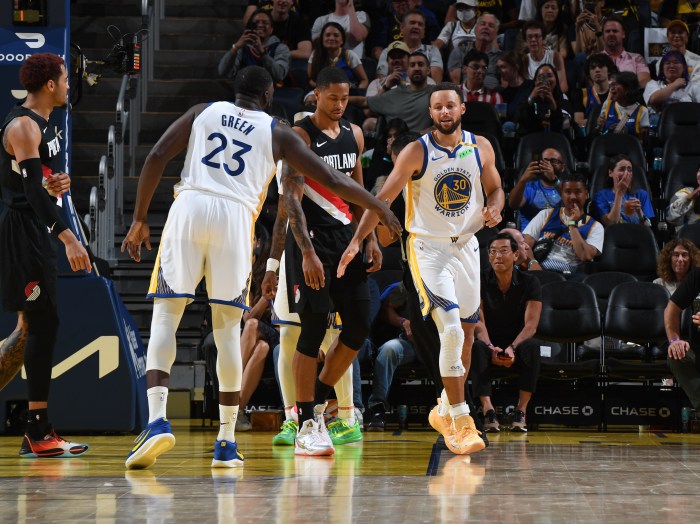
I’m going to spend some time eventually talking eloquently about what he means to this organization. I can say this and I mean it: None of our championships happen without him. I’m not who I am without him. Steve’s not the coach that he is. Klay [Thompson] is not the champion that he is without Draymond. And we all have that to say about each other. The idea of how this ends — we want to give ourselves options and flexibility to be able to do what’s necessary with the information that we find out about ourselves throughout each year.
Of course, I would love to finish my career with Steve on the bench and Draymond on the court. I think every decision is kind of with that in mind. We love to hoop and we love to embrace what’s happening. And again, who knows how it ends up? But that’s something that is important for me to show a little action, I guess, to make sure we have options.
Why isn’t LeBron in Hawaii for Warriors training camp? Why couldn’t you and Draymond get that done?
You miss 100 percent of the shots you don’t take. We took some shots at it. But I guess a guy like that, when you know you have the ability to go anywhere you want, you find a place that’s right for you. It just wasn’t here.
Did you ever feel like he was coming?
There were days I did. Days I didn’t. I think I knew [that] if there was a deeper feeling or he would have shown that [Golden State] was high up on his list, we would have felt that. Until you hear the final decision, you got to think we got the best shot, because we didn’t know when he was going to say it. But it’s probably more for him to answer than us.
What can you guys do this season? What are your expectations and hopes?
We’re going through training camp, and we haven’t talked about record. We haven’t talked about seeding in the West. We haven’t talked about any of that. And it’s kind of refreshing. We feel like we’re a playoff team. The biggest caveat for us is health. We have to have availability. We were 10th seed last year with me missing [39] games. Al [Horford] missed a lot of time. And we still gave ourselves a chance to sneak in.
So, if we can stay healthy, tweak a lot of our strategy on both ends of the ball to just play more sound basketball, more efficient basketball. Allow some of our young guys to take those steps. Of course, we feel like we should be in the playoffs. But we’re not talking about that because it gets in the way of just playing good, disciplined basketball that we know is going to help us win the game.
How do you stay healthy?
For me, it’s just a mindfulness. I’ve been doing things differently over the summer to manage what I got going on. The idea of coming into [training] camp fresh and able to ramp up from here, I think I’ve checked that box. I feel really good. The things that I can control, I think I’m ahead of the game on. There are injuries happen in every sport. You see what happened to Moses [Moody] and Jimmy [Butler] last [season]. Health is a prerequisite to winning. I don’t care who it is in the league.
You’re not winning championship, let alone making a deep run, without your guys. And so, we’re all prepared in [training] camp and got to keep doing that day after day. Have some fortune on our side. But for me personally, I feel like we’re in a great spot and able to kind of build as we go.
Do you think so much time has passed that people forgotten before the championships how hard it was for you in the beginning with your ankle injuries and the losses?
The real ones probably know. That’s kind of why it’s been fun to tell some of the stories through some of the documentaries and stuff, because it’s such a long time that it’s back of mind for me. In 2009 when I was drafted, winning 20-something games to the two ankle surgeries and the [head coach] Mark Jackson years and Steve Kerr [being hired] and obviously going from there.
So many things have happened and I could sit and talk about it for days. And I probably will when it’s all said but, between me, Draymond and Steve, we’ve seen a lot together over the last 15 years and 13 years, respectively. But going into my 18th year, like I don’t forget those days to appreciate what’s happening.
Well, was there even a time in those early years that you wanted out?
Nah. They almost pushed me out [in a trade to the Milwaukee Bucks]. And that’s a blessing in disguise of things that didn’t happen that kind of allowed me to have this kind of realized dream as a Warrior. Yeah, outside of that, that was as dicey as it probably ever got up until now.
Noah Graham/Getty Images for Eat. Learn. Play
What does the San Francisco Bay Area mean to you and your family?
I get emotional sometimes. Just thinking, I get to sit here 18 years in. I’m almost at a point where I’ve lived longer in the Bay than I’ve lived in Charlotte, which is obviously my hometown. And the idea of growing up in front of a fanbase, growing up as an adult, as a basketball player. Me and Ayesha figuring out who we were as a couple, trying to start a family in the Bay, finding our community, the East Bay.
We’re raising Bay kids for sure. And it’s kind of crazy to think that when I first got drafted, I knew about Oakland. I knew where it was. But I knew nothing about the spirit of and the pride of the Bay. And the first time I came out, walked, got toured around Jack London [Square] and Lake Merritt. And you can just feel the purity, the energy, the pride of being from “The Town” [Oakland], “The City” [San Francisco] or whatever part you’re from.
There’s such a connection and a thrill out of history and Civil Rights to expression of artistry, creativity, talent in all different industries. And so, that all kind of came into, even when we were at our worst, from the Warriors’ [results] perspective — playing at Oracle [Arena in Oakland], it was an incredible arena. You felt so lucky to be saying, “Of course we want to win.” But even when we are not, they show up to support us, and they’re loud, and they’re passionate and they care. And so that built up to [winning the NBA championship in] 2015 and then now, obviously beyond, has been monumental to my experience as a grad. You can win in a lot of different places, but this is special.
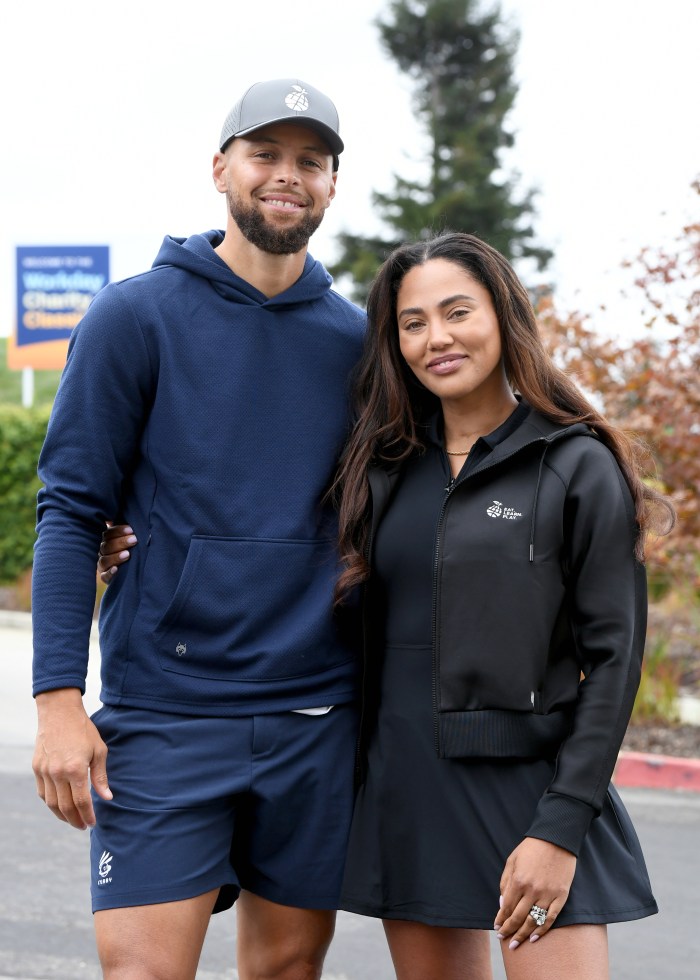
Your charity organization with your wife, “Eat. Learn. Play.,” is seven years in now. Now there are generations of kids who are in Oakland who have been positively influenced by it. What does that organization like mean to you? And there are going to be kids for years now that are going to say that thank you to the Curry family for your help.
It’s rewarding to know, again everything I mentioned just about playing in front of the community that supported us, that we found a way to create a lasting legacy and impact where it’s needed most. It’s that saying of, “If the greatest thing you do is they know how many points you scored, they were at a game or watching on TV,” we did something special. That that matters. There is inspiration there. And there is energy that’s contagious.
But then we can have these kind of examples of a girl [thanking] Ayesha or the energy we feel at a playground, unveiling where we’re transforming play spaces across Oakland school districts. Hopefully, the cohort of kids that have been impacted from a literacy perspective that are going to be appreciative of the opportunity to excel and achieve their full potential because they were able to read.
Families feeling, hopefully, a little bit of stress relief on resources that are available to their kids. All that stuff is going to matter way beyond anything I did in a jersey. So that is me and Ayesha, our entire Eat. Learn. Play. team. That’s what we pride ourselves in, in a lot of ways. It’s why the work matters so much.
The Warriors franchise when you got drafted was worth $450 million. It’s now worth, they say, $11 billion. When you think about that, how much pride do you have in building that? It’s not worth that without what you’ve done.
I understand that. It is an amazing symptom of just worrying about winning and building a standard of a culture and organization that prides itself in life. Good things kept coming out of that. And that’s collectively — upstairs in the front office, our coaching staff, our team, all the different teammates that I play with. We’ve been able to establish that for a very, very long time, as well as playing in an amazing part of the world that has embraced us as the Bay Area’s basketball team for six, seven decades now.
So, it’s kind of crazy just to think that that is kind of the result of it all. But nobody ever is — probably only [Warriors principal owner] Joe [Lacob] is thinking like, “I’ll buy it for this and it’s going to turn into that.” But for us to win and then that be the byproduct … I don’t ever talk about [the franchise net worth] because I can’t participate in it. But it’s also the idea of, yeah, it’s a result of great things, great people committed to winning. And I’m sure that’ll be a part of our collective story when it’s all said and done.
I only met [former Warriors owner] Chris Cohan one time at during a team picture of my rookie year. And then I didn’t know really about valuations or anything. … And I heard that we could get sold for $450 million. I was like, “Oh, that’s a number. Somebody wants to buy for that?” And then there was a bidding war between Joe and Larry Ellison from Oracle. So, everything happened for a reason. It’s kind of great to see the whole transformation.