
30 years later, ‘ATLiens’ remains OutKast’s defining statement
On their second genre-flipping album, Big Boi and Andre took on the hip-hop establishment, defiantly announcing to the world that ‘the South got something to say’
Dee Dee Hibbler recalls the exact moment she knew OutKast was going to change the course of hip-hop. It was summer 1995, in the basement of the southwest Atlanta mansion belonging to Rico Wade, the gregarious leader of the Grammy-nominated production trio Organized Noize.
Also in the room were two of Wade’s young protegés: the swaggering Antwan “Big Boi” Patton and introspective Andre “Dre” Benjamin, who had recently gone platinum with their funky 1994 debut Southernplayalisticadillacmuzik.
“Dre called me to the side and asked me to hear some of the new music they were working on,” remembered Hibbler, who managed Organized Noize, would become OutKast’s de facto manager, and whose buttery voice as “Peaches” had opened the duo’s debut album.
They were in the early stages of putting together tracks for their ambitious 1996 follow-up ATLiens. OutKast’s videos were getting played on Yo! MTV Raps and BET’s Rap City. Suddenly, Houston’s Rap-A-Lot Records and its franchise star Scarface, the godfather of Southern hip-hop, and Miami bass king Luther “Uncle Luke” Campbell had company.
“Dre and Big Boi were not trying to make ‘Southernplayalistic Part 2.’ They elevated soul food to fine dining.”
But the group’s future felt far from fated. Today, Southernplayalisticadillacmuzik is celebrated as a hip-hop milestone. Back then, some industry gatekeepers dismissed the Atlanta “country boys” as a fluke.
“A lot of people got the message of our first album mixed up,” Big Boi told the Los Angeles Times in a December 1996 interview. “They just heard ‘Player’s Ball’ and thought it was all about the pimps, the cars and all that mess.”
OutKast aimed to avoid ATLiens being similarly misinterpreted.
“I want you to tell me what you think,” an anxious Andre, still a few years away from embracing his eccentric André 3000 persona, told Hibbler.
One instrumental floored Hibbler. It sounded like the 1970s progressive jazz fusion band Weather Report and throwback Miami bass legend DJ Magic Mike had a session in the Dungeon.
Three weeks later, Hibbler got a call from OutKast to come to Doppler Studios. They surprised her with the finished song “Wheelz of Steel,” one of several new tracks produced by Earthtone III, the ragtag production crew of Andre, Big Boi and frequent collaborator Mr. DJ.
“I was in tears, because it came out so beautifully, from the lyrics and the production to Mr. DJ’s scratches riding it out,” Hibbler recalled of the ATLiens deep cut. “Dre and Big really started developing as producers and defining who they were as artists. I saw them both go through a metamorphosis during the early stages of ATLiens. They were telling the hip-hop world, ‘You will respect the South.'”
It was the frigid bicoastal reception OutKast received Aug. 3, 1995, at the second annual Source Awards that strapped a battery on their backs during the making of ATLiens.
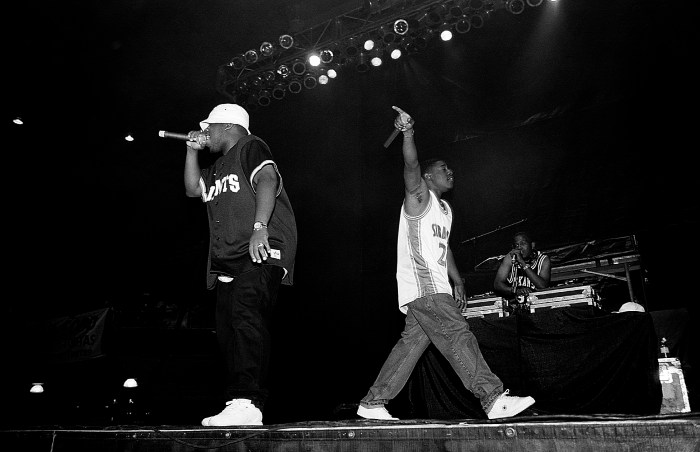
By now, that infamous evening at Paramount Theater inside New York’s Madison Square Garden has become hip-hop folklore. OutKast literally found themselves in the crossfire of a hostile East-West conflict between factions in the Bad Boy and Death Row Records camps. When Dre and Big Boi accepted their award for New Group of the Year, they were met with a smattering of boos.
“ATLiens was the punch that broke through the defenses, through the boos. After that they were undeniable.”
“I remember feeling embarrassed,” said television screenwriter and producer Selwyn Seyfu Hinds, who at the time was editor-in-chief of The Source. “You got the sense that the predominantly New York crowd was saying, ‘Yo, this is our house. Nobody can come here and rock the boat.’ Some people refused to see Big Boi’s and Dre’s genius.”
Famously, a fiery Dre would have the last word.
“But it’s like this,” he concluded the brief acceptance speech, “the South got something to say!”
“ATLiens was the punch that broke through the defenses, through the boos,” Hinds said. “After that, they were undeniable.”
Raymond Boyd/Getty Images
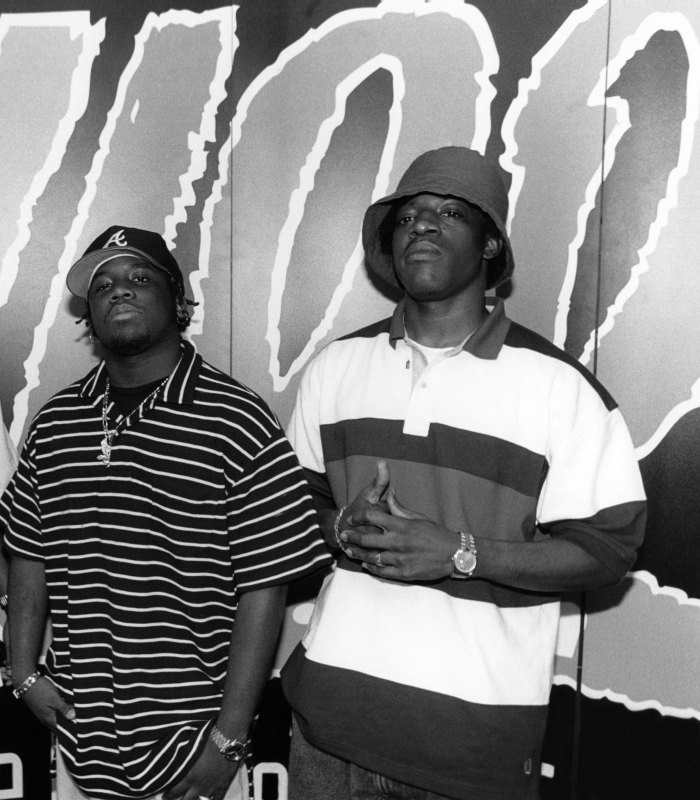
On the 30th anniversary of its release, ATLiens remains OutKast’s defining statement. It was the album that transformed Big Boi and Andre from regional stars into artists who could no longer be dismissed by the hip-hop establishment.
“My 17-year-old ears were not ready for ATLiens,” admitted Phonte Coleman, former member of the seminal Durham, North Carolina, hip-hop group Little Brother.
“It’s an at times dark, somber record,” Phonte added. “‘Mainstream’ is a classic. And ‘13th Floor/Growing Old’ is an all-time top-five OutKast song. But back then I didn’t realize how much of an impact ATLiens would have on me. Dre and Big Boi were not trying to make ‘Southernplayalistic Part 2.’ They elevated soul food to fine dining.”
ATLiens’ defining track, however, is “Elevators (You & Me).” Nothing on the radio in summer 1996 sounded like the Earthtone III-produced curve pitch. The track featured a sparse, hypnotic beat, rumbling reggae dub bassline, a quirky chorus and lyrics about the alienating trappings of fame.
Big Boi detailed his past struggles growing up in the ‘hood to gain a better perspective on stardom: “Back in the day, when I was younger, hunger, looking to fill me belly with that Rallys, bulls‑‑‑/Pull s‑‑‑ off like it was supposed to be pulled/Full as a tick, I was stoned like them white boys. …”
Andre offered an all-that-glitters-is-not-gold reality check:
“True, I’ve got more fans than the average man but not enough loot to last me to the end of the week/I live by the beat like you live check-to-check/If it don’t move your feet, then, I don’t eat, so we like neck-to-neck. …”
OutKast’s LaFace label boss L.A. Reid, however, did not want to release “Elevators” as the album’s first single. He thought it was too slow, too spaced out, too … esoteric. Big Boi and Dre firmly stood their ground.
“Elevators” went gold, peaking at No. 12 on the Billboard Hot 100. Its extraterrestrial music video featured a newly sober Andre wearing a purple turban, reflecting a pivotal artistic period when he quit smoking and drinking.
Even the album packaging for ATLiens was fantastical. Its liner notes looked like a ’70s P-Funk-inspired comic book, illustrated by DC and Marvel veteran Frank Gomez, set in the galactic city of Atlantis, where our heroes battle the evil force Nosamulli to save “positive music.”
Raymond Boyd/Getty Images
Before the emergence of OutKast, Atlanta was known for its thriving R&B hit-making scene. L.A. and Babyface’s LaFace Records, Jermaine Dupri’s So So Def and Dallas Austin’s Rowdy Records dominated the charts. But when it came to homegrown hip-hop talent, A-Town was defined more by booty-shaking bass music and the kiddie rap act Kriss Kross than serious bars.
That changed once OutKast and the Dungeon Family hit the scene, proving Atlanta could be a serious player in the rap game amid the tug-of-war between the East and West coasts.
Big Boi and Dre had been hardcore hip-hop heads ever since their days as hungry teenagers freestyling for 20 minutes straight over the instrumental of A Tribe Called Quest’s “Scenario” during an audition at Wade’s makeshift studio, christened the Dungeon, in the basement of his mother’s house. But the two MCs were also proud of local ’80s rap heroes such as Raheem the Dream and Kilo Ali.
OutKast’s ambitious sophomore statement set the stage for Atlanta’s hip-hop takeover over the next decade and beyond.
Curtis Daniel, co-founder and owner of Midtown Atlanta’s Patchwerk Recording Studios, which has served as a recording hub for the 21st century’s biggest Southern rap titans, put it succinctly: “There is no Patchwerk without ATLiens.”
Of course, without Patchwerk, ATLiens might not have become what it is, either.
Big Boi and Andre had a minuscule budget to record their sophomore album. They turned to Patchwerk, a fledgling studio Daniel and Atlanta Falcons offensive tackle Bob Whitfield ran out of a converted home.
Daniel had reached out to Hibbler to inquire whether OutKast would be interested in recording ATLiens at Patchwerk for his team’s first official project. With most of the studios in town booked, the duo took a chance on the new spot.
Things got off to a rocky start. Some of the early ATLiens vocals were accidentally erased.
“We were really learning on the job,” Daniel recalled. “OutKast, Dee Dee and Organized Noize held our hand.”
With the extended Dungeon Family in the house, the ATLiens sessions often felt like a family reunion. Organized Noize conducted 12-hour marathons with the Akai MPC3000 sampler and drum machine, accompanied by live percussion, guitar, bass, organ and piano.
Because Patchwerk recorded on tape, there was no punching in. You messed up? Start the whole song over again. Fortunately, that was no problem for an in-the-zone OutKast.
“I came into this world high as a bird/From secondhand cocaine powder, I know it sounds absurd,” Andre confided on “Babylon.” Big Boi mourned a senseless world where “Taking that life is like taking a s‑‑‑/Hit or miss, n‑‑‑‑s are playing God” on the ethereal “E.T. [Extraterrestrial].” This was a long way from “Player’s Ball.”
“ATLiens was a show-and-prove statement that OutKast is here, that the Dungeon Family is here.”
“People were saying Dre and Big Boi looked and sounded like aliens,” Daniel said. “They were just different. I knew the music they were recording would move people in Atlanta and throughout the South, because it was dope. But I didn’t know if ATLiens would move people nationally.”
That question would be answered over the next several years, as OutKast evolved from Southern upstarts into one of hip-hop’s most acclaimed acts.
Raekwon of the Wu-Tang Clan and Slick Rick dropped verses on 1998’s Aquemini. Cypress Hill’s B-Real appeared on Stankonia (2000). And Jay-Z joined the duo on the genre-blurring Speakerboxxx/The Love Below (2003), the first rap album to win Grammy Album of the Year.
Raymond Boyd/Getty Images
Acclaimed Atlanta rapper JID, who was two months shy of his seventh birthday when ATLiens was released, praised OutKast during a 2023 Rolling Stone conversation with Big Boi and later expanded on their influence in a 2025 interview.
“They were the foundation of my love for hip-hop,” he said. “They were my introduction into, like, a Southern artist being like lyricist and all the stuff that comes with it. That’s my apex. They taught me a level of just beating the insecurities and just being myself.”
Kendrick Lamar, another longtime admirer who came of age well after OutKast had entered rap’s pantheon, said it “means everything” to have received a co-sign from Andre 3000.
“It’s a very huge accomplishment for me … just them words,” Lamar recalled. “I can relive them moments all day.”
And when Doechii — born in Florida two years after ATLiens‘ release — was asked by Yahoo in 2023 what her three essential hip-hop albums were, she included OutKast’s 15-track foray into the cosmos.
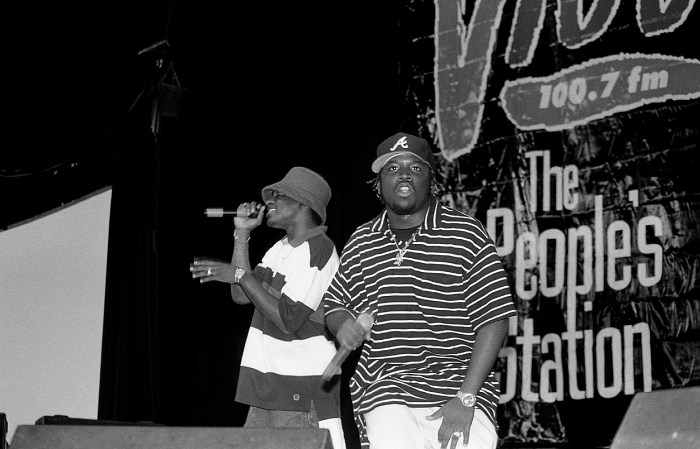
Flash forward to Nov. 8, 2025. There are no boos, only cheers at the Peacock Theater in Los Angeles, where Antwan Patton and Andre Benjamin are on hand to accept their induction into the Rock & Roll Hall of Fame.
“Great things start in little rooms,” said a visibly choked-up Andre as their extended Dungeon Family flanked the duo.
Back in the mid-1990s, no one imagined such an honor for the two Southern kids from East Point, Georgia. As Big Boi noted in a 2016 Spin interview, he and his free-spirited partner were focused entirely on putting Atlanta hip-hop on the map.
“The point that we were proving is that we’ll eat your a– up,” he proclaimed. “We some real MCs. ‘Black dog and black wolf’ is what they called us in high school. Just lyrically dominant, and it’s still about that.”
Dee Dee Hibbler was a witness.
“ATLiens was a show-and-prove statement that OutKast is here, that the Dungeon Family is here,” she said. “Look at everyone who came after us. Look at what Dre and Big Boi built. We are talking decades later, and the South still got something to say.”