
Nolan Wells, college football and the responsibility the game has to him
College football brings millions of Americans together. The sport should force us to reckon with people who make it possible.

College football — football in general, honestly — is the only religion America worships, and it never has to agree on what it believes in to function.
Even as the college game becomes more unabashedly capitalistic, there’s still something uniquely personal about it. From HBCUs to the Power 4, ritual resides in the details. It is a living legacy. For many American families, the sport can be used to trace their history.
It’s a weird sport. It’s damn sure ridiculous, too — nobody actually knows how the rankings work. Yet, there’s an insatiable beauty to it, because how many better Saturdays can a person have in life than those filled with bars, brunches, grills and one-too-many beers or cold drinks with college football as the backdrop — especially knowing you get to do it all over again on Sunday with the NFL?
I love it here, too. I always have. I perhaps always will.
Yet, as James Baldwin critiqued in his 1955 essay collection, Notes of a Native Son, love should never erase criticism — most certainly in America. Love isn’t always flowery. It hurts, enrages, and crushes. Love isn’t colorblind. Heading into this season, a painful reminder looms that there will be one player missing: Thursday night, Southwest Mississippi Community College kicks off its 2026 season against East Mississippi.
Nolan Wells should be there. But he won’t be, because he’s dead.
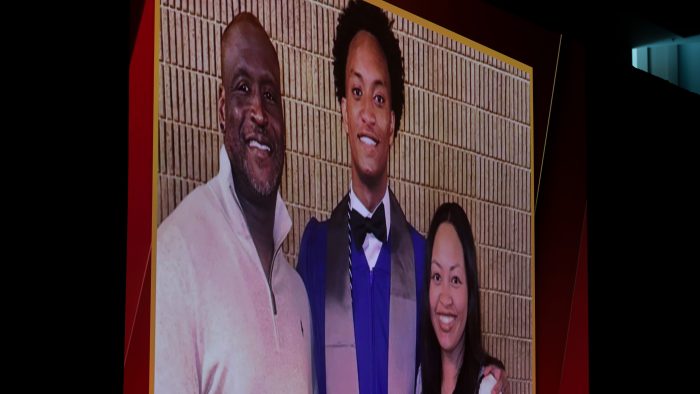
Nykieria Chaney/Getty Images
The details, or lack thereof, around Wells’ death are painfully stagnant. During the Fourth of July Weekend, Wells — a rising sophomore wide receiver at SWMCC still weeks away from starting training camp — died mysteriously at Mississippi’s Horn Island. No arrests have been made, and no charges have been filed. The cause of death remains unknown, pending the release of official autopsy results.
The tragedy sparked nationwide racial overtones. Wells was the only Black person in a group of white peers on the outing. Everyone from legal commentator Nancy Grace, popular children’s educator Ms. Rachel to podcaster Deante’ Kyle have had opinions on the case. The Rev. Al Sharpton and three of Wells’ counterparts appear barreling toward litigation.
If a young white man had gone out with a group of Black people and died, it’s hard to imagine how this would play out the same. It’s hard to imagine how that mystery would be so easily accepted.
Being Black in America, you notice these disparities constantly.
A decade has passed since former NFL quarterback Colin Kaepernick forced America to acknowledge the elephant in the room it had spent decades ignoring. His rhetorical question was simple but shook the country to its core: What happens when those responsible for fueling the spectacle demand their humanity be valued, too?
College sports spent that decade undergoing an inevitable reckoning and imperfect revolution. Slowly, and certainly begrudgingly, the athletes generating the billions finally tasted the pie they helped bake.
College football in 2026 looks and feels remarkably different than it did a decade ago, let alone than it did before Wells’ generation of players were born. The sport was always driven by profit but sold on loyalty and hometown pride. Schools built rivalries. Players — overwhelmingly Black and from disadvantaged backgrounds — brought in the money by the boatload.
The NCAA basked in this one-sided ecosystem for generations. “Amateurism,” as it was billed, was big business.
Now, a different world exists. Legalized gambling is here to stay, no matter the cost, and college sports are more wide open than ever. In fact, some players are attempting to return to college after giving the professional ranks a shot.
The Big Ten has already barred NFL players from returning to college, while the SEC has enacted the same rule for NBA, WNBA and NFL players. It’s a classic example of the toothpaste analogy: Once it’s out, there’s no putting it back in the tube.
College football will never be what it once was. In some ways, that’s truly unfortunate. In others, the system always needed to eat itself from the inside out to foster tangible change. The uncomfortable truth lies in the gray area.
College football needs us to view the game differently now. Players are finally being compensated for the massive economic boom they generate. Yet, no one said righting a generational wrong would come without headaches.
That’s the polarizing aspect of a sport so intrinsically tied to the American identity: calculating a player’s market value — a task made even harder because society rarely understands human value.
The cost of a five-star recruit and a prized quarterback at an HBCU is different, but market value is now clear. We understand the importance of factors like television contracts and savvy social media tactics. We see every day how the introduction of legalized sports betting has, at best, shifted the game’s texture and, at worst, compromised its purity.
We know the value of having College Gameday in places like Baton Rouge, Columbus or Tuscaloosa. We know the fiscal boom homecomings bring cities and towns where historically Black colleges and universities reside. It is theater and pageantry blending in ways few other American traditions can. Still, yards, records and NIL valuations don’t tell the whole story.
And they can never tell the part of the story that actually matters.
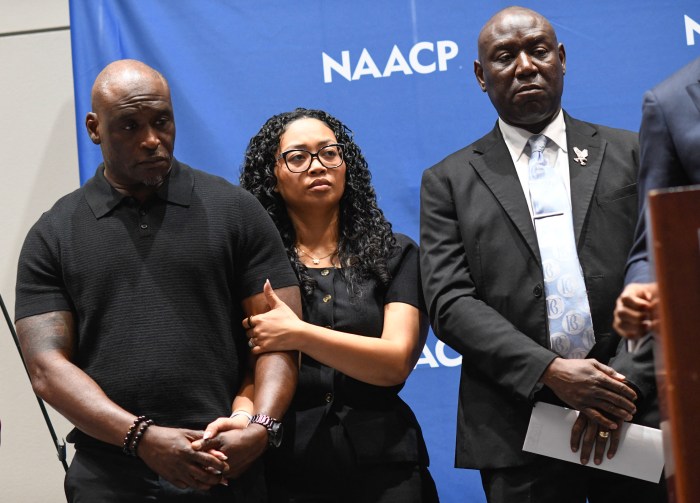
Octavio Jones / AFP via Getty Images
One of the heartbreaking soundtracks of summer 2026 belongs to Wells’ parents. The pain is unfathomable. The reality of them joining the most awful fraternity — parents burying a child — is haunting.
In an ideal scenario, maybe the nation would never have known the name Nolan Wells. Maybe he would play this season and next, finish school, and like so many other athletes, simply get a job and live the rest of his life as a “former football player.” Sometimes the best gift life can give is anonymity.
Instead, he lives forever as an all-too-familiar cautionary tale that America, presumably, forced upon him.
College football in the South is a breeding ground for complicated faith. In a region where Black Southerners fight for their voting lives ahead of a consequential election cycle, redistricting does not immediately evoke “Jim Crow,” but its impact is just as damning. You see it in Wells’ death and the agonizing wait for answers that may never come.
Look in between those contradictions, and the reality is right here. The South, and America as a whole, is once again preparing to praise college football — the same sport whose traditions and billions of dollars have been built on the shoulder pads of Black players who weren’t allowed to play in the SEC until 1967.
That’s the funny thing about religion, though: It effortlessly builds community while exposing hypocrisy. College football owns Saturday, generally speaking, the most beloved day of the week, offering bands, Rivalry Week and the reminder that winning is a must. This society has gotten good at understanding the true value of these players.
Understanding and appreciating, however, couldn’t be more different.
The inevitable will happen Thursday night. Southwest Mississippi will take the field with the weight of a lost teammate permeating through the stadium. There might be a tribute. His No. 16 jersey may sit in a frame. There will be tears, and likely be loud cheers in hopes that Wells can hear them. But the machine keeps moving. Touchdowns will be celebrated. Referees will get chewed out for controversial calls. The game of football never punts; it just moves forward.
It was like that before Wells. It will continue to be so after him.
We should require more from college football — and, more importantly, ourselves — in 2026. This doesn’t mean boycotting Saturdays or convincing ourselves the Battle of the Bands, tailgates and primetime games aren’t the pageantry we all fell in love with. Loving the game means requiring — no, demanding — more from the institution because we know just how much it shapes some of the most powerful connections in our lives.
Loving the game and critiquing it have to live side by side. It’s possible to love Saturday morning, afternoon and night while mourning a player who will never experience such again. We can dissect market values without overlooking the fact that moral values can never be calculated in the same way.
From now until January, college football will be an integral part of life. The rankings, the storylines, the big games, the homecomings. It’s all part of the ritual that will survive after Nolan Wells. And it’s exactly why the game has a responsibility to remember him — not only the position he played or a route he ran, but Nolan Wells, the person.
Few religions bring people together quite like college football. A foundational tenet of faith is not just telling us what to believe or how and whom to worship.
It is about what we owe each other.