NFL draftees’ legacy, longevity comes down to getting there versus staying there
Former NFL players tell what it takes to stay in the league after being drafted

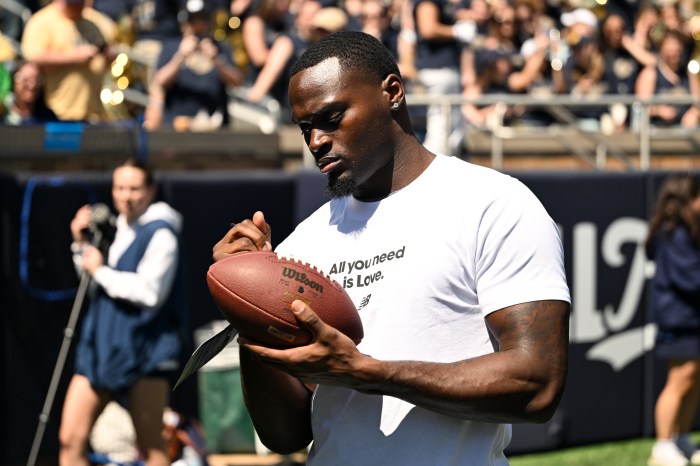
PITTSBURGH — In Jeremiyah Love’s euphoria of being selected by Arizona with the third pick of the NFL draft Thursday evening, I asked the former Notre Dame running back to do the impossible: Talk about longevity. I asked the 20-year-old rookie what he thought was required to have a long, prosperous NFL career.
“So all the people I’ve talked to, when we’re meeting with teams, with former players, with current players, there’s one common thing, or common piece of advice that I’ve gotten from all these guys,” he said. “Make sure that you have a routine that works for you. Make sure that you’re consistent. Make sure you’re doing the same things that you did to get yourself to this point, and then also just find ways to get better. So that’s exactly what I’m going to do.”
Love went further and laid out lofty long-term goals.
“I’m not complacent with just getting drafted,” he said. “I want to get to the end of my career, and I want to get a gold jacket. I want to be recognized as one of the best running backs to come to the game of football. … So that’s a lot of big talk, but a lot of work is going to be put in to get there. So that’s what I plan to do.”
What gives the annual NFL draft its joy is the excitement and enthusiasm expressed by young players living out their dreams. Being drafted is one thing, but staying in the league and building a career is something else.
After listening to Love, I reached out to a few former players, as well as an active one, to talk about the road that lies ahead for the class of incoming rookies. The first call was to someone who already had a gold jacket: Warren Moon.
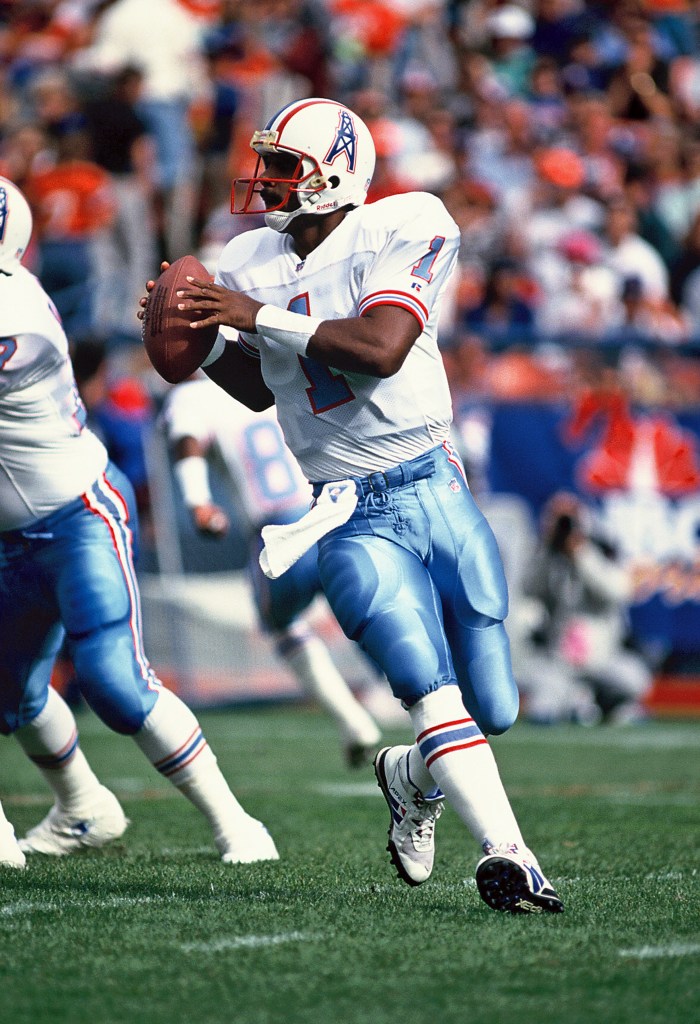
Moon was inducted into the Pro Football Hall of Fame in 2006, but when he was 23 there was nothing to suggest that he would ever reach Canton, Ohio. Despite being a star quarterback at the University of Washington, Moon was certain he would not get a chance to play quarterback in the NFL. Six weeks before the 1978 NFL draft, Moon took a leap of faith and signed with the Edmonton Eskimos — now named the Elks — of the Canadian Football League.
He won five consecutive Grey Cup championships in Canada. Finally, in 1984, Moon reached the NFL when he signed with the Houston Oilers. But as a 21-year-old coming out of college, Moon had no idea where the road he’d chosen would lead.
“When I went to Canada, I had no idea if I’d ever be able to come back and play in the NFL,” Moon said during a recent phone conversation. “If I wouldn’t have had that much success, I might have stayed up there the whole time.”
Moon retired in 2000 and, six years later, became the first Black quarterback inducted into the Pro Football Hall of Fame.
I asked Moon and a couple of others whether there was a formula to achieving longevity in an industry where injury is certain and teams are looking to replace players as soon as they draft them.
“I think it starts out with being humble and being grateful that you’re even getting that opportunity,” Moon said. “Whatever it is you’re setting your goals and your sights on, keeping your eyes on those goals, not just every year, but every day. I was always trying to find ways to make myself better. I could have gone to six or seven Pro Bowls in a row, but I was still trying to make myself better the next year. So, you have to stay humble and you have to stay hungry.”
James Black/Icon Sportswire
How do today’s incoming rookies remain hungry when many of them — thanks to name, image and likeness deals — have been fed financially throughout their college careers?
As of late 2025, Love’s NIL evaluation was listed at about $1.6 million. Love was aligned with premium global brands such as Samsung, helping promote its newest foldable phone. He was also one of the rare college football players to lock up a deal with New Balance.
According to some industry valuations, No. 1 overall NFL draft pick Fernando Mendoza had a NIL portfolio valued at an estimated $2.6 million.
“They’re not coming in broke,” Moon said. “You’re not coming out hungry, and I think that’s one of the things that this NIL deal does. It doesn’t make a player as hungry anymore, because that’s something you always strive for. Not only did you want to play pro ball, but you also want to get paid. And now you’re getting paid before you even get there. So, I don’t think you’re as hungry.”
Players may not be as hungry as they once were, but they probably are just as motivated. Motivation is the thread that connects generations, though that is not a guarantee of longevity.
When Jets linebacker Demario Davis began his NFL career in 2012, he was hungry, motivated and not thinking of a 10-year NFL career.
“No way,” the 37-year-old said during a recent conversation. “My goal was seven to 10 years, and I knew that was a long shot.”
The Jets drafted Davis in the third round of the 2012 draft. He played three seasons with them, spent 2016 with the Browns, returned to the Jets for 2017 and then joined New Orleans for the next six seasons. He signed a two-year deal with the Jets in March.
I asked Davis what advice he would give incoming rookies to have prolonged and hopefully scandal-free NFL careers.
“There is nothing about your life that’s going to be the same after you step across that stage and go into a new space,” Davis said. “What I would tell young people is immediately after that moment, it’s time to turn the page and understand that your dream has now become your reality.
“There needs to be a shift in mindset. There needs to be a shift in perspective for yourself and essentially being focused on the task at hand, and that’s adapting to the new reality, understanding who you are in this new place of being inside the NFL and what that is going to require of you.”
Davis said that for these 20- to 22-year-old athletes, embarking on an NFL career requires them to set new goals on and especially off the field.
“You have to understand that the dynamics of relationships that you had around you are going to change, because everything about you has changed,” he said. “Your affluence has changed, your influence has changed. You have a new badge, the NFL, and that comes with a certain level of access and a certain level of responsibility.
“You have to honor that and understand that that may require you to change some of the dynamics of relationships. After one or two years, and you’ve gotten the hang of it, you can step back into those relationships with the new version of you. You have to let everybody know that you need to set boundaries around yourself so that you can focus on becoming the best version of yourself. People who can’t appreciate that and recognize that, those are the very ones that you need to put the biggest boundaries on.”
Kirby Lee-Imagn Images
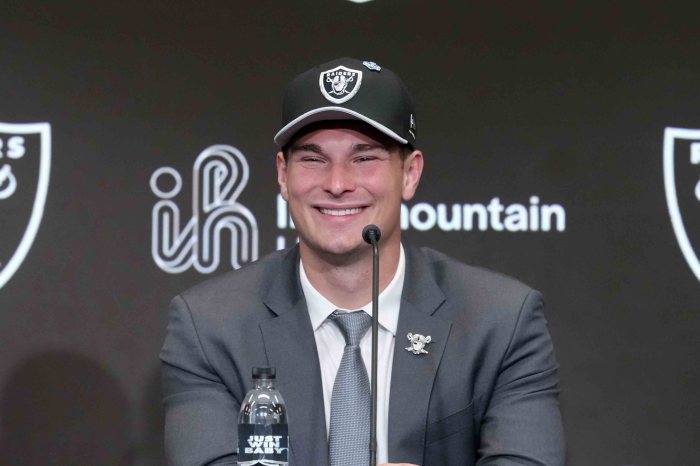
Troy Vincent, the executive vice president of pro football operations for the NFL, was the seventh overall pick of the 1992 draft. He went on to a 16-year NFL career.
While it’s impossible to predict longevity, Vincent said there are certain things that the rookies can do to at least give themselves a chance to achieve longevity.
“Stay grounded with the people who were there from the beginning,” Vincent said. “At the same time, have the understanding that the work is still ahead: earning a spot, proving you belong. Enjoy the moment but keep your mind on the competition that follows, because it’s just that — a moment. Once you arrive, you’re starting over. It’s not about where you’re from or what you accomplished, it’s about what you do next.”
Perhaps the most important thing for young players to keep in mind — and this is probably the most difficult thing — is to think about legacy, think now about how they want to be remembered in 10 years and let that determine decisions they make.
Building a legacy is a lifetime endeavor that goes beyond one’s playing career.
“Legacy is built over time, through how you impact people and the relationships you build,” Vincent said. “You have a shelf life in playing the sport you love, and the value of relationships matter. Football is an experience, not a lifetime guarantee. The clock starts now, and how you carry yourself, on and off the field, will define what lasts.
“Your legacy will be determined by the difference you make in someone’s life, what you do for people.”
John Cordes/Icon Sportswire
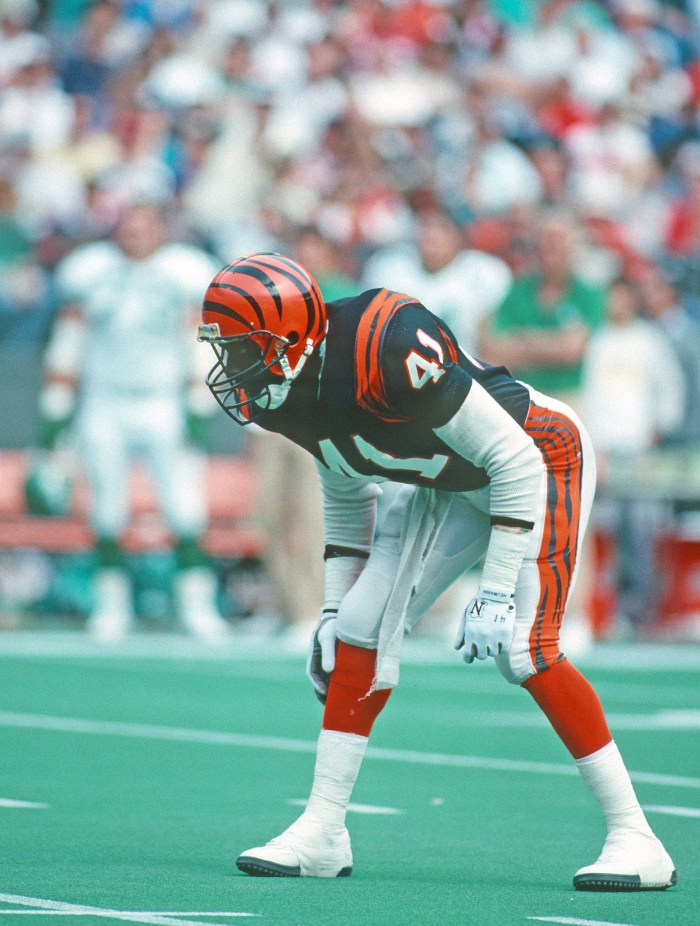
Broadcaster and TV analyst Solomon Wilcots entered the NFL in 1987 as a safety. He was drafted in the eighth round of the 1987 NFL draft.
“I would tell players to study,” Wilcots said. “Study this game like your life depended on it. When you’re not on that practice field or if you’re not in the weight room or training room, you’d better be in that film room. You’d better be crunching data.
“You should run your career like you are a CEO of your own company. You should have a team of people handing you data, helping you figure out what it all means, because if you do that, the picture becomes so much clearer.”
When Wilcots was drafted, there were only 45 players on each team’s roster, and there was no practice squad and no free agency. That was also the year of the NFL work stoppage. Two weeks after training camp began, players went on strike, and the NFL owners famously employed replacement players.
That was a sobering wake-up call for Wilcots, who immediately began thinking about life after football.
“They called me and said, ‘If you don’t play in these replacement games, we can’t promise you’re going to have a job when you get back.’ I stood up for myself. I said, ‘If I made your team, I’ll make another one.’ So, I did not cross the picket line, but you know what I did? I went and got a real job,” Wilcots said. “I went into a management training program. I got a real job every year in the offseason.
“I worked full time for more than 40 hours a week. I put all my time into that career. I already knew I was not going to be sticking around for 10 years. I knew I was not going to give football my life, because it was not going to give me that back. I could see it.”
Today, the average NFL safety earns about $5 million a year. Wilcots, who retired in 1992, was not pocketing that type of money. “The most I made was a little less than $500,000 a year,” Wilcots said. “In my rookie year, I made $65,000 a year. So, I went and got a real job.
“My rookie experience was a unique one because not too many players make a team and then they are out of a job with everybody else. You are forced to understand the business of the game, you’re forced to sense your mortality in the game early.”
George Gojkovich/Getty Images
The difference between a 23-year-old draft day rookie in 1987, when Wilcots entered the league, and the 23-year-old draft day rookie in 2026 can be measured by money.
The excitement is the same, and the sense of accomplishment is the same, but the bank accounts are often different.
“They’re already coming in with a bank account full of money [because of NIL],” said Wilcots, who does financial advising for some players. “I worked with some of these players. I consult with some of these players. I’m helping them find homes when they come here to Cincinnati.
“These dudes can buy a home. They already got money before they even sign their contract. They’re closing on houses as soon as the draft’s over. We had to wait till we signed our contract before we could even get a bus ticket.”
From Warren Moon to Troy Vincent to Solomon Wilcots to Demario Davis to Jeremiyah Love, the thread that connects rookies through all decades is a sense of excitement tempered by uncertainty. Longevity is hoped for, but nothing is promised in a brutal game.
The charismatic Love wants to end up in the Pro Football Hall of Fame. As Moon can attest, the road to Canton is long, steep and uncertain.