
New York Knicks trying to scale a mountain not climbed in 53 years
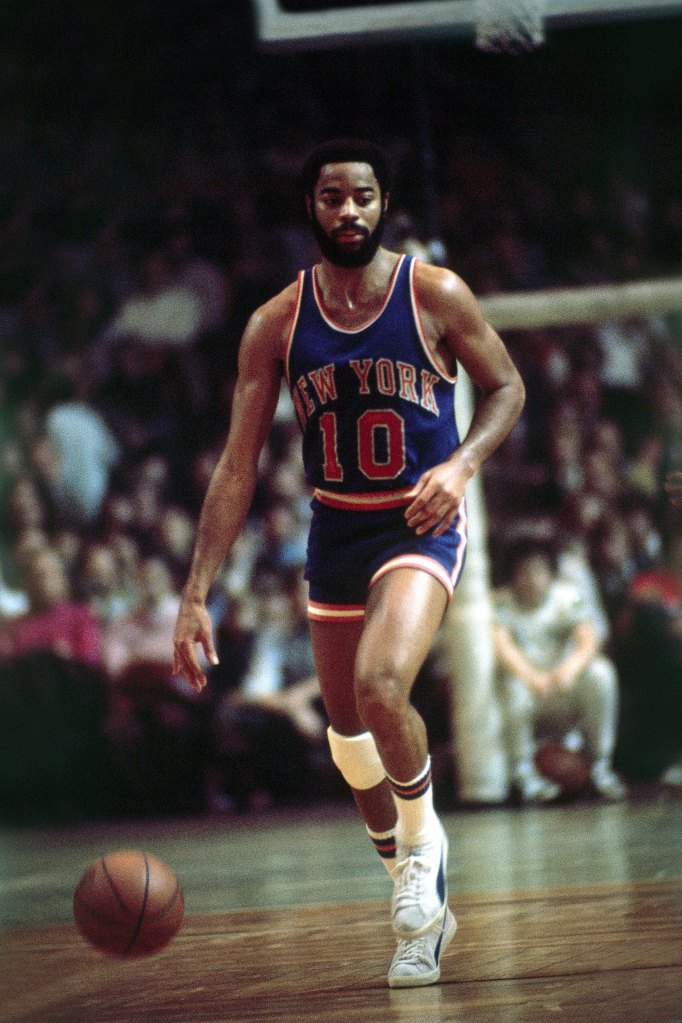
Walt ‘Clyde’ Frazier remembers. He’s passed the torch to these Knicks, seeking their first title since 1973

Listen to this story
CLEVELAND — Shortly before the New York Knicks and Cleveland Cavaliers played Game 4 of the Eastern Conference finals, I spoke with Knicks legend Walt “Clyde” Frazier about New York’s championship prospects.
Specifically, I wondered how Clyde thought he would feel if this year’s team actually won the franchise’s first NBA title since Frazier’s Knicks won it in 1973.
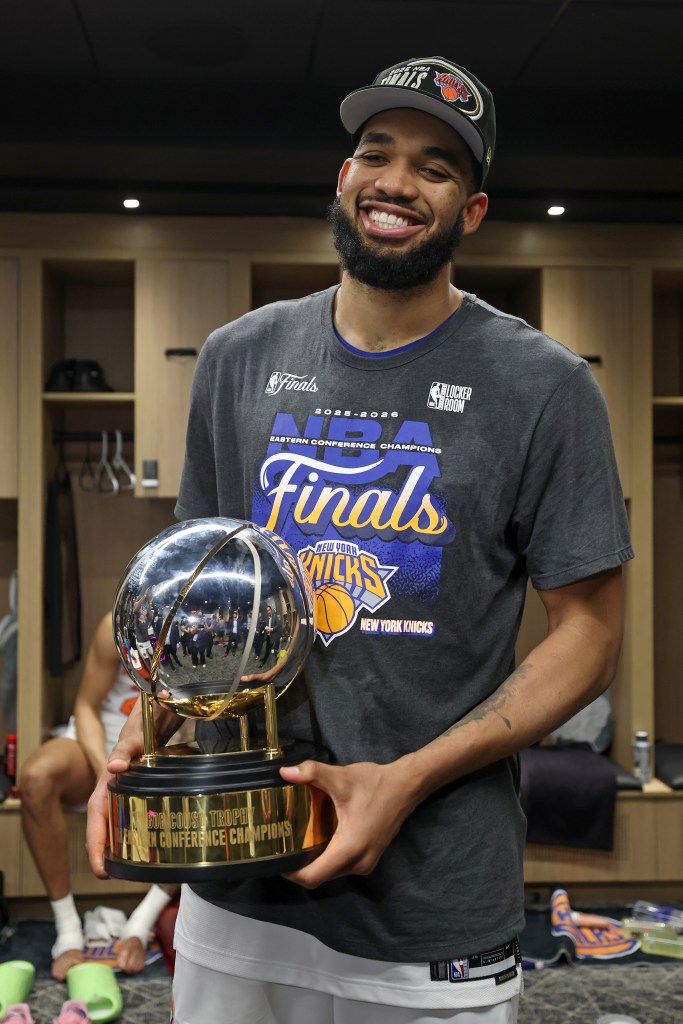
On Monday, the Knicks’ 130-93 win swept Cleveland out of the playoffs 4-0 and helped them take a step closer toward remaking Knicks history.
Frazier, who turned 81 last month, has been the contemporary face of those championship Knicks — a haunting reminder of more than 50 years of subsequent Knicks futility. Frazier said he would be fine with sharing a slice of history, reminding me he has two championship rings with the Knicks, the first coming in 1970, the second in 1973.
The conversation about ending the drought keeps those championship Knicks teams, and Frazier in particular, relevant.
“It’s good for me. It’s a resurrection,” he said. “They’re talking about me more now than then. It’s the same thing now with these guys. When they start winning, they got to bring us up. That’s what we’re comparing. They’re saying [Jalen] Brunson is better than Clyde or he’s better than [Patrick] Ewing, [that] he’s the greatest Knick.”
Frazier’s Knicks became the toast of the town and helped solidify New York’s reputation as the mecca of basketball. This new group of Knicks is the current toasts of the town. They reached the conference finals last season and lost; this year, they have roared to the NBA Finals at a record clip.
Times have changed and basketball culture in New York has changed. The playground proving ground has been replaced by air-conditioned gyms and a more corporate and expensive conveyor belt to the big time.
One thing that has not changed is the adulation that comes with being on a championship push in New York.
After Monday’s victory, Knicks big man Karl-Anthony Towns, who grew up in Edison, N.J., described what it means to be part of a long-hoped-for Knicks renaissance.
“When I was growing up, watching the Knicks, it was just hoping one day you could just put the jersey on,” Towns said. “[I] never knew I’d be in this position at this mic talking about us going to the Finals and the city believing in us. There’s nowhere better in the world when [Madison Square] Garden has hope.”
Knicks alums such as Ewing and Frazier can also offer a sobering perspective on the fragility and elusions of success. Three months after leading the Knicks to the 2000 Eastern Conference finals, Ewing was traded to the Seattle SuperSonics. He retired in 2002.
Four years after leading the Knicks to a second NBA title in 1973, Frazier — the inimitable Clyde — was traded to the Cavaliers. He went from living in a penthouse overlooking Manhattan to an apartment on the seventh floor in Cleveland. He called his three seasons in Cleveland the worst and the best times of his life.
“I was preparing myself for my retirement,” he said. “I was reading self-help books, something I would have never done if I stayed in New York. It turned out to be a blessing, but I was devastated when I got traded.”
Frazier said it took years to forgive the Knicks — and Willis Reed, the team’s general manager — for trading him.
“It took me about seven or eight years,” he said. “I didn’t follow the game after I retired. I was trying to adjust to life. The biggest thing I found was that I had to control my ego. My phone isn’t ringing off the hook no more, and the Knicks had moved on to the next Clyde.”
Actually, they had not. More than 50 years later, that 1973 title remains the Knicks’ last.
Frazier is a valuable, high-profile member of the Knicks’ family, an important bridge between the franchise’s past and its future.
This season marked the second consecutive season the Knicks reached the Eastern Conference finals. They lost to the Indiana Pacers last year and saw Tom Thibodeau fired as the head coach because of it.
The Knicks will either play the defending champion Oklahoma City Thunder or the San Antonio Spurs, led by 7-foot-4 Victor Wembanyama. Whomever the opponent, New York will be the underdog.
For the sake of the Knicks’ legacy and the elevation of New York City basketball, I hope the Knicks play San Antonio and the 22-year-old Wembanyama. He is the George Mikan, the Wilt Chamberlain, the Kareem Abdul-Jabbar of this generation.
Aside from the revenge factor (the Knicks lost to San Antonio in the 1999 NBA Finals), in Wembanyama the Knicks would face a generational player projected to be one of the greatest in NBA history. The Spurs, especially Wembanyama, are the perfect challenge and cast of characters to play opposite the Knicks on this Broadway stage.
This is also a perfect opportunity for the Knicks to underscore the ethos that made New York City the mecca of basketball. The players the city produced — both the playground legends and the ones who made it to the pros — were not so much stars but gritty, salt-of-the-earth players who played the game for the game’s sake.
Dick Raphael/NBAE via Getty Images
A couple of years ago, I asked basketball analyst Kenny Smith what made New York City basketball special. Smith grew up in Lefrak City, was a star at Archbishop Molloy High School in Queens, played at North Carolina and, during his 10-year NBA career, won two NBA titles with Houston.
“You’ve got great players coming out of Chicago, great players coming out of L.A., but in those cities only the ones who want to be great play [at the next level],” Smith said. “In New York, the guys who play don’t want to be great, they just want to play in the day. Now, everyone who’s playing AAU, everyone who’s playing streetball, everyone who’s playing travel ball, everyone playing in high school in those cities has delusions of grandeur to be in the NBA.
“Everyone in New York [back then], they just want to play. They don’t think they’re going to be in the NBA, so you have everyone playing. We had a guy in our neighborhood, Fat Ike. I had Fat Ike on my team because he knew how to set a hell of a pick. He ain’t trying to make the NBA, he ain’t thinking about it. Those guys don’t exist in other cities.”
When Frazier first came to New York, Reed, at the time the Knicks’ captain, made a point of bringing the high-priced rookie uptown to Harlem to play in the legendary Rucker Park league as a member of Reed’s team. Frazier was overwhelmed and astounded by the basketball culture he experienced.
Over time, he came to understand the essence of New York City basketball, what made it special — the styling, the swagger, the profiling — and the cool. As Clyde, Frazier would bring that essence to Madison Square Garden and would carry it with him when the Knicks won two NBA titles.
Fifty years later, Frazier is the only Knicks player who consistently comes around who has played on that Broadway stage, starred in a leading role, and won two championships. Though the torch has been passed to Brunson, the new Knicks listen when Clyde speaks, as he did during Monday’s celebration.
His message on the precipice of the Finals? There’s one more mountain to climb.
“He’s the guy now who’s the carrier,” Frazier said, referring to Brunson. “But you have to capitalize when you get there, so we’re going to stay on them.
“As Red Holzman told us when we reached this point: ‘Hey Clyde, we ain’t won nothing yet.'”