
Jason Collins was dignity, not distraction
The first openly gay NBA player wasn’t just important to league history but to the legacy of the oppressed
One of the NBA’s more progressive ambassadors, Jason Collins, died from brain cancer at the age of 47, his family said Tuesday. The first openly gay NBA player announced his retirement in 2014 with two words in a compelling commentary to The Players’ Tribune: “I’m Out.”
“When I decided to come out publicly with my letter in Sports Illustrated in April 2013, I was fully prepared to never play in the NBA again,” Collins wrote. “Being an older free agent, I was dreading the ‘D’ word. He’s a Distraction. Why bother? But I was also bracing myself to hear a lot worse, whether it was from opposing fans or from players.”
The d-word that comes to mind when I think about Collins isn’t “distraction.” It is dignity, and his gradual demand to live his life on his terms is something that can and should be aspirational for men regardless of their sexual orientation.
Make no mistake about it, we get the masculinity and manhood conversation in sports and society wrong far too often. Competition is healthy, but in the absence of morality and humanity, it becomes depraved. Win at all costs. But who pays the toll?
Societally, a fog persists where people can’t compartmentalize same-sex intimate relationships between males. At times, the very idea of such relationships are used as a pejorative for athletes who are in tune to their humanity or simply say there’s more to life than money, clothes and multiple partners. “Oh, he’s gotta be gay.”
The quality of one’s resume should not be an indicator of whether they deserve dignity. But Collins’ resume, like his smile, is sturdy and kind: A Stanford University graduate, he set the school record for field goal percentage and finished third all-time in blocks. In the NBA, he built a reputation as a standout defender and leader.
A statement from the Brooklyn Nets (the New Jersey Nets during Collins’ tenure) said he helped to “define an era of our franchise” and played “a vital role on our back-to-back Eastern Conference championship teams in 2002 and 2003.”
The deeply intellectual and articulate Collins was similarly praised by one of the NBA’s great cerebral players and coaches, Dallas Mavericks coach Jason Kidd.
“This one hurts. Jason Collins was a pioneer,” Kidd wrote. “And having him in Brooklyn at the start of my coaching journey meant so much. … You are already missed my brother. Rest in power.”
What makes Collins important to NBA history and the legacy of oppressed people isn’t what he did on a basketball floor. It’s his remarkable realization of self-determination. Writer James Baldwin put it this way in his marathon dialogue with cultural anthropologist Margaret Mead in 1971: “You’ve got to tell the world how to treat you. If the world tells you how you are going to be treated, you are in trouble.”
Collins wrote: “You know what a real distraction is? Maintaining a lie 24 hours a day, seven days a week, for most of your career, for most of your life. The energy involved in hiding the stress, shame and fear of being gay is a full-time job. With all that removed, I was like a new person.”
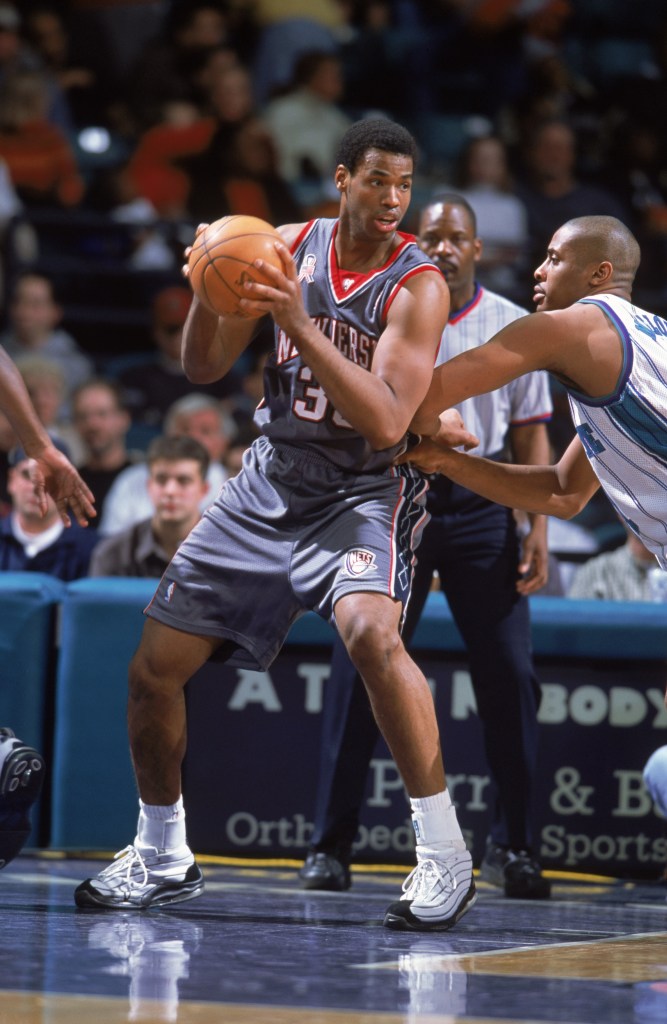
Garrett Ellwood/NBAE/Getty Images
Martin Luther King Jr. said a “riot is the language of the unheard.” I also think distraction is the language of the unheard — weaponized silence. We use the word “distraction” to keep athletes sanitized and devoid of social commentary, or anything that might encourage us to really consider how we treat athletes (and each other).
Collins’ awareness led to activism. Specifically, he wore the number 98 to bring awareness to the death of Matthew Shepard, a college student who was murdered in 1998 because he was gay. His death, along with the murder of James Byrd at the hands of white supremacists that same year, led to Congress’ eventual passage of The Matthew Shepard and James Byrd Jr. Hate Crimes Prevention Act in 2009.
The duality of those hate crimes made singular in legislation doesn’t escape me when talking about Collins and the Black athlete in general. Collins wrote about his previously closeted lifestyle and how it initially hindered his desire to speak out. Becoming his authentic self and opting out of a “double life” unified him in purpose and peace.
If Collins’ legacy is an example, sports, and most notably Black athletes, can have the same revelation. It’s easy to envision a boxer like Jack Johnson as defiant and masculine because of his career and the controversies that came with it. We should hold Collins’ defiance in a similarly high regard, even if it doesn’t fit the fantastical expectation of hypermasculinity.
It is a natural progression that I have enjoyed seeing in the WNBA, where same-sex intimate relationships are seen as less taboo, if taboo at all. The progressiveness of the league is vivid beyond sexual orientation — it is bold in its takes on social (in)justice and labor rights, and holds a healthy balance between competition and sisterhood.
I hope that male athletes can enjoy a similar type of freedom. It will require us to do what the late and great Jason Collins did — look in the mirror, demand solidarity with oneself and home in on the love that follows.
Or, as Collins put it when he retired: “That’s the secret that every single closeted person reading this — athlete or otherwise — should know. In the end, the people who genuinely love you will always love you and support you, no matter what. It’s the secret I wish I had known for 33 years.”