
Drake’s ‘Iceman’ is a 40-degree day
The rap superstar’s highly anticipated return to music is rinse-and-repeat Drake

On Friday, while dropping my daughter off at school, her teacher chuckled as she eagerly asked me a question.
So what’d you think about Drake’s albums?
My short answer was that I didn’t have an opinion yet. Truthfully, a review less than 24 hours after the project dropped felt more catered to my own ego than it did giving the titanic-sized project composed of three albums — Iceman; Maid of Honour; and Habibti — as close to an accurate response as possible.
Drake albums, especially now, announce themselves way more like traffic jams than carefully-crafted bodies of work. As the weekend flew by, group chats, texts and timelines offered their own synopses flying in both directions. Then, late Sunday, shortly after the Cleveland Cavaliers’ destruction of the Detroit Pistons to advance to the Eastern Conference Finals, it hit me. I heard the album’s ethos before. Long before Drake, actually.
Credit Stringer Bell — another man, like Drake, hell-bent on sovereignty, pro-self economics and a system he mastered until he could no longer control it.
“That’s like a 40-degree day. Ain’t nobody got nothing to say about a 40-degree day. Fifty? Bring a smile to your face. Sixty? S‑‑‑, n‑‑‑‑s is damn near barbecuing out that motherf‑‑‑er,” Bell said in The Wire’s legendary scene. “Go down to 20, n‑‑‑‑s get they b‑‑‑‑ on, get they blood complaining. But 40? Nobody give a f‑‑‑ about 40! Nobody remember 40. And y’all n‑‑‑‑s is giving me way too many 40-degree days!”
Two years removed from a beef with Kendrick Lamar that obviously, and understandably so, still dominates Drake’s career and the conversations around it, you still had to give it to him in this regard. He could still author a moment.
Truth be told, the anticipation for Iceman had started long before May 15, but in that final leg, Drake, 39, succeeded in making the day all his own. The ice mountain in his hometown of Toronto, the YouTube live stream, the smorgasbord of videos. It did what it was supposed to do: create mass hysteria.
Forty-three tracks over the course of three albums present an ordeal that’s simultaneously a rap archaeological mission and Instacart shopper pilgrimage. The listener is tasked with finding highlights that exist but become watered down by their own gluttony and, at worst, never arrive.
The trifecta of albums showcases that familiar knack for big records, sultry records and even his own flavor of introspective records. There is something for everyone willing to go on the journey with Drake. Yet, in attempting to check off every box, lives an all-too-familiar exhaustion that’s defined Drake’s catalog for at least a decade — and undeniably so in a post-pandemic world.
“Firm Friends” is one of the bloated project’s finest moments. A soulful Conductor Williams-beat creates the backdrop for one of those introspective records where Drake has historically done some of his best work. Here, Drake admits just how much time has changed him.
I am so far gone that a thank-me-later is useless now.
He honestly couldn’t be more right.
“Shabang” is legitimately fun. It’s one of those Drake records with a sole purpose of thriving in warm-weather excursions by land, sea or air — and certainly authoring Instagram or TikTok timelines. “Slap The City” is one of those great moody Drake ditties primed for kickbacks and cookouts. In the weeks leading up to Iceman’s release, a concerted campaign painted Drake as rap’s primary savior of fun. That clubs haven’t been the same since Kendrick’s vicious, verbal chest-caving. It was misguided propaganda, but it didn’t negate the fact that he knows how his fanbase consumes music.
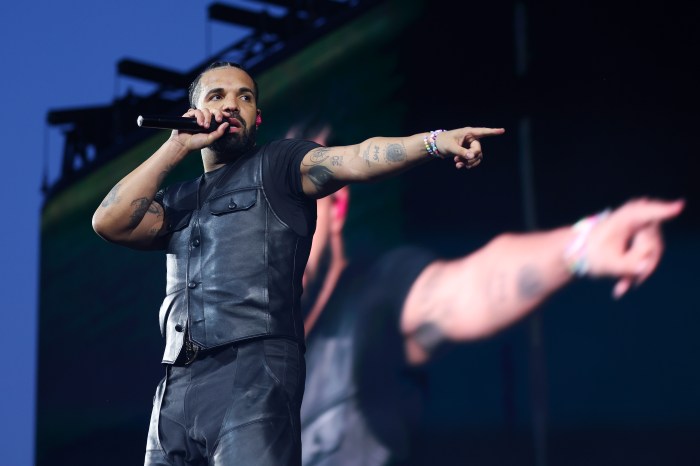
The Drake Experience is defined by caption-ready bars on projects that thrive on emotional ambiguity. Iceman is no different. It’s less about adopting the role of storyteller than it is about being a soothsayer of producing engagement in assembly line-like fashion.
The hits come. The eye-popping numbers come. What remains, however, is an artist still emotionally rooted in a fallout on the world’s stage. An artist and a project rooted in fleeting self-reflection and consistent agitation that simply isn’t productive, creative or entertaining. And an artist who seemingly long abandoned leading with his best foot forward, opting instead for whatever increased his bank account and blinding sense of influence.
Since 2021, Drake has released an eye-popping eight releases, including six solo projects and three major tours spanning the globe. All have been massive commercial successes, but few — if any — have garnered widespread artistic acclaim.
Nearly all have suffered from obese tracklists while remaining algorithm darlings. The biggest knock on Drake pre-Kendrick beef was that he never allowed his music to digest before presenting the next dish. There was always the next feature, song or project — Drake never broke the algorithm, he wrote his own thesis dissertation in it. The problem with Drake is that the algorithm has far too much control in how the art is consumed, and Iceman certainly doesn’t buck that trend.
Placing Iceman in context with Drake’s career over the last decade, confrontation hasn’t been a net positive for Drake’s brand — and certainly not the quality of the music.
No artist is more responsible for how rap beef operates in the social media/streaming era than Drake. Battles with Meek Mill, Pusha T and Kendrick all wore down a cloak of invincibility to the point where it was eventually ground into dust. One taught the value of going viral with thick tension. The other created a level of paranoia and defensiveness that still lives on Iceman. The other attacked his authenticity as an artist to the point where it changed how the music was, is, and perhaps always will be heard.
Y’all forgot if I gave you a hand, you under the thumb, Drake raps on “Make Them Remember.” Whether in boardrooms or amongst his peers, altruism was never Drake’s guiding light. Leverage was. But leverage didn’t buy blinding loyalty. It’s what makes the countless darts aimed at targets like LeBron James, Jay-Z, Rick Ross, A$AP Rocky, Dr. Dre, DJ Khaled, DJ Mustard, Kendrick Lamar, and more feel equal parts expected, earned and ultimately shallow, too.
A record like “2 Hard 4 The Radio” is an almost laughable attempt to create a more infectious West Coast-sounding record than “Not Like Us.” And a record like “Ran To Atlanta” with Future and Molly Santana — a subtle critique of Kendrick’s claim of cultural voyeurism — crash lands as one of Iceman’s frostbitten faux pas.
The title of “world’s greatest hitmaker” held little weight when it was time to defend dominance through competition and not sales. Iceman is an attempt to regain and maintain the once-ubiquitous dominance.
That’s why every album, certainly the last half-decade, feels so tiresome. Drake hasn’t run out of talent, but his formulaic routine has no lasting impact. At 43 tracks, Iceman doesn’t just suffer from lazy lyrical moments (I’m greater than everybody like some grated cheese, or I rack up a tab in Chanel ’cause I do buy everything like I’m Middle Eastern from “Make Them Pay”). It’s the embodiment of Stringer Bell’s infamous rant about complacency and history’s ultimate disregard of it.
The music isn’t terrible enough to do away with him forever. And it could be his pathway to a new recording contract, the likes of which the music industry has never seen. If so, that’s an incredible play for Drake. The keywords being “for Drake.” The pursuit of money controls negotiating tables. Oftentimes, though, artistic integrity is sacrificed in pursuit of it.
The hits will come. They always do. Drake will be a soundtrack for a summer that’s supposedly been melancholy without him. The individual moments will have a shelf life far longer than the album’s. You’ll be pleased if you’re judging it on that idea.
Nevertheless, if you’re looking for breadcrumbs of a new artistic chapter as 40 barrels closer and closer for October’s Very Own, that says more about your own expectations than it does Drake himself. The motivations are clear. People change, and as a result, priorities shift, too.
But why would Drake ever completely abandon the repetitive formula that’s built one of the most dominant empires in recent music history?
Drake hasn’t made albums in a traditional sense in nearly a decade. Why else would he ever release 43 tracks all at once if it didn’t involve business and a long-standing overdependency on numbers for validation? New Drake releases were once industry-stopping moments. Iceman proves they very much still can be. But now it’s no longer about inclusion. It’s about extraction. Why give people the meal when they can treat the music like a buffet line and pick their own ingredients? It’s the same music it’s always been. Same packaging. Same sound. Same seasonings.
That’s why Iceman is a 40-degree day.
It’s standard. It’s risk-averse. It’s easily consumable. And the fervor of the anticipation is impossible to ignore when it’s all that your timelines and group chats care to talk about. Remembering the album in full will prove far more difficult moving forward, because cohesion was never the destination or intention.
Moments don’t always blossom into memories.
So when my daughter’s teacher again asks me for my opinion on Iceman this week, that’ll be my answer. Drake created a moment, but he didn’t create a lasting memory. He stands as both the streaming era’s greatest success story and, increasingly, its clearest cautionary tale — an artist who mastered the logic of numbers so completely that the numbers eventually became indecipherable from the art itself.
Nuance bent to global reach. Cohesion gave way to volume.
I’m fighting the man, Drake claims on “B’s on the Table,” not suing a rapper / You boys are not listening.
Maybe he genuinely believes that. Maybe there is a genuine frustration with the system he now finds himself straitjacketed by. But it’s difficult to pursue character development as a superstar challenging the machine when he remains one of its most dominant architects. Drake didn’t just adapt to the streaming era — he’s the face of its creative blueprint.
This is why Iceman isn’t a rebellion. It’s an album with no sense of direction, but it expects the listener to find their way to the end.
It’s recalibration geared to Drake and only Drake.
This isn’t an artist emancipating himself from a system. He’s, in real time, negotiating what his future looks like inside of it. With that in mind, the question ceases to be whether Drake can still overwhelm the moment. Instead, we have to wonder: In 2026 and beyond and in a musical environment that relentlessly critiqued his every move, can he make anything that outlives it?