Celebrating 10 years of Andscape
More
At 2026 NFL draft, Shedeur Sanders’ 2025 fall still sends a message
The lessons learned from last year’s draft apply not just to the Browns’ quarterback

Up Next From Sports
PITTSBURGH — This time last year the fall of quarterback Shedeur Sanders became the dominant story of the 2025 NFL draft. To some extent, Sanders’ dramatic fall hovers over the 2026 draft as well.
Before Thursday’s draft, the NFL announced it would limit access to draft prospects’ contact information to one person with each franchise. The league took that action because last year, on Day 2 of the draft, ahead of the 40th overall pick, the still-undrafted Sanders received a crank call from someone impersonating New Orleans Saints general manager Mickey Loomis.
Turns out the crank call was made by the 21-year-old son of Falcons defensive coordinator Jeff Ulbrich. The son was mocking Sanders, the former Colorado quarterback, the youngest son of Hall of Famer Deion Sanders and one of the most widely known players in college football.
Shedeur Sanders expected to be taken in the first round of the draft. He would not be selected until the fifth round, on Day 3 of the draft. His slide set off a series of debates that continue to this day. This was a message from the NFL to draft classes to come: No one is larger than the league, and no one is bigger than the game.
For many gatekeepers, Sanders epitomized everything corruptive about the college game, with newly liberated players free to transfer and free to make millions in name, image and likeness deals. Shedeur became the embodiment of the NIL era, with players equipped with resources and social media power.
Many of the top players in this year’s draft have already earned significant amounts of money. Sanders was more boisterous than most, wearing expensive chains around his neck, driving luxury cars on campus and by many accounts taking a casual, almost dismissive attitude toward his interviews with NFL team executives.
According to some reports, the Giants had targeted Sanders but became so turned off during the interview process that they switched to Jaxson Dart, whom they took at No. 25 on Day 1. The Saints, by the way, drafted Louisville quarterback Tyler Shough in the second round.
NFL scouts and executives often talk out of both sides of their mouths — and mean it. They say they want a player who is more mature, more seasoned, but privately will admit: “We want them poor, hungry and desperate so they’ll do whatever they’re told to do.”
There is a push now to use laws and executive orders to put college athletes back in their place by attempting to limit the number of times they can transfer and somehow put a cap on the amount of money they can make.
There are no polarizing players in this year’s draft, certainly no Shedeur Sanders, and even Sanders has conceded that he could have done a better job of handling the pre-draft process. In any event, his draft drop no doubt captured every player’s attention. It’s not a stretch to conjecture that agents, coaches and advisors have reminded NFL hopefuls to be respectful, to express humility and gratitude.
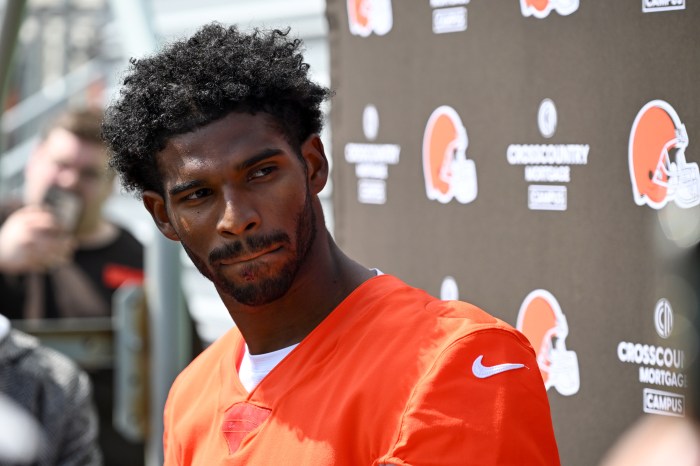
Nick Cammett/Getty Images
“There were people who don’t think he’s that good of a player, and then there were a lot of people who think he’s a great player and he was done wrong by some conspiracy,” said Solomon Wilcots, a former NFL player, longtime host for Sirius NFL Radio and a television analyst. Wilcots played at the University of Colorado and has closely followed Sanders’ career.
“What I loved about Shedeur is that he admitted that he could have handled the draft process differently,” Wilcots said.
As for Shedeur Sanders lesson for incoming players: “Take the process seriously. If you’re a top-five pick, you still go into it with humility.”
A year later, the debate over Shedeur Sanders lives on, even as a new batch of raw recruits is being drafted. Hall of Fame quarterback Warren Moon carefully monitored Sanders’ growth from Jackson State to the University of Colorado. Sanders had NFL talent, but there is more to the business than talent. Moon had a stellar career at the University of Washington, but he went undrafted and opted to play in Canada before joining the NFL and having a Hall of Fame career.
“I think what hurt Shedeur was not so much his ability but just kind of the way he handled himself,” Moon said during a recent conversation. “All the attention he brought to himself, most organizations didn’t want deal with that. They didn’t want that coming into their locker room. That’s the reason why he slipped. It had nothing to do with his ability. It had to do with just how he carried himself, and they just didn’t want their quarterback to be that way.”
In terms of lessons to be learned, Moon said: “If anybody learned anything from that, it’s [him]. Whoever’s playing quarterback, you want to make sure you come in a little bit more humble and with a little less pizazz and publicity behind your name, and just come in and be a quarterback and be a leader.
“I’m sure that whole draft experience really humbled him right up, brought him right back down to earth. It was probably good for him. I hated to see it happen to him, because I knew he was a better player than that. But in the long run, it’s probably going to be good for him. Now he can focus on being a quarterback and getting better and not have to worry about all the other junk.”
Sanders has been chastened to an extent. Though, a year later, I wouldn’t say he has been humbled.
That’s a good thing.
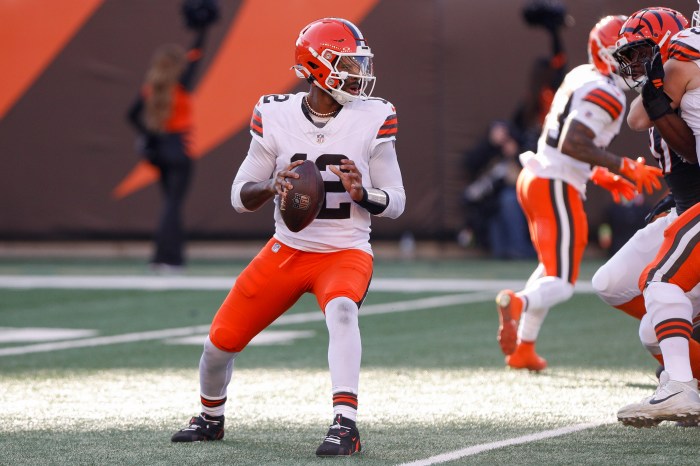
Ian Johnson/Icon Sportswire
Last week, during the Cleveland Browns OTAs, Sanders was asked to reflect on his draft experience a year later. He was typically reflective.
“I don’t look at anything as a negative,” he said. “When you start looking at things as a negative, that’s when you grow spite and hatred and nothing positive comes out of that. So, I view everything — it’s just like, I’m just happy. I’m thankful, I’m blessed. I was in a position to where I can handle everything that comes my way. So now I feel bulletproof.”
Sanders pushed back when a reporter asked whether his free fall in the draft had been a humbling experience.
“What does humbling mean?” Sanders asked.
The reporter explained that throughout his college career at Jackson State and Colorado, Sanders had been the big man on campus. The draft knocked him down a peg.
“I don’t let nobody else dictate how I feel about myself,” Sanders said. “If you allow that, then you are living for the wrong reasons. I know who I am as a person, as an individual and just being a child of God. So, I can’t let nobody dictate how I could feel about myself.
“And if I allow that, then I’m not mentally strong. I got to be able to be mentally strong in each and every situation that life throws at you.”
Sanders survived his draft ordeal and learned from it, as others will survive and prosper from their experience at this year’s draft. But a year later, Sanders’ draft day experience continues to resonate because it was more than a fall. It was a message.
William C. Rhoden is a columnist for Andscape and the author of Forty Million Dollar Slaves: The Rise, Fall, and Redemption of the Black Athlete. He directs the Rhoden Fellows, a training program for aspiring journalists from HBCUs.