
How The Ink Alliance and Sanford Greene are creating new pathways into comics
By supporting Black-owned comic shops and mentoring emerging artists, they’re helping build a stronger pipeline for the next generation

It took The Ink Alliance, a national collective of Black-owned comic book retailers, just five days last month to sell out 1,000 copies of its debut comic exclusive, a variant cover of DC Comics’ New Titans #38.
Comic collectors from 20 states and Canada ordered the cover online. Customers traveled to different states, cities and counties to show their support, and new buyers discovered the comic shops that comprise the alliance.
The collaboration came thanks in large part to Sanford Greene, an award-winning artist who also uses his role as a professor at Benedict College to uplift the next generation of Black illustrators. As he worked on the cover, he realized it could be turned into a cultural moment spotlighting Black ownership of comic book shops.
So in May, once he finished drawing iconic Black characters Static and Cyborg, he immediately reached out to Mike Davis, co-founder of the Ink Alliance and owner of the Blerds Underground Comic Book Shop in La Grange, Illinois.
The Ink Alliance had no name or logo yet, but for its founders and members, Greene came at the perfect time.
“We would not have been able to formalize this quickly if it weren’t for Sanford Greene,” Davis said. “He lit a match to what we were starting.”
The alliance and its debut cover are the latest accomplishments for Greene, Davis and their colleagues who aim to help create pathways into the comics industry for both Black retailers and Black creators.
Historically, Black people have been underrepresented on the page and behind the scenes.
All-Negro Comics, the first known comics magazine created solely by Black writers and artists, released its first and only issue in 1947.
Yet a quarter-century later, Billy Graham, artist of Luke Cage and Black Panther, was the only Black person working on Marvel’s creative team.
The challenges persisted into the next generation. In 1997, Milestone Media, founded by a coalition of Black writers and artists, shut down its comic book division due to low sales after receiving limited exposure to new fans.
The industry is more diverse now, but Black creators remain a small minority, and there are only a few dozen Black-owned comic shops in the country.
James Portis III, a comic book journalist who first reported on The Ink Alliance’s formation, said comic book shops represent an important space where Black people can feel comfortable expressing joy together through a shared passion.
“Comics are one of the greatest forms of literature, in my opinion, and this is an avenue where Black men and women can come together and enjoy literature,” Portis said.
Given the important role comic book shops play for the industry and its fans, Greene wanted to make sure his cover did more than just celebrate Black characters. He saw it as a chance to create opportunities for Black-owned retailers and emerging Black creators alike.
At the same time Greene was crafting his cover, Davis was feeling isolated, desperate for community with other Black owners. He reached out to Phillip Rollins, co-founder of Ink Alliance and owner of OffBeat comic book shop in Jackson, Mississippi, and together they started searching for more Black shop owners.
They found eight.
The group of 10 evolved into a coalition in which owners can pool their resources and ensure Black comic book shops continue to exist in America.
One of the biggest challenges Black-owned shops face, Davis said, is competing financially with big stores. Having seen larger comic book shops create unique collaborations, he wondered how to create similar opportunities for Black stores with fewer resources.
“So for me it was like, ‘How do we as Black retailers start to unlock opportunities that we can’t get by ourselves?’” Davis said. “Because there are a whole lot of things in this industry that are set up to help larger stores, like these incentive variants [Greene’s cover], that we as individual stores were locked out of mostly because we don’t have that type of purchasing power.”
The cover’s success helped stores in the alliance grow their subscriptions, customer bases, and social media presence. In fact, the success of the first project has pushed the alliance to expand to more stores.
But Greene’s role in breaking down barriers in comics didn’t start with the alliance. For more than a decade, he’s also been helping develop the next generation of creators at Benedict College in Columbia, South Carolina.
Greene remembers arriving at Benedict College in the 1990s as a young artist from the small town of Greeleyville, South Carolina, unsure of how to break into the industry. He describes his time at the school as transformative, particularly once he was taught by author and illustrator Tyrone Geter.
For Greene, seeing someone who looked like him working in an industry similar to the one he wanted to enter was key to his development.
“He was my gateway into understanding all the stuff I wondered about when I was younger about how to become an artist,” he said.
When the opportunity arose to become the mentor Geter had been to him, Greene could not turn down the offer. In 2012, he became the school’s artist-in-residence.
“My main occupation is to prepare them artistically and to set them up in places that would allow them to gain opportunities for a career,” Greene said.
Benedict College/Sanford Greene
Tiffany Wider, coordinator of the Benedict College arts department, said Greene provides real evidence of how students can pursue a career as an artist.
“Having somebody like that tangible and accessible on campus to talk to, if you’re interested specifically in comic arts or just illustration period, I think it’s just very inspiring to the students here,” she said.
Greene’s guidance has helped students flourish.
Timothy Geathers, a 2012 Benedict College graduate, said Greene took him under his wing while challenging him.
“I always draw and come back to him, and he’ll tell me to work on this or that,” Geathers said. “I just kept doing that, and it got to the point where he started giving me work, like helping him with character designs.”
When Geathers graduated, Greene brought him in to assist on the award-winning Image Comics series Bitter Root. He started around Issue #7 and saw the series through to the end.
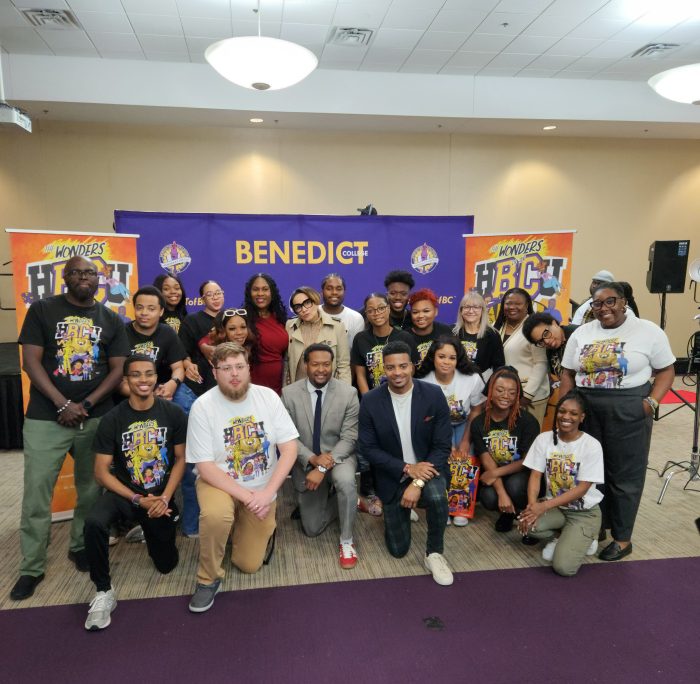
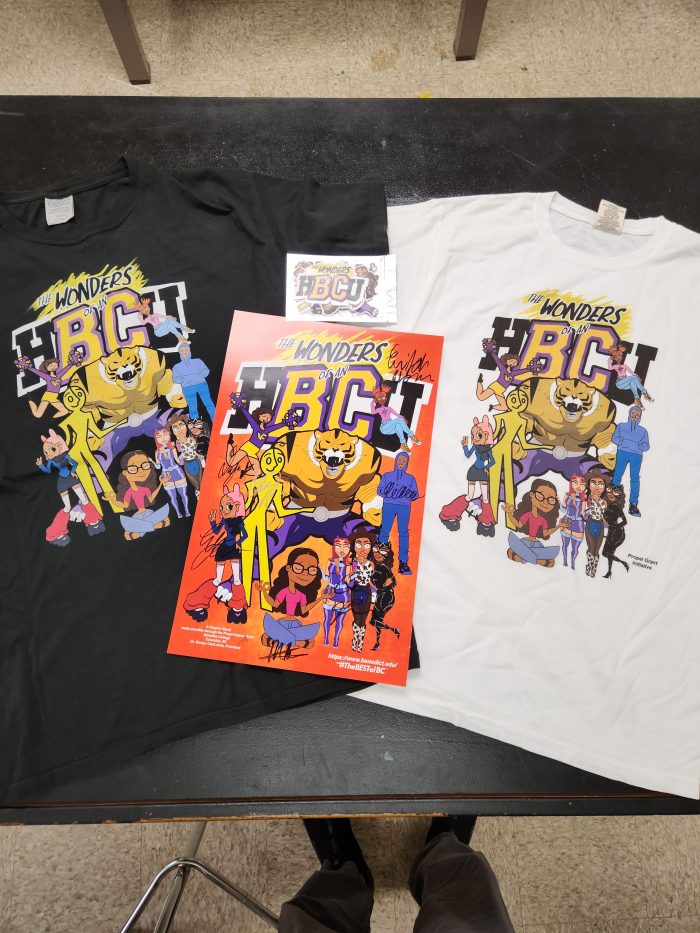
In 2023, with the backing of an Apple grant initiative, Greene launched a project that included students creating their own graphic novels. Over the course of two semesters, students produced “The Wonders of an HBCU,” which tells the story of their college.
Benedict College/Sanford Greene
Alyssa Guyton, a 2023 Benedict College graduate, worked on the graphic novel during her senior year and said the experience taught her a lot about the process of creating a book — and provided her a lesson in not getting overly attached to her art.
“There were a lot of times he’d say, ‘No, start over,’ and you just gotta roll with it and take critique well,” she recalled.
Another Benedict College arts student, Asiah Fulmore, was nominated for an Eisner Award earlier this year, showing the strength of the pipeline Greene is helping build.
And by collaborating with the Ink Alliance, he is looking beyond the creative and ensuring his work helps the retailer, too.
The success of the New Titans cover has encouraged Ink Alliance members to continue working together, sharing resources and exploring ways to create more opportunities for Black-owned comic shops.
Jermaine Exum, a member of The Ink Alliance and owner of Acme Comics in Greensboro, North Carolina, for the past 30 years, said the coalition has allowed him to bond with other comic shop owners.
“I just appreciate that we’re able to talk to one another,” Exum said. “Comic book retail can be very isolating, where you feel like you’re alone in it. Nobody knows what you’re going through.”
Greene has made it his mission to change that, creating opportunities across the industry and helping fans see more diversity in the comics that mean so much to them.
“What makes me want to help [is that] I was there at one point,” Greene said. “I was trying to figure this thing out and didn’t see a whole bunch of people that looked like me.”