
Jas Bell is turning Fever and Pacers merch into cultural currency
Indiana’s new global design and product director aims to create merchandise that functions as culture, not just team gear

Listen to this story
Somewhere between the WNBA’s biggest cultural moment in a generation and streetwear’s full takeover of professional sports, Indiana found its guy.
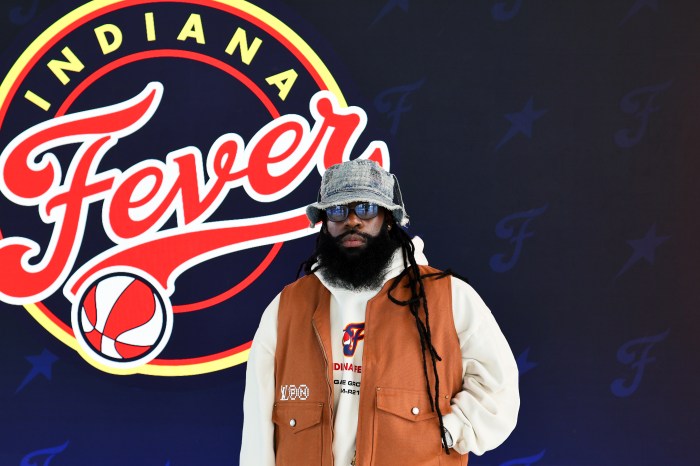
Pacers Sports & Entertainment is betting on that find at scale, naming Jas Bell its first global design and product director. The newly created role gives Bell oversight of the visual identity for both the Indiana Pacers and the Indiana Fever at a time when both brands are expanding far beyond the court.
Bell, known professionally as Leonardo Chop, is a creative strategist whose portfolio includes art direction for SZA and a co-sign from Metro Boomin. Over the past few years, he has proven merchandise doesn’t have to be an afterthought sold in a team store; it can be an item that makes a stranger in Tokyo or Berlin stop and ask where to buy it.
This is not Bell’s first time working with the Fever. He was a key creative force behind the team’s Stranger Things collection, a collaboration that sold out quickly and earned a Silver Clio Sports Award. He’s spent his career sitting at the exact intersection PS&E is now chasing: streetwear, art, music and sports culture colliding into something that doesn’t feel like a generic licensed product.
The numbers back the ambition.
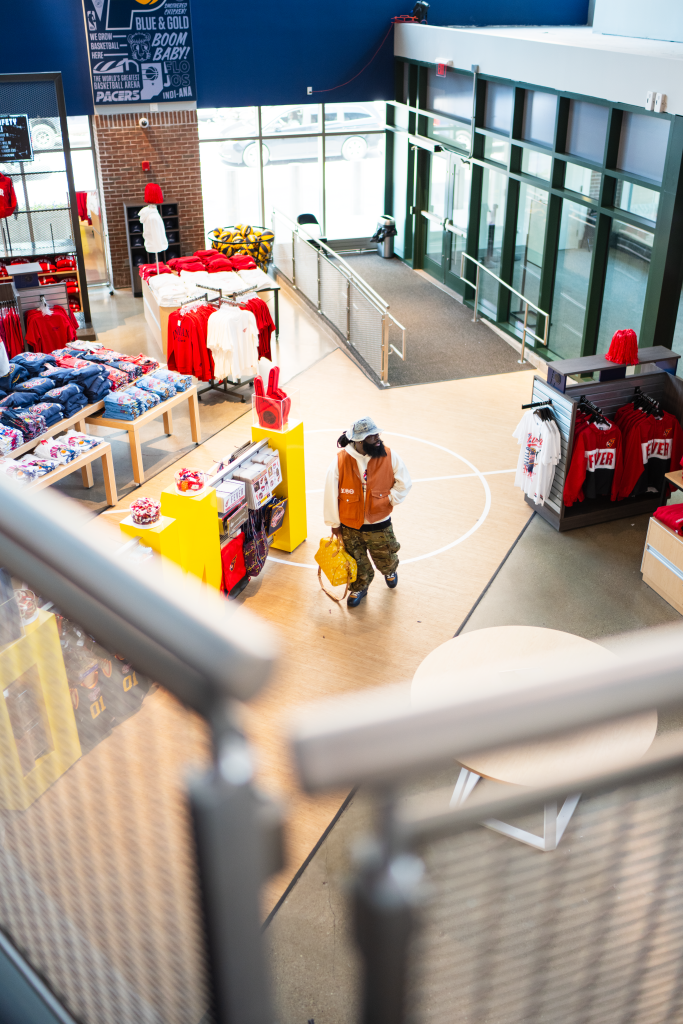
The Pacers and Fever have posted some of the highest per-capita game-day merchandise sales in professional basketball, and PS&E is one of the few organizations that runs its retail operation fully in-house. Bell’s job is to transform that infrastructure into a consistent visual identity that can scale from Gainbridge Fieldhouse to global stages, such as the Pacers’ Nov. 7 game in Mexico City.
In a conversation with Andscape, Bell discussed what it means to design for a fanbase that may never watch a game but wears the merchandise anyway; how he protects the influence of the Black women who built women’s basketball culture from being flattened into a trend; and why he wants the next era of Fever and Pacers product to be remembered as cultural artifacts.
Pacers Sports & Entertainment
The Fever aren’t just a basketball team anymore; they’re a cultural property. How do you design for people who engage with the brand?
Bell: I wouldn’t say the role changes, but the canvas definitely expands. My design process has always been about world-building and treating brands as cultural properties. It’s actually built to bridge that gap. We want to design pieces that translate to anyone, whether they are sitting courtside or just out in their city on the day-to-day. We’re designing for the culture now, and in this next phase, you’re going to see a massive elevation in how that comes to life and our impact.
Tunnel fits, social media graphics, merchandise, and arena experiences are all part of the same ecosystem. How do you create a cohesive system rather than a collection of assets?
Bell: I think I have quite a bit of experience in this specifically. When you just create deliverables, you get a collection of assets. When you want to create a story, you have to engage in world-building. I approach a season the same way I approach a tour or rollout. You don’t design a hoodie, a social graphic and an arena backdrop as separate items on a checklist. You establish the visual universe first.
What does this specific era of the Pacers/Fever look like, and how does it feel?
Bell: Once that foundation, that North Star, is set, every single touchpoint naturally speaks the same language. Whether it’s design style, the colors, an Instagram reel, or the physical environment of the arena, they all feel cohesive because they all live in the exact same world.
Women’s basketball has historically borrowed visual language from men’s sports. What opportunities do you see to create an aesthetic that feels native to the WNBA?
Bell: The WNBA has a unique energy that stems largely from individuality. I think there is so much beauty in the culture the players are already building on and off the court. That translates and permeates through the teams in a special way. The opportunity to design with the same level of taste they already harness is a blessing. We’re moving past the era of just slapping a team logo on a basic hoodie. It’s about creating a visual world that reflects the power, style and cultural influence these women hold, while also providing pieces anyone can wear to show their support for women’s sports.
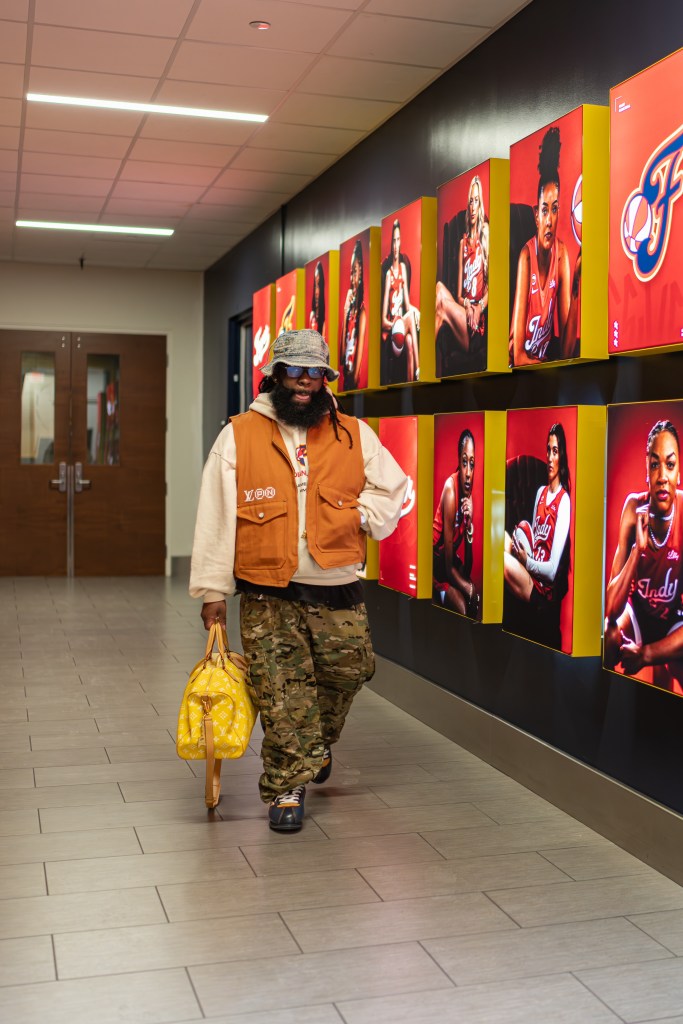
Black women have been central to the growth of women’s basketball culture for decades. How do you make sure that influence is reflected in a team’s visual identity instead of being referenced when it’s trendy?
Bell: You make sure it’s authentic by recognizing that their influence is a permanent part of the league’s foundation, rather than a seasonal trend. To me, the magic of the WNBA is the collective sisterhood. As a design director, you don’t honor a specific influence by isolating it; you honor it by making sure it’s naturally woven into the DNA of the brand, because it is! One of my jobs is to listen to the players and build a visual world that authentically represents the impact they have had and continue to have every single day.
Pacers Sports & Entertainment
When you think about the Fever, are you more interested in honoring the game’s history or building something that feels entirely new?
Bell: I actually don’t believe those two concepts have to conflict or fight each other. One of my favorite approaches to design is taking something classic and pushing it through a completely modern lens. You honor the history of the game through the franchise’s heart and heritage, but the execution, silhouettes, and storytelling can feel entirely new. We’re quite literally defining the future of product design in sports. My goal isn’t just to rely on the past — for me, the magic happens when there’s a synergy and marriage between the past, present and future. We want to design pieces that can time travel.
The best basketball brands often feel hyperlocal while still resonating globally. What does Indiana bring to the Fever and Pacers’ visual identity that couldn’t exist anywhere else?
Bell: Being from the Midwest — St. Louis, actually — I’ve always viewed our region as this incredible melting pot. We sit right in the middle of the map, and have influences from everywhere. Indiana shares that same complex DNA, but it’s anchored by an absolute, pure obsession with basketball, extending to sports in general, which is an unbelievable foundation to build on. That DNA is special and rare, but with that unique DNA, it’s about taking the core elements of the city and applying a level of detail, design, and storytelling that feels authentically Indiana yet can sit comfortably anywhere in the world.
Pacers Sports & Entertainment
Which designers, artists, photographers or creative movements outside of sports are influencing your work right now?
Bell: Honestly, my inspiration doesn’t come from a mood board much anymore. A lot comes from the spaces I’m currently moving through. Literally, right now as we speak, I’m in Paris at the House of Louis Vuitton, watching them merge luxury, travel and sports in real time. Pharrell [Williams] has always been a sensei to me; I’m constantly learning from him. Even more so now in this new role [of men’s creative director at Louis Vuitton], considering how fashion, sports, music, and culture are all crossing paths.
But my inspiration is also incredibly grounded in the people around me on a day-to-day basis. Just watching our teams provides so many creative sparks. I can also enter a flow state during downtime by absorbing sports and fashion documentaries, or whenever I’m in the studio with my brother Metro [Boomin]. His soundscape is huge for my process sometimes; just sitting in that environment will inspire me to create and see colors or design scopes.
Five years from now, what would make you feel like you’ve successfully changed how people think about sports design through your work with the Fever?
Bell: For me, it comes down to longevity and reach. We talked earlier about designing pieces that can time travel — I’ll know we succeeded if, five years from now, the pieces we’re architecting today are being archived and hunted down because they’re true cultural artifacts, not just old merch. We’re already living a bit of that, considering how well the Stranger Things capsule I designed continues to live on, like we just dropped it.
Geographically, I want to walk down the street in Los Angeles, Atlanta, Paris or Tokyo and see someone wearing our garments simply because it’s undeniable, even if they’ve never watched a single quarter of a game. From there, we’ll draw them in to follow the team and become true fans — that’s the ultimate win. It means we shattered the ceiling of what sports design is supposed to be. I want to look in someone’s closet, see a Fever or Pacers piece hanging next to their favorite pieces, and have it make total sense.