
Kingston Flemings ready to ‘constantly get better’ in NBA
Projected top-10 pick thinks he won’t reach his potential until years in the league

CHICAGO — Some NBA draft picks will have reached much of their potential by the time they arrive in the league. The way former University of Houston guard Kingston Flemings sees it, the best is yet to come for him, thanks to his work ethic.
“Every single year, I’ll get better,” Flemings told Andscape on May 11 during the NBA pre-draft camp. “They can’t say that one year I played better. Maybe one year I’ll shoot better or something like that, but they can’t say I’m the same player. If you look back to any year in my career, the next year I played I got better, no matter what it was. If I would have stayed in college this next year, I would have got better.
“So, anywhere I go, who they draft me as is not who I’m gonna be my fifth year. Some people, they draft them at their peak. That’s who they are. But not me. This is the lowest I’m going to be as long as I’m in the NBA. As the year goes on, as the days go on, I’ll just constantly get better, just compete all the time.”
Flemings averaged 16.1 points, 5.2 assists, 4.1 rebounds and 1.5 steals while shooting 38.7% from 3-point range as a freshman for Houston last season. The 2026 All-Big 12 Conference first-team selection set a Houston freshman scoring record by dropping 42 points on Texas Tech. ESPN’s Jeremy Woo listed Flemings as the ninth-best prospect in his latest NBA draft top 100 list on June 19. The San Antonio native is also one of five children and his sister, Bella, committed to play for Duke next season.
Andscape is celebrating Father’s Day and the lead-up to the 2026 NBA draft with a Q&A series including some of the draft’s top prospects and their fathers. The first round of the draft is Tuesday at 8 p.m., ET, at the Barclays Center in Brooklyn.
The fathers and sons who participated in the Q&A series include Flemings and his father, Demetric “Dee” Flemings; former Arkansas guard Darius Acuff Jr., and his father, Darius Acuff Sr.; former Tennessee forward Nate Ament and his father, Albert Ament; former Duke forward Cameron Boozer and his father, former NBA All-Star Carlos Boozer; former Louisville star guard Mikel Brown Jr., and his father Christopher Brown Sr.; and former BYU forward AJ Dybantsa and his father, Anicet “Ace” Dybantsa Sr.
The following is a Q&A with Kingston and Dee Flemings:
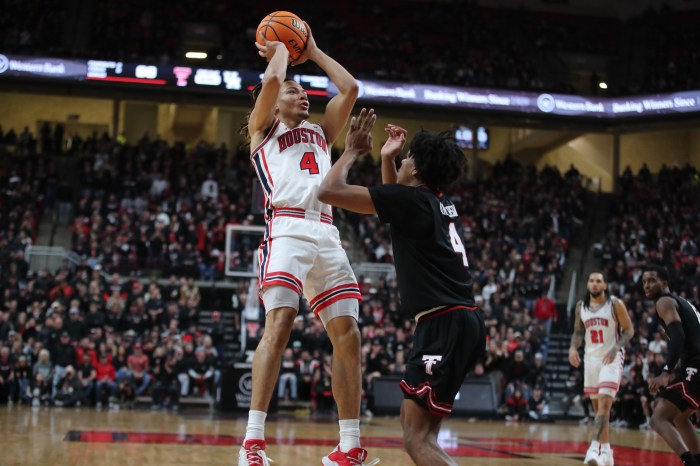
Michael C. Johnson-Imagn Images
As you talk to all these NBA teams, what do you tell them when they ask you, ‘Who are they getting as a player, and who are they getting as a person?‘
Kingston Flemings: If you ask anyone I’ve played with, or on any team, any level, no one can say I was a bad teammate, going all the way back to when I started in first grade or kindergarten. Any people I play with, I constantly get everyone I play with better. I can fit into any team with anything they need for me — facilitator, scorer, defender. I can do anything for that team. So, if you put me on any team with any players, I can get along with them and make them better as a team.
What gives you the most excitement about the NBA draft, and what gives you a little anxiety about it?
I guess anxiety — I just want to get on the court, really. The interviews and testing, all that is nice. But at the end of the day, you just got to play basketball. So, I like getting on the court and the excitement. All of it is exciting. I dreamed of this as a kid, just watching it when I was younger. And just being here is definitely surreal. So, I’m just ready to hear my name called and walk across the stage.
Father’s Day is two days before the 2026 NBA draft. What do you think about the timing of that, and what does your father mean to you?
It’s great. He means everything to me. I think about how hard him and my mom worked. Just [her] being a nurse, [him] being a firefighter. And then putting all that time into us. I know he picked up a shift working with Delta [Air Lines] so he could get us free flights so we could fly places.
He worked out with me and my sister at the YMCA at 5 a.m. before he had to go to work. Everything he sacrificed to get me and my sister and my siblings to the place we are right now, people don’t see it. But we definitely see it behind the scenes. And without him, we definitely wouldn’t be here right now.
Your father flew to Chicago just to be a part of this father-son interview with you. Can you give me some more detail about everything he does?
I know it’s not easy. He grew up a single child, so he kind of had to teach himself a lot. There is so much that he’s taught us. He wasn’t the most amazing basketball player. He had to learn a lot, and he learned a lot of things in different ways just picking people’s minds any way he could just to cater to our dreams.
It was never his dream for me to go to the NBA, or my sister to play basketball. But we told him what we wanted to do, and he [guided us] to the best of his ability. And that’s just the man he is, definitely. Whatever he puts his mind to, he ended up doing it. And he’s gotten me and all my siblings to a pretty high space so far.
He also gives you a push to commit and give your all. Can you expound on that?
I can’t be one foot in, one foot out. No matter what it is — basketball, soccer, lacrosse, tennis, whatever it would have been — we’re going to be completely headstrong into that. So, once I said it was basketball, especially for me, we worked at it every single day. At 5 a.m., late nights, everything like that. So, the same with my sisters.
Once we said what our dream was, he constantly reminded us that it wasn’t his dream, it’s our dream. So, he shouldn’t be working harder for our dream than we are. He would always say that a lot.
Did you ever fight his push?
Definitely. When it’s coming from your dad, sometimes you just don’t want to hear it, because you’re hearing it all day, every day. But as I got older, you really know what he’s saying is true. Even sometimes you don’t when you don’t want to hear it. So, he prepared me for a lot of things.
Going to Houston, playing for Coach Samp [Kelvin Sampson], playing high school and just life. Life is not easy at all. But the way he raised me, and how hard he pushed me from that, just prepared me for life.
Your parents didn’t let you know what name, image and likeness money they agreed to for you with Houston until you signed your contract. What did you think about that approach?
I’ve never been a huge accessories guy or money guy or anything like that. I didn’t really care which schools were paying me more or less. They definitely didn’t really tell me about it. So, at that point you’re picking the school off who you like the most — coaching staff, everything like that. And money’s not involved in it. Some schools could offer the most money, but their coaching staff and everything like that is horrible.
So, definitely when it came down to my final schools, Texas Tech and Houston, either school I would have picked would have been great. But I’m glad I went to Houston. Coach Samp, playing with them, all my teammates, they taught me a lot just being there for the one year I was.
As a firefighter, what does it say about your father as a person that he’s putting his life on the line for people he doesn’t know?
I’ll try not to think about [the risk] too much. I hope he is safe whenever he’s at work. But just knowing him, my mom, they are in two professions where you’re helping people all day. So, there’s not a lot of professions like that. So, sacrificing himself for other people is just the way he kind of lives life. If you meet him, he won’t say that he’s like a sentimental guy or anything like that. But you definitely can see it.
He cares about what people say, and he cares about helping other people, even though he was a single child. He likes people liking him, really. So, him being a firefighter, just how much he sacrifices for other people.
Whatever team you go to, what teachings of his are you gonna bring with you there?
There’s definitely a lot. When you’re at a new place with new people, some people are there to help you. But it’s kind of for you. Keep your circle tight. And you got to work on your own. Take it one step at a time. So, when you go to a new place like that, some people are there to help you, but you really got to focus on yourself, because you’re the reason you’re going to become somebody.
So, really focusing on yourself, working every single day by yourself, not having someone else make you go to the gym or make you work out or lift. Wanting to do it by yourself, and just wanting to become the best you can, just every single day, that’s me. So, anything I’m playing, if it’s any sport or anything, I just hate to lose. So, I’m constantly getting better, so I never have that feeling of losing or feeling that someone’s better than me, especially when I’m on the court.
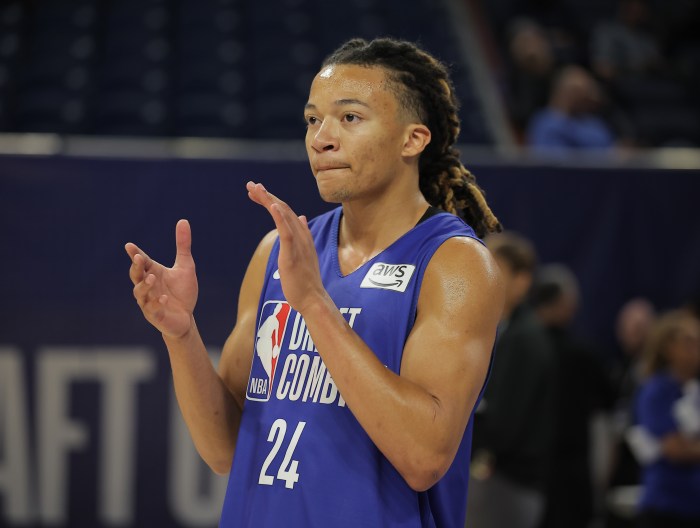
Melissa Tamez/NBAE via Getty Images
There is a perception that the top four players in the 2026 NBA draft are Cameron Boozer, AJ Dybantsa, Darryn Peterson and Caleb Wilson. When you don’t hear your name in that mix, how do you feel?
People on the outside can say a lot of things. But once you get on the court, it’s one thing. You’re hooping out there. So, what people think of you, who likes you, who doesn’t, all you really need is one person, one team to believe in you. All I really needed in college was one team to believe in me: Houston. … If all the other teams across didn’t believe in me, it didn’t matter, because Houston did. So, any team that believes in me in the NBA — whether it’s the first pick, whether it’s the last pick in the draft — it doesn’t matter. As long as I get there and I get a chance, I get opportunity, I’m going to show who I am.
It doesn’t matter on the first pick, second pick, third, so on. I’m just proud of all the kids and all the players that have gotten here. It’s not easy at all. I know I’ve worked for it. But obviously I know the player I am, and I know how I see myself. I don’t overly care what other people think, because they’re not me, and they’re not playing on the court like I am. They don’t get a 94-foot slab like I do, guard people like I do, play like I do, compete like I do. They don’t know that. They just see outside. They see the measurables. But end of the day, you just got to get on that court. It’s just us and other teams.
Would you agree that you’re a silent assassin when you play?
In high school or middle school, I talked a little more. But college, I didn’t really talk at all. Some people try to talk, but once they realize that you’re not talking back, you’re not engaging them, it makes them feel dumb. … So, if you’re really focusing on yourself, focusing on your team, and not what other people say, that’s just solid banter. They’re trying to get under your skin, but if that works on you, it works on you.
When I watch you play, it looks like you could score in your sleep. When you’re hot, what does that feel like?
Yeah, definitely. Any spot I get to, I feel confident in the shot. A lot of times, especially when you get it going, you just feel confident all across the court, especially when you get in the flow. So, getting to those spots, getting in the midrange, and then using my body — once you start scoring a lot, the defense starts second-guessing. And then they don’t trust that they can guard you. Once doubt creeps in, that’s how you kill people. So definitely, as the game goes on, I start feeling it. My confidence grows, and that’s how I had those big games.
What is your village of supporters like?
For me, since I started playing basketball, I stayed with the same people. The same people that I grew up with playing against, I play with them every single day. The same people that I grew up with training with, I train with them every single day. I’m just blessed to be around a certain amount of people that are trustworthy and have this mindset that can really help me. So, there’s no reason for me to leave for the outside, because I know these people were with me from the beginning.
A lot of people come in like at the end, and they see who you are. But they didn’t see who you were. They didn’t see all the work you played in before that. And that’s who the people were in my village, that’s who they saw. [It’s about] just staying with those [people], continuing to work. And they know the player I am and the mindset I have.
How much pride do you have in your last name?
Definitely a lot. I see online sometimes “Flemmings,” and they put two “m’s,” and that kind of irks me a little bit. Your name is all you got, at some point. So, any team, or any person I go to, I just want them to really like me as a person and like my name, because that’s all you got. If you go to a team and no one on that team likes you, even if you did good, once you leave, they got some people asking you about them, they’re going to tell them the truth, and that’s your name at the end of the day.
So, anywhere I leave, I don’t want to give a reason for someone to talk down on me or anything like that. So, I definitely carry that heavy when I’m playing anywhere I go. I’m just trying to be a sound kid, a nice kid. And then on the court just do whatever I can to kill and get the win.
What does the city of San Antonio, your hometown, mean to you?
People just, when they hear San Antonio, they have a bad connotation with it a little bit, you know. In Texas, it’s Houston, Dallas. So, it’s a little like San Antonio doesn’t have too much respect. But I think just how much work we put in, like especially on our team. I know how much work we put in — my family, all my friends. So, I think just trying to bring a good rep to the 210 [area code] any way I can. And just support them, and just show people in San Antonio are one of one, too.
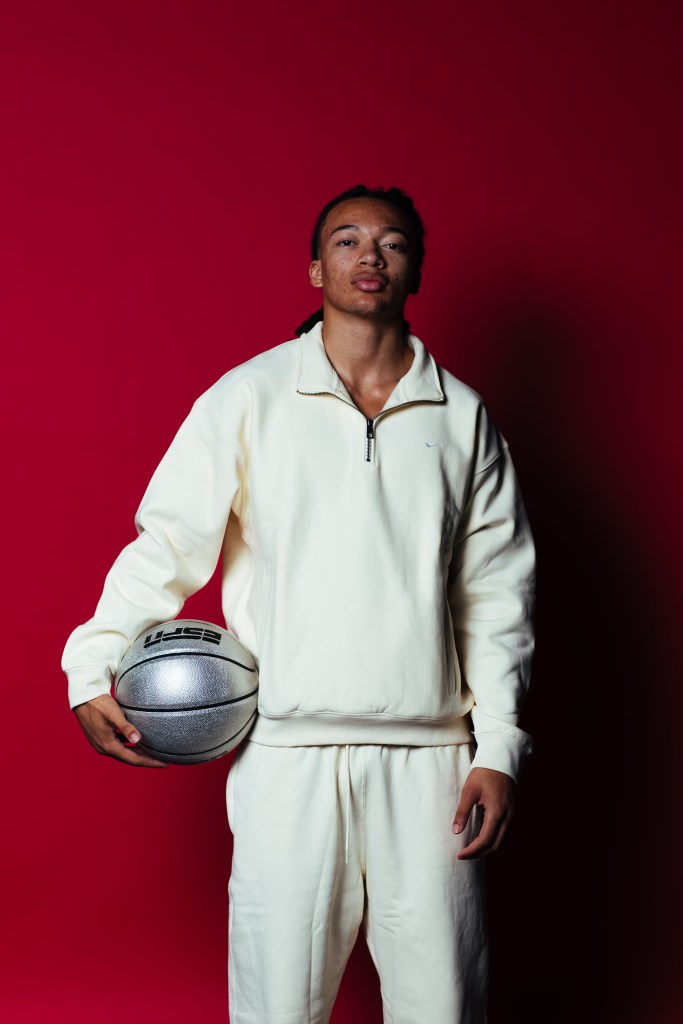
Carmen Mandato for ESPN
What is your first recollection of putting a basketball on your son’s hands?
Demetric “Dee” Flemings: Kingston is about six years younger than his older brother, and his whole life, he’s just been following him around. In a sense, that motivates him. But it’s, if you know Kingston, he’s motivated by Shaydon, because he always wanted to be better than him. So, when Shaydon was, I’ll say, 8 [years old], so that put Kingston at about 2, he’s at Shaydon’s practices, he’s trying to play, he’s at football practice, he’s at basketball practice, and he’s just picking up the ball. He’s out there trying to challenge the teammates and get in there.
How did you name him Kingston?
I wanted to call him King, but I felt like it’d be a little too egotistical. And I knew his nickname would be “King,” so we just went with Kingston.
At what point did you say, “Kingston could be special in this game of basketball”?
I knew something was different about him when he was 4, playing on his older brother’s team. So, he was 4 playing on the 10-year-old team. He couldn’t get the ball to the rim. So, it was literally just defense and passing. And ultimately, that’s really who he is. And he just always wanted to find everybody and pass.
And one day, around the same age, we’re at the park and just on the court working, and he does a Eurostep. I said, “Where’d that come from?” He said, “I saw it when Shaydon was playing the video game.” So, that told me there’s something different about his mind that he saw his brother playing a video game, saw a Eurostep, and then he just came out to the court and did it on his own. It was like, “OK, he’s got a little something different to him.”
As a Black man, what kind of lessons, and just as a man in general, was it important for you to teach them just in life?
Leave every room better than you found it. Take care of family. And the family is extended. I grew up an only child, so my family was my team, it was my neighbors, it was my community. I try to instill that in them. I’m a firefighter. My wife is a nurse. So, community is really important to us. So, be pillars of their community, and just take care of people.
It’s great that Kingston is a potential top-10, top-five pick. But when people stop me and say, “I met your son and he’s one of the humblest kids I know.” Or, someone told my wife at the [NCAA] tourney that Kingston is the one person that always made sure that the women reporters or the younger reporters got their questions in because they’re getting bullied, and the older reporters won’t let them get their questions in. And he’ll always make sure they do. I raised a good human.
What do you think is the perception and reality of Black fatherhood?
There’s the age-old stereotype that we’re not present. I’m always going to be here. Being a firefighter affords me that. I have a hectic schedule, but it gives me a lot of days off. I try to be at everything that I can. We started a [AAU basketball] team. Kingston grew up in a neighborhood team. We have a 12-passenger van, and it was literally so we could take everybody around.
I have five kids, and it’s a lot. But we’ve driven that van to [Las] Vegas twice. To Atlanta three times. But it’s just [transporting] the community. I’m a present Black father, and I want them to see that.
What came to mind when you learned that Father’s Day was two days before the draft?
I would love for the draft to be on Father’s Day. That would be a great culmination to everything we’ve done. We’ve been doing this since [age] 3 or 4. Kingston was in kindergarten shooting 500 shots a day. And we’ve been to the gym with his sister and the older brother, and now I’m getting the younger two girls there. But it’s just to see all his hard work, and he finally reached his goal. This was always his goal. And for my kids, my job is to help them accomplish their goal.
It’s never about what I want. I make them write their goals down, and then I’m going to hold them to it. Short-term. Long-term. And we’re going keep going. And we’ll reevaluate those goals. But this is one goal that never changed for him from when he was a little boy: “I want to be in the NBA” … he never changed, and so to see him like achieve that and know that I was able to actually help him achieve that, I did my job.
How do you envision NBA draft day?
You made it to this goal. So, a lot of laughs, a lot of love, a lot of hugs. We’ll enjoy it as a family, because everybody sacrificed for this. His brother is his manager, and he drives me crazy. And mom is there always to balance me out. And sister [Bella] is always there. Those two, they’re watching each other’s games, they’re evaluating, they’re giving pointers to each other. Everybody went into this. So, it’ll be great. And then the next day, we’ll sit down and we’ll write down some new goals.
Your last name is going to be running up and down the court in the NBA. What will it be like to see your last name on your son’s back in the game? How much pride do you have in it?
Immense pride. I’m a goal-oriented guy. And this was your goal, and I felt like I did my job as a dad. You achieved your dream. And my daughter, she wants to be on ESPN someday and maybe one day she’s interviewing him on the sidelines. They’re taking my name into rooms and arenas that are so beyond me or anything I could have ever done. So, just proud. I feel accomplished that I did my job, whatever it was.
If an NBA team were to ask you why should we draft your son, what would you tell them?
He’s hardworking, he’s loyal, he’s a family-oriented person. The day you draft him, you become family. And he’s his father’s son. He’s going to do anything for family. I lay down my life for people I don’t know. And Kingston extends himself for anything, for the team. And he’s going to do whatever the team needs him to do to win. That’s family. And that’s who he is.
If Kelvin Sampson asked him to drive the ball, he doesn’t shoot a lot of threes. If Kelvin says, “D, I need you to guard this guy. I need you to rebound more.” Whatever you need him to do to win, he wants to win, he wants to be wherever he’s drafted for the remainder of his career. And he wants to leave that room better than he found it.
In terms of the NIL, the new, still-evolving college basketball landscape, to social media, as a father, how did you navigate that?
Social media was a harder navigation. Just trying to teach them not to be like their friends, you got to be different. And keep reinforcing it, reinforcing it, reinforcing it to hopefully they see the bigger picture. As far as NIL, honestly, not that big a deal. Neither he nor his sister knew how much money they were going to get. So, we purposely didn’t allow him into any of those meetings.
He made his decision based on what he felt was the best for him. He eventually had to sign his contract. I was hoping that Sampson and [the coaching staff] could not show it to him. But obviously, he had to sign it. He signed the contract maybe a week before he went to school. But we don’t let money factor into their decisionmaking skills.
What does Father’s Day mean to you?
It’s a day where I’m supposed to be celebrated, and that’s not really my style. I’m really lowkey, behind-the-scenes. Honestly, all I ever want to do in that day is just get everybody together and we sit and eat. But it swells my chest up with pride that I created this family.
I was the only child. Single mother. My mom was in the military but grew up in [New] Jersey for the most part, just kind of was home by myself a lot. And so, my friends and neighborhood was the family that I hung with. My best friend, Kingston’s godfather, grew up across the street from me. But to see that I created these amazing humans, that’s my proudest accomplishment.
What specific lessons did you instill in him?
First, be a good human to everybody you meet. You need to walk in and you need to not just shake the GM’s hand and the governor’s hand, but you need to know those attendants. You need to know the people who clean up. You need to know the person who washes your uniform, and you need to treat them with the same level of respect. As far as accomplishments in the NBA, there is nothing you can’t do as long as you’re willing to sacrifice for it.
So, regardless of what anybody may say, “This person’s better. You can’t do this or that.” How hard are you willing to work for it? Whatever spot you want, whatever minutes you want, whatever role you want, you just got to set your mind, write your goals, reverse engineer from there, and that’s your blueprint — your map, rather — to get to that destination.